 Pin
Pin The first time I made chicken katsu, I was standing in a tiny kitchen in Osaka, watching my friend's mother move through the breading station with such casual confidence that I felt like I was learning a language just by watching her hands. She never measured anything, just knew when the egg coating was right, when the panko was golden enough. Years later, I realized that what looked like magic was actually just repetition and love, and now I make it the same way she did, though I do measure my ingredients. There's something about that crispy exterior giving way to tender, juicy chicken that never gets old, no matter how many times you make it.
I made this for my partner on a random Tuesday when they'd had a terrible day, and I remember them closing their eyes with that first bite like they'd just traveled somewhere warm and safe. It's funny how a piece of fried chicken can do that, how the simple act of someone spending 35 minutes in the kitchen to make something golden and perfect can feel like the best kind of apology or celebration or just proof that you're thinking about them.
Ingredients
- Boneless, skinless chicken breasts (4, about 150 g each): Pound these gently between plastic wrap to an even half-inch thickness so they cook evenly and stay tender inside while the outside gets impossibly crispy.
- All-purpose flour (1/2 cup): This is your first line of defense, helping the egg adhere and creating the initial crispy layer that's absolutely essential.
- Eggs (2 large) and water (1 tablespoon): The egg mixture is your glue, and that splash of water makes it spread easier without getting too thick.
- Panko breadcrumbs (1 1/2 cups): Don't even think about using regular breadcrumbs here; panko is coarser and airier, which is literally the whole point of the crispiness you're after.
- Vegetable oil (1 cup): You need enough to come halfway up the chicken as it fries, and the oil temperature matters more than you'd think.
- Tonkatsu sauce ingredients (ketchup, Worcestershire, soy, mirin, mustard, sugar): When combined, these create a sauce that's simultaneously tangy, umami-rich, and slightly sweet in a way that makes you immediately understand why this dish is a classic.
- Salt, black pepper, shredded cabbage, lemon wedges, and steamed rice: These are your supporting cast, each one serving a purpose in balancing the richness of the fried chicken.
Tired of Takeout? 🥡
Get 10 meals you can make faster than delivery arrives. Seriously.
One email. No spam. Unsubscribe anytime.
Instructions
- Pound the chicken to even thickness:
- Place each breast between two sheets of plastic wrap and use a meat mallet or even a rolling pin to gently pound it to about half an inch. You'll feel the resistance give way as the chicken flattens out, and that's how you know you're done.
- Season your flattened breasts:
- Sprinkle both sides with salt and pepper, being generous but not reckless. This is your only chance to season the chicken itself, so don't skip this step.
- Create your breading station:
- Line up three shallow dishes: flour in one, beaten eggs mixed with water in the second, and panko in the third. Having everything ready means you won't be standing there midway through with wet hands and no escape.
- Bread each cutlet with intention:
- Drag each chicken breast through the flour, shake off the excess, dip it in the egg mixture until it's completely coated, then press it firmly into the panko breadcrumbs. The gentle pressing matters because it helps the crumbs adhere rather than slide off in the oil.
- Let breaded cutlets rest (optional but recommended):
- If you have 10 minutes, let them sit on a plate. This helps the coating set and get even crispier during frying, though I won't judge you if you're hungry and skip this step.
- Heat your oil to the right temperature:
- You want it to shimmer and move easily in the pan, reaching about 170°C or 340°F. If you don't have a thermometer, drop a tiny piece of panko in and watch it sizzle immediately without burning.
- Fry the cutlets until golden:
- Working in batches if needed, lay each breaded chicken breast in the hot oil and listen for that satisfying sizzle. Fry for 3 to 4 minutes per side until they're deep golden brown and the chicken is cooked through (165°F internal temperature if you're checking).
- Drain on a rack or paper towels:
- Transfer them immediately to a wire rack or paper towel-lined plate so they stay crispy on the bottom and don't sit in their own oil.
- Whisk together your tonkatsu sauce:
- In a small bowl, combine ketchup, Worcestershire, soy sauce, mirin, mustard, and sugar, whisking until it's completely smooth and unified in color.
- Plate and serve:
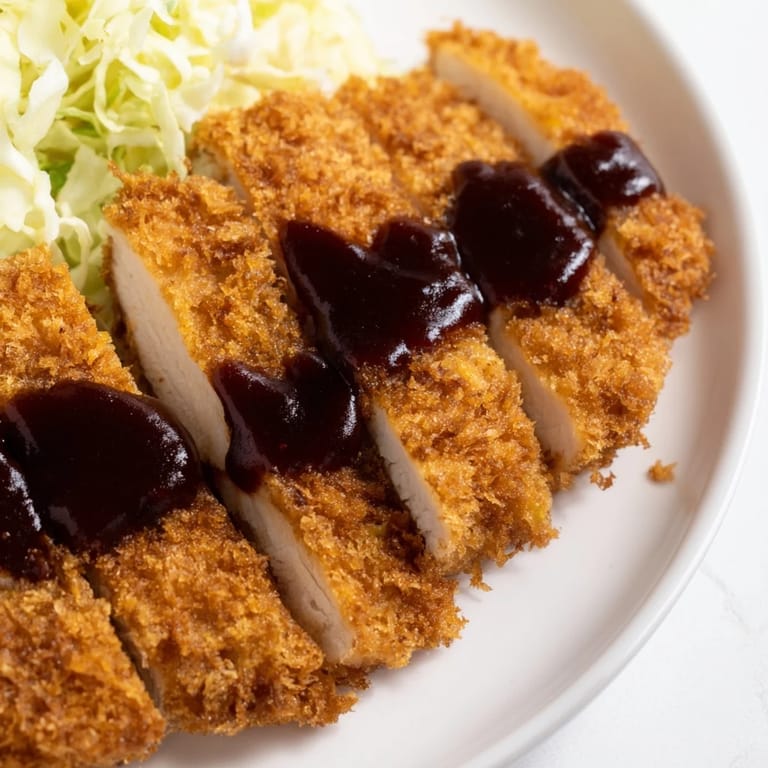
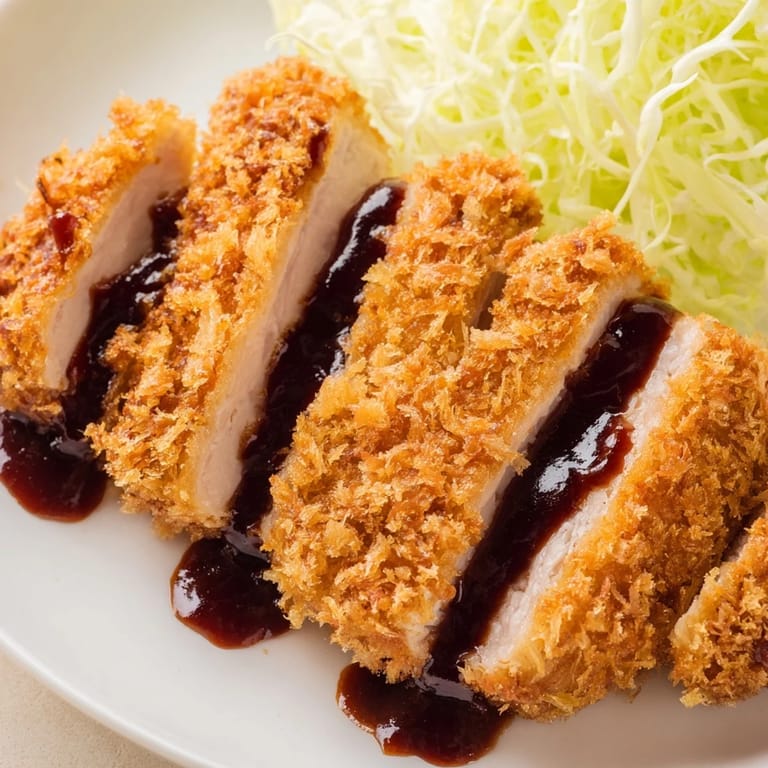
- Slice your chicken katsu into strips, arrange it on a bed of shredded cabbage if you're using it, drizzle or pour that glorious tonkatsu sauce over the top, add a lemon wedge on the side, and serve alongside steamed rice.
 Pin
Pin I learned the hard way that you can't rush this dish, and you can't overcrowd the pan either. The first time I tried to fry two cutlets at once, the oil temperature dropped so much that they absorbed more oil than I wanted, and they came out heavy instead of light and crispy. Now I fry them one or two at a time, and the difference is remarkable.
The Magic of Proper Oil Temperature
Getting the oil hot enough is the single most important thing, and I've learned to trust my instincts more than thermometers over the years. The sound changes when the oil is ready, and if you listen carefully, you'll hear a specific sizzle that tells you everything is going to be fine. It's the same temperature you'd use for making latkes or frying anything else in a shallow pan, so if you've done that before, you already know what you're listening for.
Why Panko is Essential
Panko breadcrumbs are coarser and less dense than regular breadcrumbs, which means they fry up crispier and airier instead of turning into a dense, compressed crust. The first time someone explained this to me, I thought they were being precious about bread, but once I tasted the difference, I understood that this wasn't snobbishness, it was just how things actually work. The larger flakes create little air pockets that get crispy in the oil, which is the whole appeal of katsu in the first place.
- If you absolutely cannot find panko, regular breadcrumbs will work, but you're signing up for a less crispy result.
- Store-bought panko works perfectly fine; there's no need to make your own unless you're feeling experimental.
- Some people toast their panko lightly before breading to get even more color and crunch, which is a clever trick if you want to take this even further.
Tonkatsu Sauce Variations
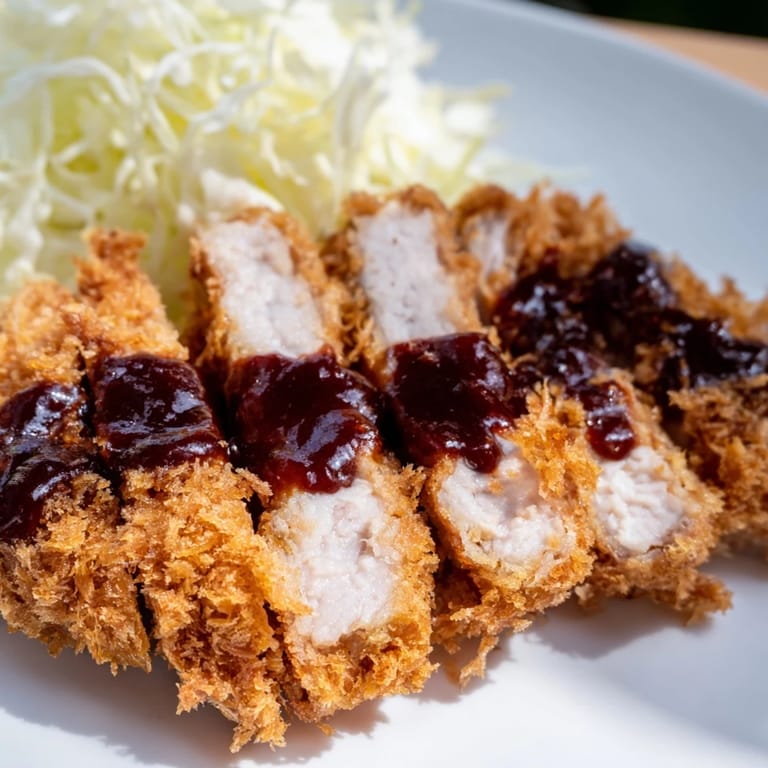
The sauce I've written here is the standard version you'll find everywhere, but I've made variations based on what was in my fridge or what I was craving. Sometimes I add a touch of ginger, sometimes a tiny bit of garlic powder, and once I was out of mirin so I used honey and actually preferred it. The base of ketchup, Worcestershire, and soy sauce is what makes it tonkatsu sauce, so as long as you keep those three, you can play with the rest.
 Pin
Pin Chicken katsu is comfort food that somehow feels elegant, which is maybe why it's become one of my go-to meals for both weeknight dinners and meals I'm proud to serve to people I want to impress. It's proof that you don't need fancy ingredients or complicated technique to create something genuinely delicious.
Recipe FAQ
- → What is the best way to achieve extra crispy chicken cutlets?
Letting the breaded cutlets rest for about 10 minutes before frying helps the coating adhere better and crisp up beautifully.
- → Can I substitute panko breadcrumbs with something else?
While panko gives a light, airy crunch, you can use regular breadcrumbs but the texture may be denser and less crispy.
- → How do I know when the chicken cutlets are cooked through?
Fry each side until golden brown, about 3-4 minutes per side. Ensure the internal temperature reaches 165°F (74°C) for safety.
- → What can I serve alongside the crispy chicken cutlets?
Shredded cabbage, lemon wedges, and steamed rice are traditional accompaniments that complement the dish well.
- → Is shallow frying preferred over deep frying for this dish?
Shallow frying uses less oil and still achieves a golden crust, making it a practical choice without sacrificing crispness.