 Pin
Pin The first time I served these crispy rice salmon stacks, I wasn't even sure they'd work—I'd been flipping through a fusion cookbook on a lazy Sunday afternoon when the image caught my eye, and I decided to improvise right then. My kitchen filled with the smell of toasted sesame oil and frying rice, and when that first golden square came out of the pan with a satisfying crunch, I knew I'd stumbled onto something special. My guests couldn't stop reaching for seconds, and honestly, neither could I.
I made these for a dinner party on a rainy October evening, and I'll never forget how my friend Sarah's face lit up when she bit into the contrast of crispy rice and buttery avocado—she kept asking what the secret was, convinced I'd spent hours on them. There's something magical about a dish that tastes this composed but feels this relaxed to make, and watching people slow down to actually savor each bite made the whole kitchen adventure feel worthwhile.
Ingredients
- Sushi rice: This is the foundation—regular rice won't give you that sticky, moldable texture or the subtle tang that balances the salmon.
- Rice vinegar, sugar, and salt: Together these season the rice and make it cling slightly, which is exactly what you want when you're frying squares of it.
- Vegetable oil: High heat demands a neutral oil that won't smoke or add competing flavors to your crispy exterior.
- Sushi-grade salmon: Buy it from a reputable fishmonger or sushi counter; the quality difference is noticeable and worth it.
- Soy sauce and sesame oil: These two create an umami backbone that makes the salmon taste more like itself.
- Sriracha: A touch of heat cuts through the richness of the mayo and avocado, though you can skip it if spice isn't your thing.
- Avocado: Choose one that yields gently to pressure but isn't mushy—you want creamy, not brown.
- Mayonnaise: Mix it with sriracha to create a sauce that tastes far better than store-bought spicy mayo.
- Sesame seeds, chives, and nori: These are the finishing touches that add texture, color, and that unmistakable sushi-bar feeling.
Tired of Takeout? 🥡
Get 10 meals you can make faster than delivery arrives. Seriously.
One email. No spam. Unsubscribe anytime.
Instructions
- Prepare the sushi rice:
- Rinse the rice under cold water while stirring with your fingers until the water runs clear—this removes excess starch that would make the rice gummy instead of fluffy. Cook it in equal parts rice and water, then let it steam off the heat for those final 10 minutes, which is when the grains fully absorb the moisture.
- Season and cool the rice:
- Fold the vinegar mixture into the warm rice with a gentle hand, as if you're folding whipped cream into mousse; rough stirring breaks the grains. Let it cool completely at room temperature so the seasonings set and the rice firms up slightly.
- Press and chill:
- Line an 8-inch square pan with parchment and press the rice into an even, compact layer—this helps the squares hold together when you fry them. Twenty minutes in the fridge gives it enough structure to survive the skillet.
- Make the salmon mixture:
- Combine your diced salmon with soy, sesame oil, and a squeeze of lime while it chills, which lets the flavors meld. The lime juice starts gently cooking the edges of the raw salmon, creating a subtle flavor shift that tastes more complete.
- Create spicy mayo:
- Whisk equal parts mayo and sriracha until smooth and vibrant red—it should taste like a kick of heat balanced by creamy richness.
- Fry the rice squares:
- Cut the chilled rice into 2-inch squares and fry them in hot oil until they're golden and make a satisfying crunch when you tap them with your spatula. Two to three minutes per side gives you that crispy exterior while keeping the inside tender.
- Assemble with intention:
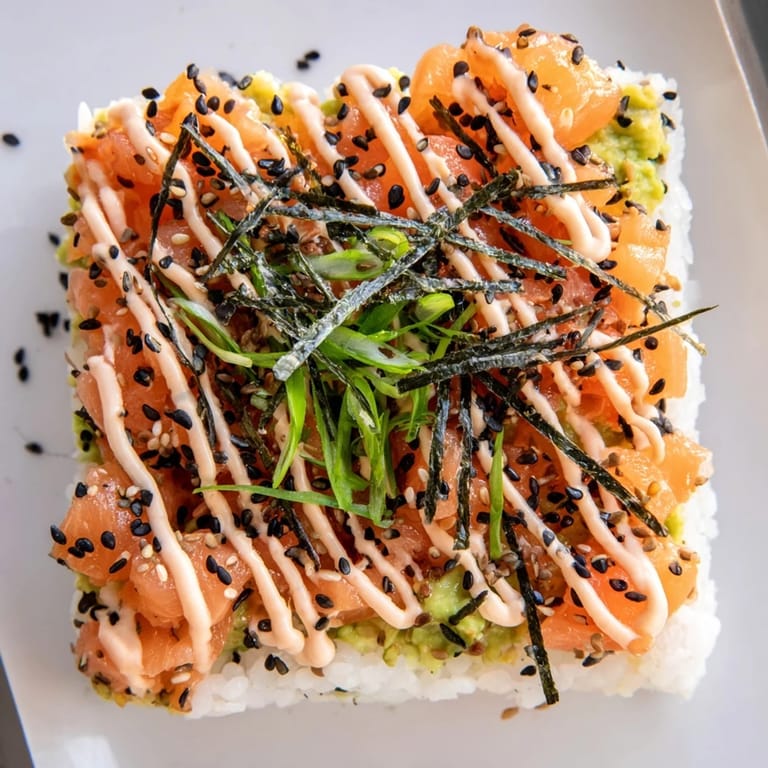
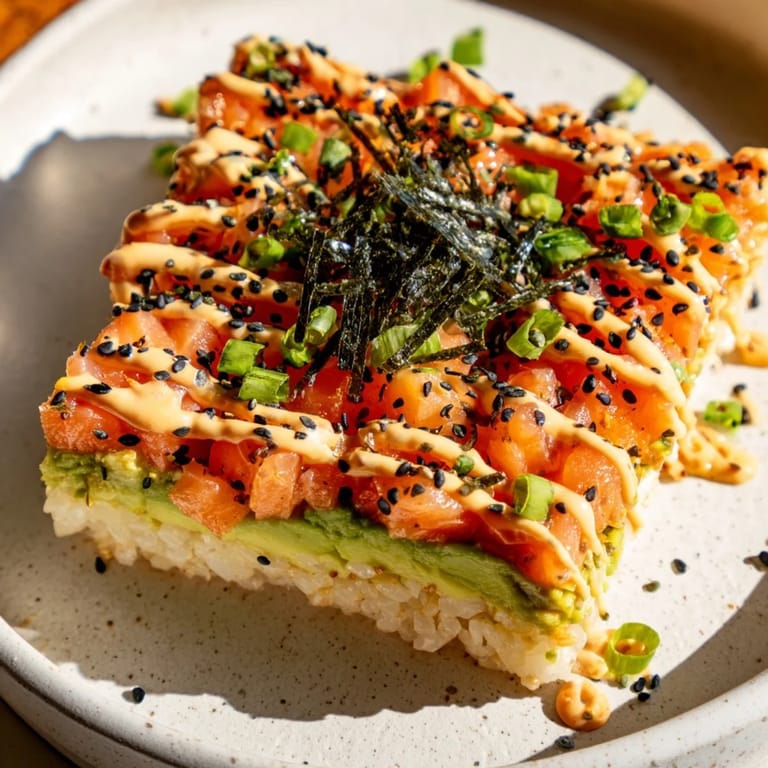
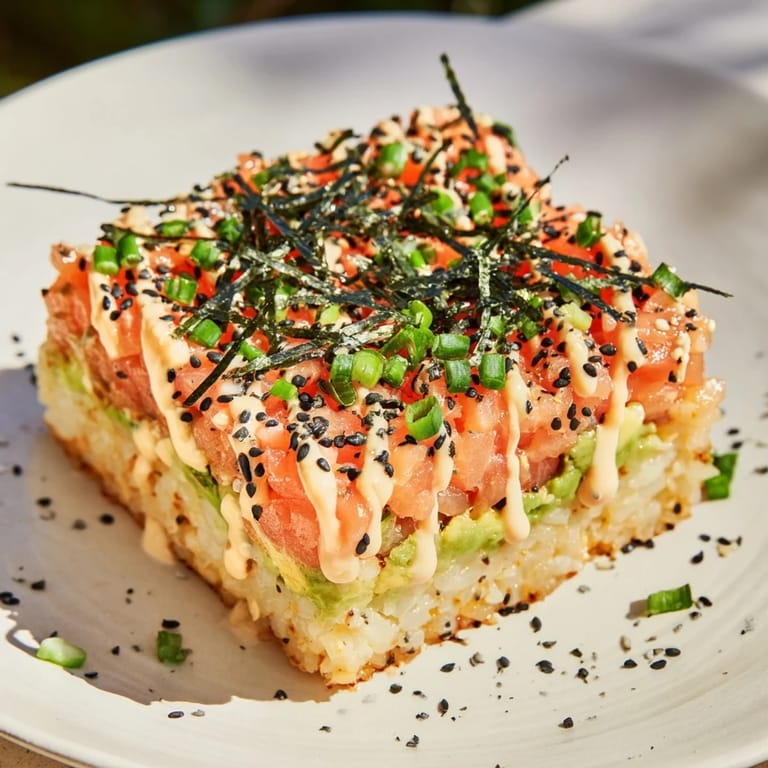
- Layer each warm rice square with avocado, salmon, a dab of spicy mayo, and a generous sprinkle of sesame seeds and chives. The warmth of the rice should still be there to soften the avocado slightly while keeping its shape.
 Pin
Pin There was an afternoon when I made these for my nephew who was going through a phase of refusing most foods, and somehow the fun of assembling his own stack—choosing how much sriracha, deciding if he wanted the nori—turned it into an adventure instead of a battle. Food tastes better when you've had a hand in building it, and I've made them that way ever since.
The Beauty of the Warm-and-Cool Contrast
This dish works because of temperature and texture playing against each other—the crispy, warm rice stays crispy for just long enough if you serve immediately, and the cool avocado and salmon provide relief and creaminess. It's the kind of balance that makes you want another bite, and then another, wondering each time how something so simple tastes so thoughtfully composed.
Making It Your Own
Once you have the crispy rice base down, the toppings are your playground—I've added thin cucumber slices on nights when I wanted something fresher, swapped in cooked shrimp when salmon wasn't available, and even experimented with a wasabi-mayo when I was feeling bold. The structure stays the same, but the dish bends to what you have in your kitchen and what you're craving that day.
Timing and Serving
These are best served within a few minutes of assembly, while the rice still has that satisfying snap and the toppings haven't begun to soften into the warmth. If you're cooking for a crowd, have all your components ready and assembled in bowls, then build the stacks in front of your guests—there's theater in that moment, and it ensures everything is at its best.
- Prep all ingredients before you start frying the rice squares so assembly takes only minutes.
- If you need to make these ahead, fry the rice and store it in an airtight container; warm it in a low oven just before serving.
- Leftover crispy rice squares are surprisingly good eaten plain as a snack the next day.
 Pin
Pin This dish has become my go-to when I want to feel like I've cooked something restaurant-quality without the stress, and it always reminds me that the best meals are the ones that taste impressive but feel easy to make. Serve it warm, serve it with intention, and watch how quickly it disappears.
Recipe FAQ
- → How is the crispy rice prepared?
Sushi rice is cooked, seasoned with vinegar mixture, chilled, then cut into squares and fried in vegetable oil until golden and crisp.
- → Can cooked salmon be used instead of raw?
Yes, canned or cooked salmon can be substituted for sushi-grade salmon if preferred for safety or convenience.
- → What gives the dish its spicy flavor?
Spicy sriracha is mixed into the salmon and also combined with mayonnaise to create a spicy mayo drizzle.
- → Are there any suggested toppings for extra freshness?
Pickled ginger or thin cucumber slices can be added to enhance freshness and complement the flavors.
- → What utensils are needed for preparation?
You’ll need a saucepan, mixing bowls, nonstick skillet, sharp knife, cutting board, and parchment paper.