 Pin
Pin There's something about a bowl of bright, crunchy vegetables that stops me mid-morning. I discovered this salad on a sweltering July day when my fridge felt full of promise but my energy felt completely flat. My neighbor brought over a container of fresh edamame from her garden, and I suddenly wanted to build something that tasted like vitality itself—cool, textured, and alive with flavor.
I made this for a potluck last spring and watched people genuinely linger over the salad bowl instead of just grabbing a spoonful. Someone asked if it was from a restaurant, and I felt that small kitchen victory wash over me—the kind that makes you want to cook for people more often.
Ingredients
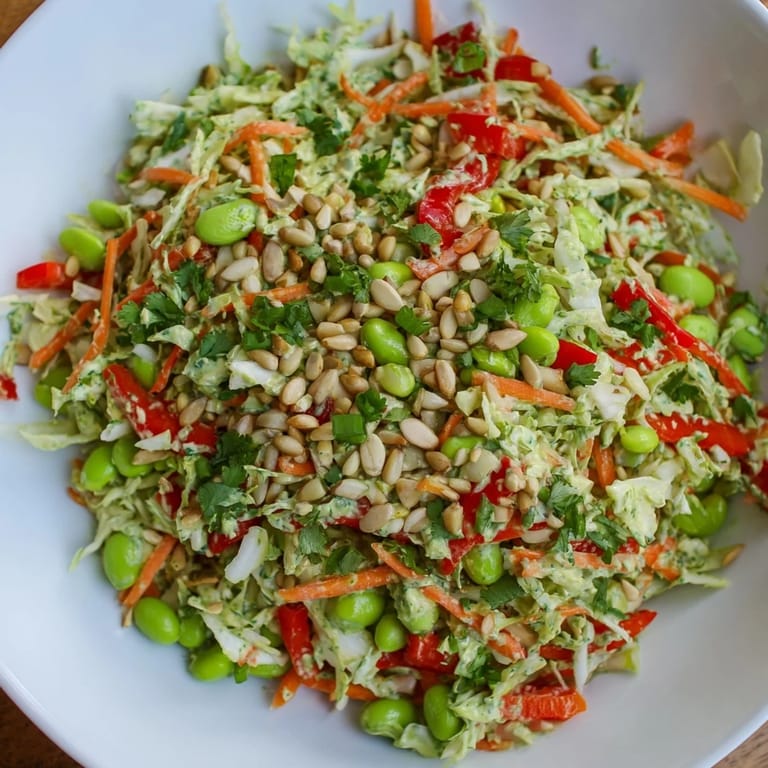
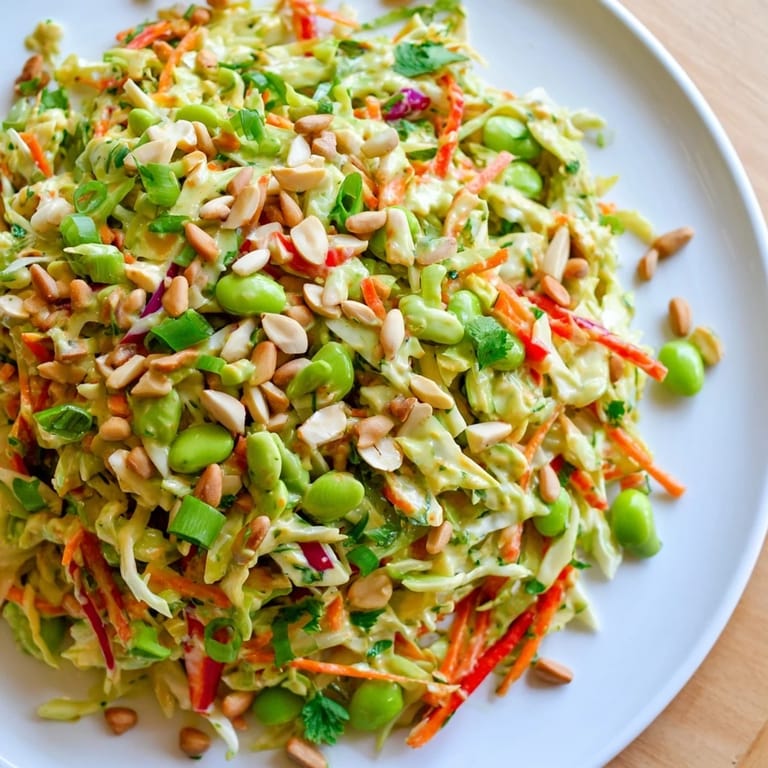
- Green cabbage, 4 cups shredded: The backbone of everything. Shredding it finely makes it tender without losing that satisfying crunch when fresh.
- Edamame, 1 cup shelled: These little beans bring protein and a buttery sweetness that balances the bright dressing beautifully.
- Carrots, 1 cup julienned: Thin slices catch the dressing better and feel more elegant on the plate than chunky pieces.
- Red bell pepper, 1/2 cup sliced: The sweetness and color pop are necessary here—don't skip it or use another color thinking it's the same.
- Green onions, 1/4 cup sliced: A whisper of sharpness that wakes up the whole bowl.
- Fresh cilantro, 1/4 cup chopped: If you're one of those people it doesn't taste like soap to, this is your secret weapon.
- Greek yogurt, 1/2 cup: Creamier and tangier than regular yogurt, it grounds the dressing without heaviness.
- Mayonnaise, 1/4 cup: Trust me on the ratio. Too much and you lose the herbaceous freshness; too little and it tastes thin.
- Fresh lemon juice, 2 tablespoons: Squeezed from real lemons. Bottled changes the whole character.
- Fresh parsley and chives, 2 tablespoons each: These aren't optional—they're what make it taste like actual green goddess, not just ranch's cousin.
- Fresh tarragon, 1 tablespoon optional: If you have it, use it. It adds an anise note that feels unexpectedly sophisticated.
- Garlic, 1 small clove minced: One clove. Not more. A heavy hand here ruins everything.
- Dijon mustard, 1 teaspoon: The emulsifier that holds everything together and adds a gentle sharpness.
- Salt and pepper to taste: Always finish dressing on the edge of under-seasoned, because the salad vegetables will bring their own subtle flavors.
- Sunflower seeds, 1/3 cup roasted salted: The crunch stays intact right until the end if you add these at the very last moment.
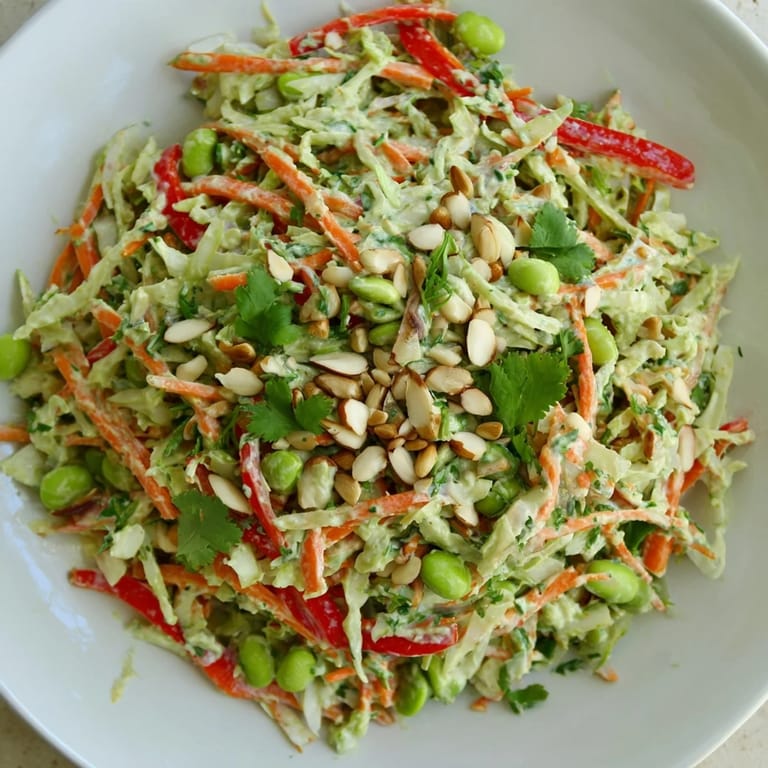
- Sliced almonds, 1/3 cup toasted: Toasting them yourself changes everything. Store-bought toasted almonds are fine, but fresh-toasted feel like a small act of love.
Tired of Takeout? 🥡
Get 10 meals you can make faster than delivery arrives. Seriously.
One email. No spam. Unsubscribe anytime.
Instructions
- Cook the edamame if needed:
- If you're starting with frozen beans, boil them for 3 to 4 minutes until they're tender but still have a gentle snap inside. Drain and cool them under cold running water—this stops them from cooking further and keeps them bright green.
- Gather your vegetables:
- Shred the cabbage as fine as you can manage without losing your patience. Slice everything else and toss it all together in a large bowl with the cooled edamame and cilantro.
- Build the dressing:
- In a separate bowl, whisk the yogurt, mayo, lemon juice, fresh herbs, garlic, and mustard together until it's smooth and pale green. Taste it and adjust the salt and pepper—this is your moment to make it taste exactly right.
- Bring it together:
- Pour the dressing over the vegetables and toss everything until every piece is coated. You want the cabbage to glisten but not swim in excess dressing.
- Top it right before serving:
- Sprinkle the sunflower seeds and almonds over top just before people eat. This keeps them crisp and gives the whole thing a finished look that feels intentional.
 Pin
Pin I remember my partner saying they'd never seen me actually enjoy eating salad before this one. That moment made me realize the difference between salad as obligation and salad as something you actually crave—it's all about texture, brightness, and not being afraid of flavor.
Why This Becomes a Favorite
There's real magic in how this salad works for almost any situation. Serve it chilled on a hot day, at room temperature as a side to grilled anything, or even pack it for lunch and find yourself genuinely excited when it's time to eat. It doesn't wilt into sadness like some salads do, and it never feels like you're being virtuous—it just feels like good food.
Make It Your Own
This is a template that invites playing. Some of my best variations came from what was actually in my vegetable drawer on a given day. I've added shredded beets for earthiness, swapped the almonds for toasted pumpkin seeds when a guest had a nut allergy, and once tossed in some diced avocado because I had one that needed using. The green goddess dressing is flexible enough to handle any of it.
Serving and Pairing Ideas
This salad is genuinely happy playing supporting role or taking center stage. It sits perfectly beside grilled fish, roasted chicken, or crispy tofu. I've also served it as a standalone lunch with crusty bread and felt completely satisfied. The dressing is herbaceous enough that it doesn't need anything heavy to feel complete.
- For potlucks, keep the crunchy elements separate and let people add their own—everyone gets them exactly as crisp as they prefer.
- If you're vegan, swap the Greek yogurt for cashew cream and use vegan mayo, and nobody will taste the difference in the dressing at all.
- Double or triple the dressing recipe and keep it in a jar for the rest of the week—it's stunning on grain bowls or roasted vegetables too.
 Pin
Pin This salad has become the thing I make when I want to feel like I'm taking care of myself without it feeling like deprivation. It's just honestly good.