 Pin
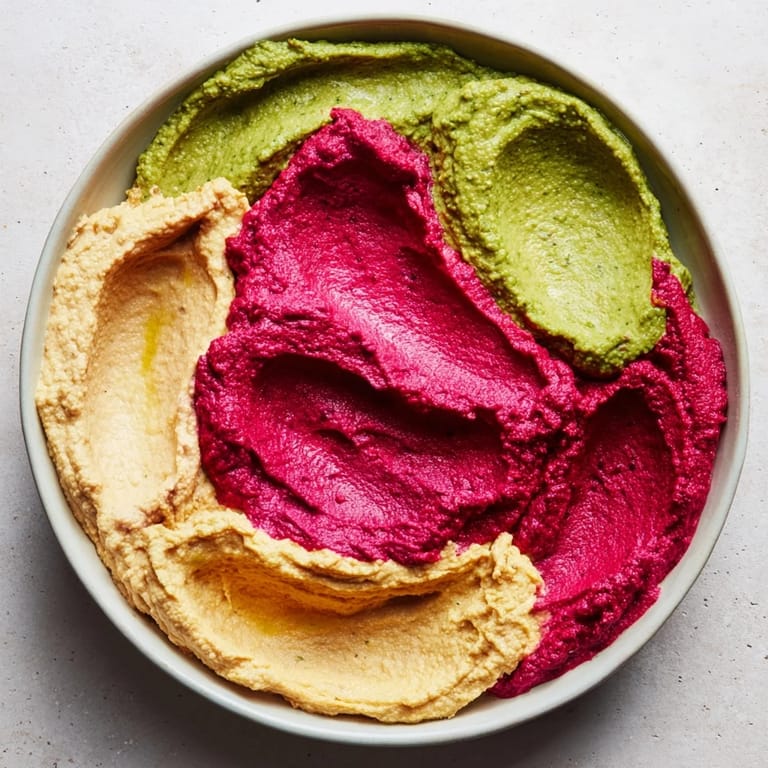
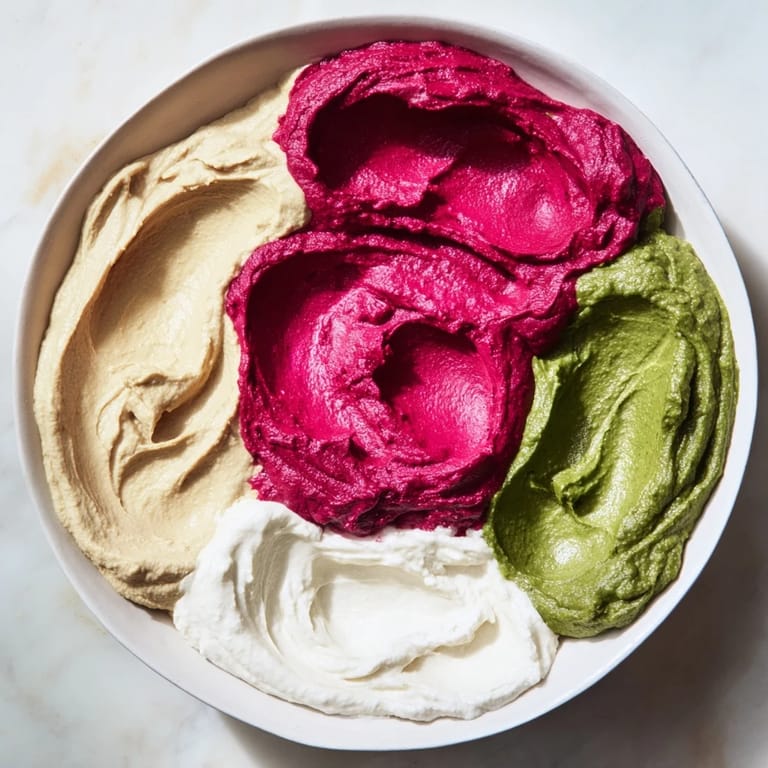
Pin I discovered the magic of color on a lazy Sunday afternoon when my friend texted asking what to bring to a dinner party. Standing in my kitchen with a handful of different hummus containers and an idea, I realized I could turn them into something that looked far fancier than the five minutes it took to make. The marble swirl was born—not from a recipe, but from the simple satisfaction of watching colors blend without actually blending together.
The first time I made this for a proper gathering, I remember my hands shaking slightly as I swirled the beet hummus into the classic one, worried I'd mess up the pattern. Instead, those imperfect swirls were exactly what made it look like actual marble stone. My sister laughed and said it looked like something from a fancy restaurant, and somehow that meant more than if I'd followed a recipe perfectly.
Ingredients
- Classic hummus: The neutral base that lets other colors shine without competing for attention.
- Beet hummus: This gives you that jewel-tone pink that makes people lean in closer to the platter.
- Spinach or basil pesto hummus: The earthy green that ties the whole thing together and tastes even better than it looks.
- Roasted red pepper dip: Warm and slightly sweet, it's the bridge between the earthiness and the brightness.
- Greek yogurt: Plain and creamy, it acts as your marble veining and helps soften the swirls without muddying the colors.
- Black sesame rice crackers: The textural contrast and visual drama of black against the pastels is everything.
- Beetroot crisps: They echo the beet hummus and feel like you thought through every detail.
- Spinach or kale crackers: Match these to your green dip for that color-coordinated moment.
- Classic water crackers: The neutral player that lets the dips be the star.
Tired of Takeout? 🥡
Get 10 meals you can make faster than delivery arrives. Seriously.
One email. No spam. Unsubscribe anytime.
Instructions
- Prepare your canvas:
- Grab a large, shallow platter that's light colored or white if you can—it makes the dip colors pop. If you're using a bowl, that works too, just lean it slightly so guests can see the marble effect from above.
- Dollop with intention:
- Spoon each dip onto the platter in a loose circle pattern, leaving gaps between them. Don't overthink placement; the randomness is what makes it look intentional.
- Swirl like you mean it:
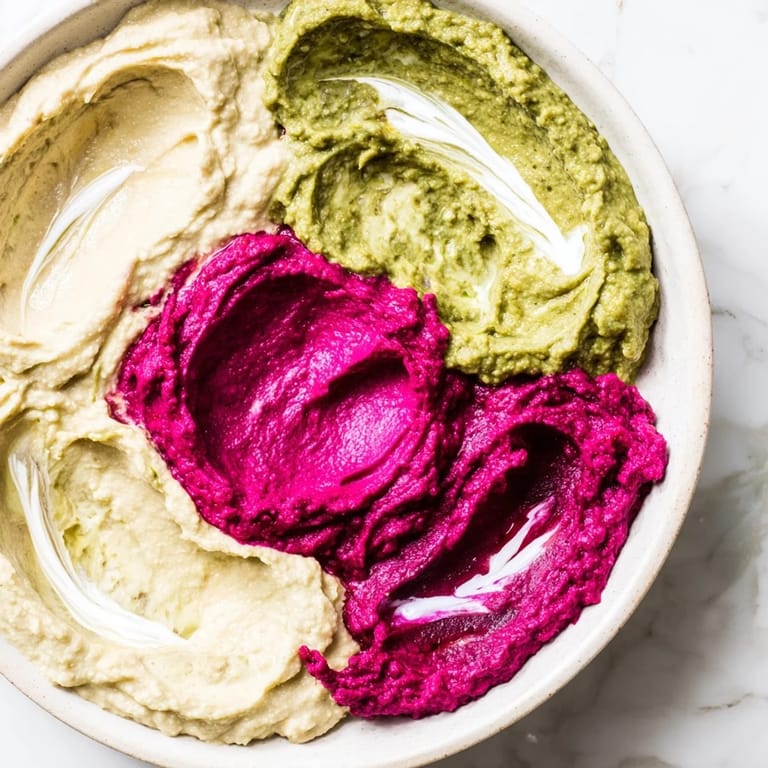
- Using a butter knife or the back of a spoon, gently drag one color into another in sweeping motions. The goal is visible color boundaries that blend slightly at the edges, not a completely mixed puree. This takes maybe thirty seconds of gentle work.
- Add the yogurt veins:
- Drizzle a few spoonfuls of plain Greek yogurt across the surface and swirl it in, letting it create natural-looking cracks like marble. This step is your secret weapon for making it look genuinely stone-like.
- Frame it:
- Arrange the crackers in groups around the perimeter, clustering each type with its matching dip color. Step back and look at it—you've just created edible art.
 Pin
Pin There was a moment at that first dinner party when someone took a photo of the platter before touching it, and suddenly I understood that food isn't just about taste—it's about the pause it creates. That marble swirl became the conversation starter, the thing people said they'd try to recreate at home, the moment that proved simple ingredients could become something unexpected.
Why This Works
The beauty of this recipe is that it breaks the rule that homemade food should feel casual and imperfect. Here, imperfection is the whole point. The dips don't need to taste remarkable individually—classic hummus and beet hummus are things most people can grab from a store shelf—but arranged this way, they become remarkable together. The colors do the heavy lifting, which means you can focus on the actual experience of making something that will make people happy.
The Cracker Coordination
Matching crackers to dip colors feels small, but it's the difference between a nice platter and a platter someone remembers. Black sesame crackers against the pink beet hummus, green crackers nestled near the spinach dip—these little visual echoes make the whole thing feel intentional and thoughtful. You're not just putting food on a board; you're creating a color story that guests can follow from dip to cracker to next bite.
Making It Your Own
The moment you feel comfortable with the basic technique, you can start experimenting with whatever dips you can find or make. A golden turmeric hummus adds warmth, a black bean dip deepens the tones, whipped feta scattered across the top becomes its own element. The technique of swirling and color coordination stays the same, but suddenly it's reflecting what you have on hand and what you're excited about this particular week.
- If you want to add fresh herbs, scatter them after swirling for color and a hint of flavor without disrupting the marble effect.
- A light dusting of paprika or sumac on top adds both visual interest and a tiny flavor hit.
- Make this vegan by using coconut yogurt or cashew cream instead of Greek yogurt—the white veining works just as well.
 Pin
Pin This recipe taught me that sometimes the simplest things—colored dips, arranged thoughtfully—can create a moment. It's the kind of dish that makes you feel like you've brought something special to the table, without the stress of actually cooking.
Recipe FAQ
- → How do I achieve the marbled swirl effect?
Gently layer different colored dips randomly on a platter, then lightly swirl them together using a butter knife or spoon, taking care not to overmix to keep distinct swirls.
- → What types of dips work best for this presentation?
Hummus varieties with different colors, roasted red pepper dip, and pesto hummus create vibrant contrasts that highlight the marbled effect beautifully.
- → Can I make this suitable for vegan diets?
Yes, swap the Greek yogurt with coconut yogurt for swirling and ensure crackers are free of animal products for a vegan-friendly option.
- → What crackers complement the dips visually and texturally?
Use a mix of black sesame rice crackers, beetroot crisps, spinach or kale crackers, and classic water crackers to echo the dip colors and offer varied textures.
- → How should I serve this dip platter?
Arrange dips with crackers around a large shallow bowl or platter, providing small spoons or spreaders for easy guest serving right at the gathering.