 Pin
Pin The first time I encountered shakshuka was at a tiny brunch spot in Jerusalem, where the owner kept bringing out steaming pans, each one different from the last. This spring version stumbled into my life years later when I found myself with an excess of fresh peas and broad beans from the farmers market, and I decided to throw them into my usual shakshuka pot. The way the sweet vegetables tamed the spicy sauce was such a happy accident that it's now become my go-to when spring arrives.
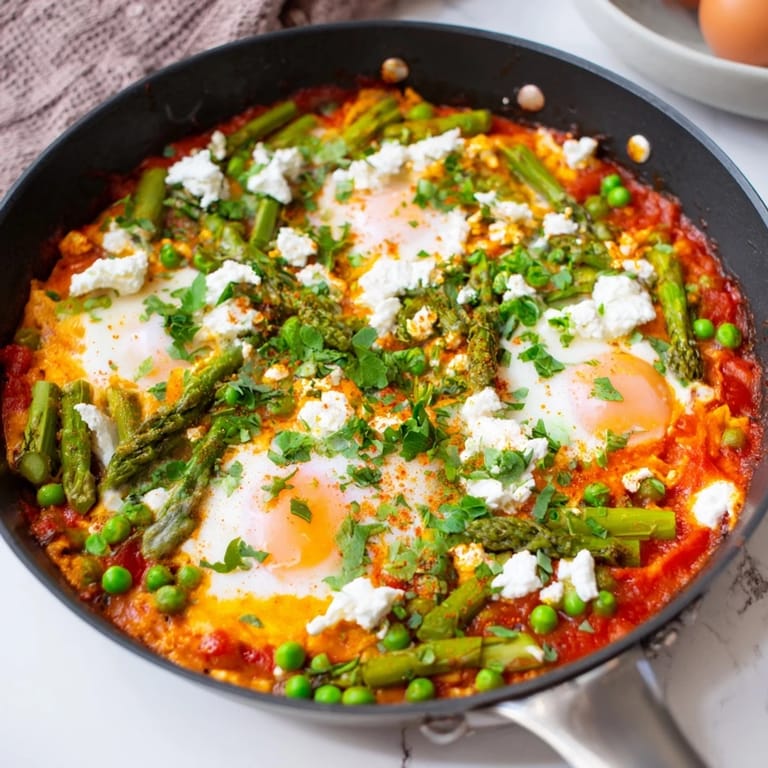
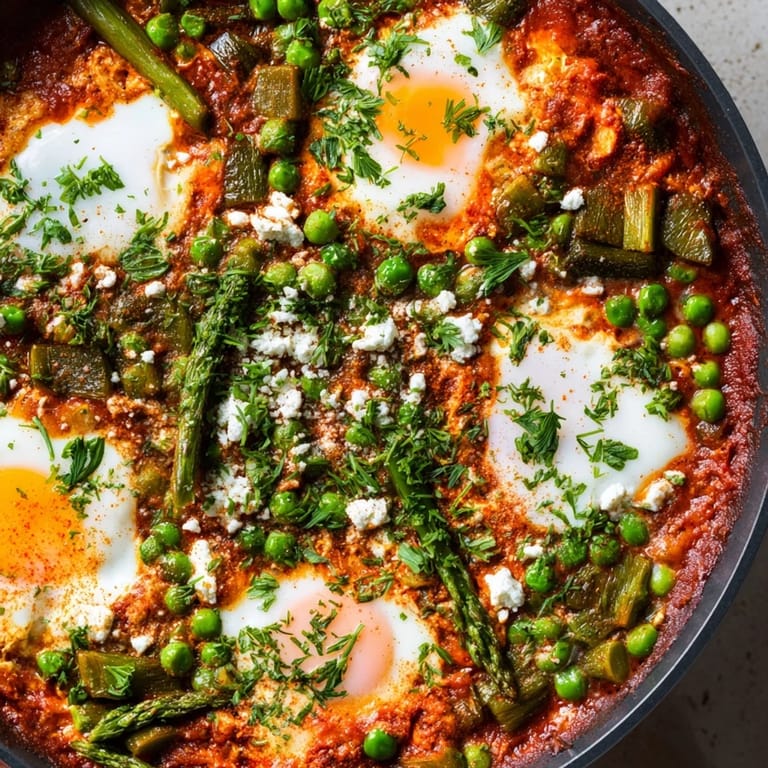
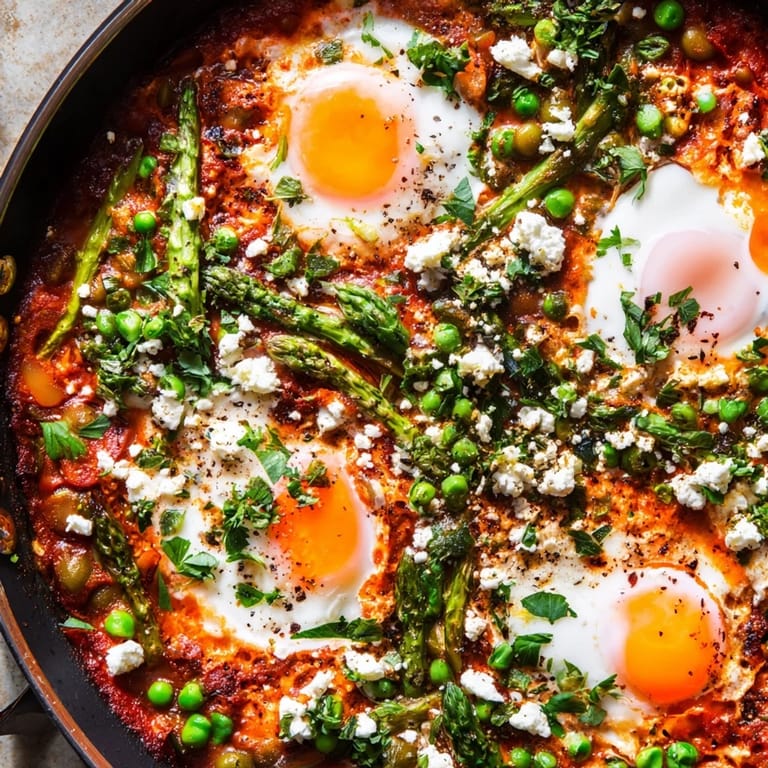
Last spring I made this for my sister's birthday brunch, and I'll never forget how everyone fell silent when I placed the steaming pan on the table. The eggs were perfectly set, that gorgeous golden yolk just waiting to be broken, and the bright green vegetables peeking through the red sauce made it look like something from a restaurant. My brother in law, who claims to hate vegetables, went back for thirds and then asked for the recipe before he even left the house.
Ingredients
- 1 tablespoon olive oil: A good quality extra virgin olive oil adds a lovely fruity base that ties all the Mediterranean flavors together
- 1 medium onion, finely chopped: The onion forms the aromatic foundation, so take your time chopping it evenly for consistent cooking
- 2 garlic cloves, minced: Fresh garlic is essential here, and mincing it finely ensures it distributes throughout the sauce without any bitter chunks
- 1 red bell pepper, diced: This adds natural sweetness and a beautiful contrast to the green vegetables, creating that vibrant multi color appearance
- 150 g asparagus, trimmed and cut into 2 cm pieces: Spring asparagus adds a lovely crunch and fresh flavor that pairs beautifully with the rich tomato base
- 150 g fresh or frozen peas: Even frozen peas work wonderfully here, adding bursts of sweetness throughout every bite
- 150 g fresh or frozen broad beans, shelled: These creamy beans have a buttery texture that complements the runny egg yolks perfectly
- 400 g canned chopped tomatoes or passata: I prefer whole peeled tomatoes that I crush myself for a rustic texture, but passata works for a smoother sauce
- 2 tablespoons tomato paste: This concentrates the tomato flavor and helps thicken the sauce so it clings to the vegetables
- 1 teaspoon ground cumin: Earthy and aromatic, cumin is the backbone spice that gives this dish its Middle Eastern character
- 1 teaspoon smoked paprika: The smokiness adds depth and complexity that you just cant get from regular paprika
- ½ teaspoon ground coriander: Bright and citrusy, coriander lifts the heavier spices and adds freshness to the sauce
- ½ teaspoon chili flakes optional: Start with less if you're sensitive to heat, but I find it needs just a tiny kick to balance the sweet vegetables
- Salt and black pepper, to taste: Taste and adjust as you go, remembering that the feta will add saltiness if you choose to include it
- 4 to 6 large eggs: Fresh eggs really matter here, as you'll see them in their whole state, so seek out the best quality you can find
- 2 tablespoons fresh parsley or mint, chopped: The herbs add a pop of fresh flavor that cuts through the richness of the eggs and sauce
- 60 g feta cheese, crumbled optional: Salty and creamy, feta is the perfect finish, though the dish is complete without it for a dairy free version
- Lemon wedges, to serve: A squeeze of fresh lemon right before serving brightens everything and makes the flavors sing
Tired of Takeout? 🥡
Get 10 meals you can make faster than delivery arrives. Seriously.
One email. No spam. Unsubscribe anytime.
Instructions
- Build your aromatic foundation:
- Heat that olive oil in your largest deep skillet over medium heat, then add the chopped onion and let it soften slowly for about 5 minutes until translucent and fragrant, taking your time to build a solid flavor base.
- Add the aromatics and spices:
- Stir in the minced garlic and diced red pepper, cooking for another couple of minutes until softened, then add all your spices and let them toast for just 1 minute until their perfume fills the kitchen.
- Create the sauce base:
- Pour in the tomatoes, tomato paste, and season with salt and pepper, then let everything simmer uncovered for about 10 minutes, stirring occasionally until the sauce thickens slightly and develops a deep red color.
- Introduce the spring vegetables:
- Add the asparagus, peas, and broad beans to the sauce, cover the pan, and cook for 7 to 8 minutes until the vegetables are just tender but still retain their lovely bright green color and fresh taste.
- Create the egg wells and finish cooking:
- Use the back of a spoon to make small indentations in the sauce, crack an egg into each well, cover tightly, and cook gently for 5 to 7 minutes until the whites are set but those golden yolks remain gloriously runny.
- Add the finishing touches:
- Remove from heat immediately to prevent overcooking, scatter with fresh herbs and crumbled feta if using, and bring the whole pan to the table with lemon wedges for everyone to squeeze over their portion.
 Pin
Pin What I love most about this dish is how it transforms a humble meal into something communal and special. The act of everyone gathering around the pan, dipping bread into the sauce and breaking those golden yolks, creates such a warm moment of connection. It's become my favorite way to welcome friends into my home, especially when the vegetables are at their peak and the windows are finally open to the spring air.
Making It Your Own
Once you've mastered the basic version, you'll discover endless ways to adapt this dish to whatever vegetables are in season. I've made it with summer zucchini and tomatoes, autumn butternut squash and kale, and winter spinach and roasted peppers. The key is maintaining that balance between the spiced tomato sauce and whatever vegetables you choose, always keeping them in bite sized pieces that will cook through in the same amount of time.
The Bread Situation
Don't underestimate the importance of good bread for this dish. I've learned through experience that sourdough, with its sturdy structure and tangy flavor, is exceptional for soaking up the sauce without falling apart. A warm pita or flatbread is more traditional and creates that authentic Middle Eastern experience, while a crusty baguette works in a pinch. Whatever you choose, toast it lightly so it maintains some integrity when dipped into those runny yolks.
Perfecting Your Technique
The most common mistake I see with shakshuka is rushing the sauce, but that step is absolutely worth the time it takes to develop those deep, concentrated flavors. Let the tomatoes bubble away, stir occasionally, and trust the process. Another thing I've learned is that making wells that are slightly deeper than you think necessary helps keep the eggs contained and prevents them from spreading too much across the surface.
- Use a pan with a lid that fits tightly to trap the steam needed to cook the eggs evenly
- Room temperature eggs will cook more evenly than cold ones straight from the refrigerator
- Let the pan rest for a minute or two after removing from heat before serving to help everything settle
 Pin
Pin There's something deeply satisfying about a dish that comes together in one pan but tastes like it took hours to perfect. This pea and broad bean shakshuka has become my spring signature, and I hope it finds its way into your regular rotation too.
Recipe FAQ
- → What vegetables work best in this shakshuka?
Fresh spring vegetables shine here—peas, broad beans, and asparagus provide tender texture and vibrant color. You can also add spinach, zucchini, or diced courgette for extra greens.
- → How do I know when the eggs are perfectly cooked?
Cook covered for 5-7 minutes until whites are completely opaque and set, but yolks still jiggle slightly when you gently shake the pan. The eggs continue cooking slightly off the heat.
- → Can I make this dish vegan?
Absolutely. Omit the eggs and feta cheese, then add a drained can of chickpeas or white beans during the vegetable simmering step for protein. The result remains hearty and satisfying.
- → What should I serve alongside this dish?
Warm pita bread, flatbread, or crusty sourdough are essential for scooping up the sauce. A simple green salad with lemon dressing balances the rich spiced tomato base beautifully.
- → How spicy does this shakshuka taste?
The base is mildly spiced with warm cumin, paprika, and coriander. Chili flakes add gentle heat—start with half teaspoon and adjust to your preference. Fresh chopped chili works too.
- → Can I use frozen vegetables instead of fresh?
Yes, frozen peas and broad beans work perfectly. Add them directly to the simmering sauce without thawing first. They may need 1-2 extra minutes to reach tenderness.