 Pin
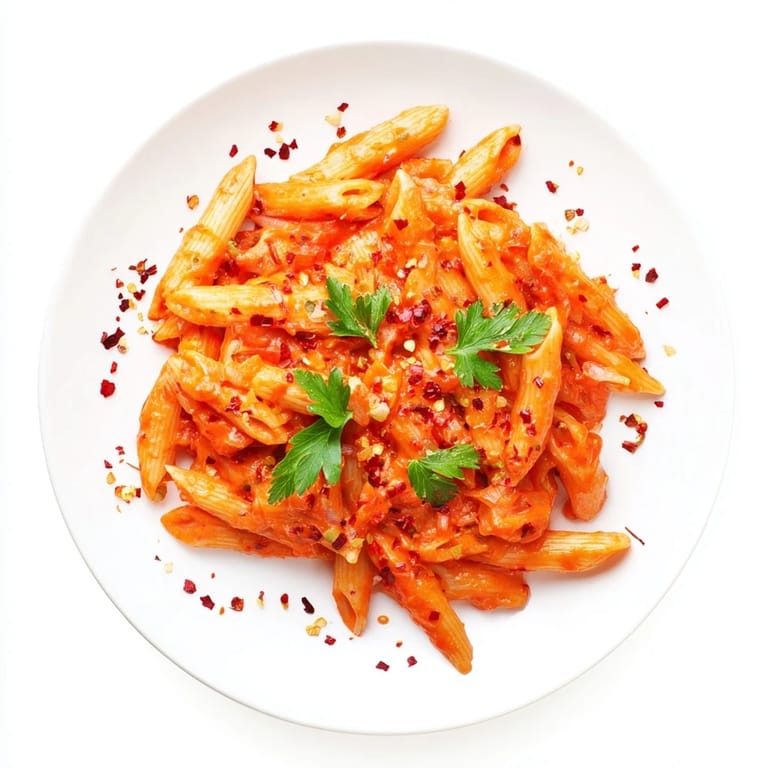
Pin There's something about watching garlic and chili dance in hot olive oil that makes you feel like you're cooking in Rome, not your own kitchen. The first time I made arrabbiata, I was trying to impress someone with minimal ingredients and maximum flavor, and somehow that constraint became the whole point. This dish taught me that sometimes the best recipes aren't complicated—they're just honest, letting each element shine without apology.
I made this for friends one evening when the fridge was almost bare, and someone asked if it was a restaurant recipe. I laughed because it's the opposite—it's what Roman home cooks have made for generations when they have nothing but time and a few good ingredients. That moment made me understand why this dish has survived centuries; it doesn't need improvement, just respect.
Ingredients
- Penne rigate: The ridges trap sauce beautifully, so don't swap it for smooth pasta unless you like your sauce sliding off.
- Extra virgin olive oil: This isn't background flavor—it's the base of everything, so use one you actually enjoy tasting.
- Garlic cloves: Slice them thin and watch carefully; they go from fragrant to bitter in seconds, so medium heat is your friend here.
- Red chili flakes: Start with less than you think you need—you can always add more heat, but you can't take it back.
- Peeled whole tomatoes: Canned is perfect here; they're picked at peak ripeness and require no judgment about what's in season.
- Sea salt and black pepper: Taste as you go; these two seasonings do the heavy lifting, so don't skip proper seasoning.
- Fresh flat-leaf parsley: Chop it just before serving so it stays bright green and alive-tasting rather than wilted and dull.
Tired of Takeout? 🥡
Get 10 meals you can make faster than delivery arrives. Seriously.
One email. No spam. Unsubscribe anytime.
Instructions
- Get the water salted and ready:
- Bring a large pot of salted water to a rolling boil—this is your only seasoning source for the pasta, so salt it like the sea. Once boiling, add penne and cook until al dente according to package instructions, then drain, reserving 1/2 cup of that starchy water for later.
- Build the sauce base:
- Heat olive oil in a large skillet over medium heat and add sliced garlic with chili flakes. Listen for a gentle sizzle and watch for the smell to shift from raw to warm and toasted—that takes about 1 minute, and the moment it smells perfect, you stop, because another 30 seconds turns it bitter.
- Let the tomatoes simmer:
- Pour in crushed tomatoes with salt and pepper, then step back and let them bubble gently for 12-15 minutes, stirring occasionally. The sauce will darken slightly and thicken just enough to coat the back of a spoon, which means the water has cooked off and the flavors have deepened.
- Bring it together:
- Add drained penne to the sauce and toss everything together, adding splashes of reserved pasta water until the sauce coats each piece without pooling at the bottom. The starch in that water is magic—it helps the sauce cling to the pasta instead of just sliding off.
- Finish with care:
- Remove from heat, stir in chopped parsley so it stays green and fresh, then drizzle generously with good olive oil. That final drizzle isn't just garnish; it adds richness and brings the whole dish into focus.
 Pin
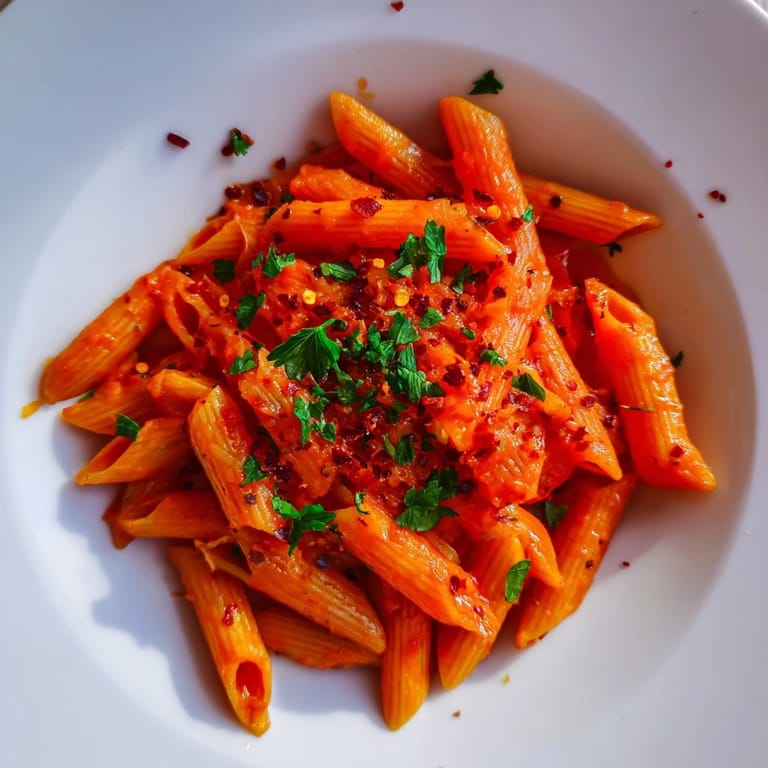
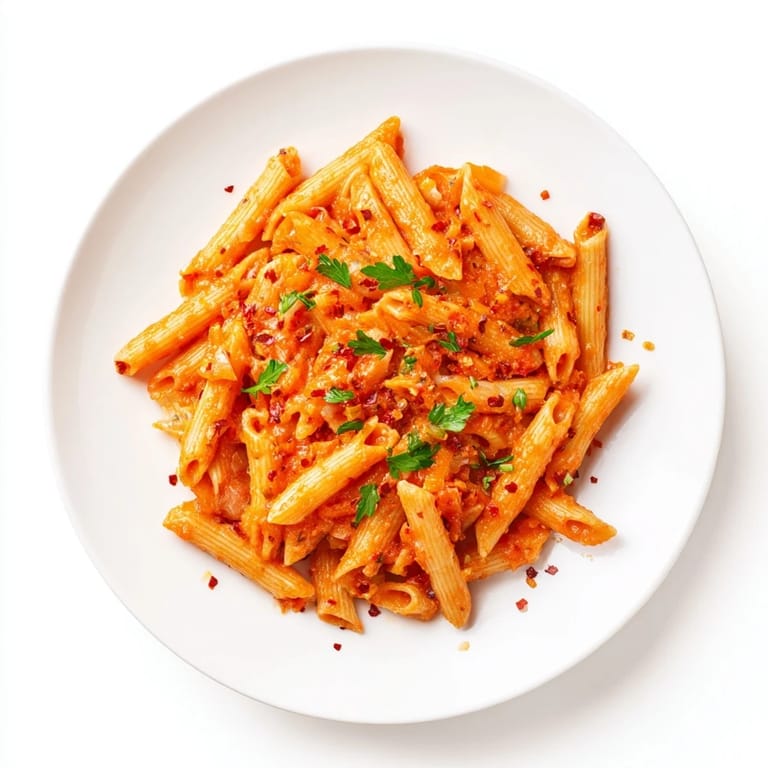
Pin There's a moment when you plate arrabbiata and the steam rises up carrying that chili and garlic scent, and everyone around the table suddenly stops talking. That's when you know it's working—not because it's fancy, but because it's honest and alive.
Why This Dish Became a Kitchen Staple
Arrabbiata proved to me that limitations can be gifts. With just five ingredients in the sauce, there's nowhere to hide, which means every choice matters. I stopped overthinking recipes after this one and started trusting that simplicity, when done right, beats complexity every time.
The Heat Level Question
The name arrabbiata means angry in Italian, referring to the heat, but angry doesn't have to mean painful. I've learned to taste the sauce before adding pasta and adjust the chili flakes depending on my mood and who's eating. Some nights I want to feel the burn; other nights I want the warmth without the punch, and this recipe accommodates both without apology.
Pairing and Serving
Traditionally, Romans serve this without cheese, letting the sauce speak for itself, though a light grating of Parmesan won't offend anyone. A crisp white wine like Verdicchio or a light red like Chianti cuts through the richness beautifully and makes the meal feel intentional rather than rushed.
- Skip cheese entirely the first time you make this—experience it as it was meant to be, then decide if you want to change it.
- Serve immediately while the pasta is hot and the parsley is still bright; waiting five minutes changes everything about how it tastes.
- If you have leftovers, store them separately; reheating them together often makes the pasta mushy, so warm the sauce alone and toss with pasta just before eating.
 Pin
Pin Arrabbiata is proof that great cooking isn't about having a full pantry; it's about knowing what you have and respecting it enough to let it shine. Make this often, and it becomes not just a recipe but a moment you return to whenever life gets too complicated.
Recipe FAQ
- → What type of pasta is best for this dish?
Penne rigate is ideal as its ridges hold the spicy tomato sauce well, enhancing every bite.
- → How can I adjust the spiciness level?
Modify the amount of red chili flakes used; reduce for milder heat or increase for bold spiciness.
- → Can I use fresh tomatoes instead of canned?
Yes, ripe fresh tomatoes can be crushed and used, though canned tomatoes provide consistent texture and flavor.
- → What is the purpose of reserving pasta water?
Adding some reserved pasta water helps loosen the sauce and allows it to cling smoothly to the pasta.
- → How long should the sauce simmer?
Simmer the sauce uncovered for 12 to 15 minutes until slightly thickened and flavors meld beautifully.
- → Is this dish suitable for a dairy-free diet?
Absolutely, it uses no dairy ingredients and pairs well with plant-based toppings or none at all.