 Pin
Pin The first time I watched my grandmother fold pelmeni, her hands moved with such practiced ease that I couldn't follow where one dumpling ended and the next began. She'd learned this from her mother in Saint Petersburg, and I was mesmerized by how she'd pinch the little crescents into those perfect ear-like shapes without even looking down. Years later, when I finally attempted them myself, my kitchen filled with the most wonderful smell of simmering meat and broth, and I understood why this dish had survived generations and oceans.
I made a double batch for a dinner party once, convinced I'd overprepared, but my guests went through them so quickly that I found myself frantically boiling the last frozen batch while everyone was already reaching for seconds. That's when I realized pelmeni isn't just food—it's the kind of dish that makes people linger at the table, asking for the recipe, wanting to understand the story behind it.
Ingredients
- All-purpose flour: The foundation of your dough, and I learned the hard way that measuring by weight rather than scooping from the bag prevents a stiff, dense result.
- Cold water: This keeps your dough tender and workable, making the folding much more forgiving than I expected.
- Egg: Binds everything together and creates a silky texture that helps the dough stretch thin without tearing.
- Salt: Essential in both dough and filling to wake up all the flavors.
- Ground pork and beef: The two meats together create a more interesting filling than either alone—the beef adds richness while the pork keeps things tender.
- Onion: Grate it finely so it releases its moisture into the filling, seasoning it from within.
- Garlic: A gentle presence that doesn't overpower but adds warmth to every bite.
- Black pepper: A generous hand here makes all the difference in the filling's character.
- Sour cream: The creamy, tangy finish that transforms hot pelmeni into something truly special.
- Fresh dill: Optional but worth seeking out—it's the final touch that feels both humble and elegant.
Tired of Takeout? 🥡
Get 10 meals you can make faster than delivery arrives. Seriously.
One email. No spam. Unsubscribe anytime.
Instructions
- Create your dough:
- Combine flour and salt, then add the egg and water gradually, kneading until the dough becomes smooth and elastic—about 8 to 10 minutes of patient work. Let it rest wrapped in plastic wrap for 20 minutes; this step relaxes the gluten and makes rolling so much easier than if you rush it.
- Mix the filling:
- Combine both meats with the grated onion, garlic, salt, pepper, and cold water, stirring until the mixture becomes sticky and holds together. This texture is crucial—it means the filling will stay moist inside each dumpling as it cooks.
- Roll and cut:
- On a lightly floured surface, roll the dough to about 2mm thickness—thin enough to cook quickly but thick enough not to tear. Cut out circles with your round cutter and work with a few at a time so the dough doesn't dry out.
- Fill and fold:
- Place a small teaspoon of filling in the center of each circle, fold in half to form a half-moon, and pinch the curved edge firmly to seal. Then bring the two pointed corners together and pinch them as well, creating that distinctive pelmeni shape that's both functional and beautiful.
- Boil until they float:
- Drop the pelmeni into salted boiling water in small batches, stirring gently at first so they don't stick to the bottom. They're done when they float to the surface and you can tell the filling is cooked through—about 5 to 7 minutes total.
- Serve with generosity:
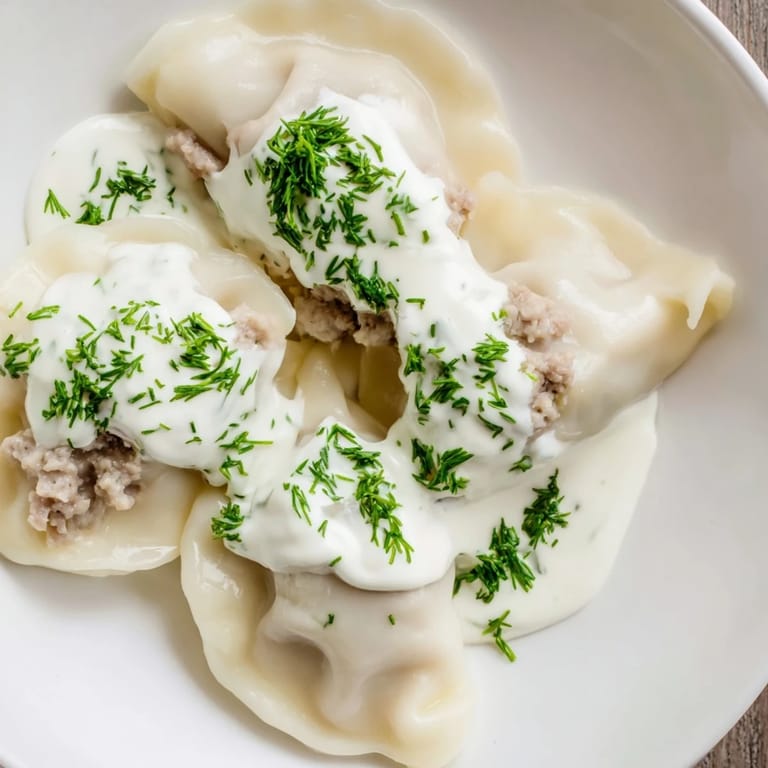
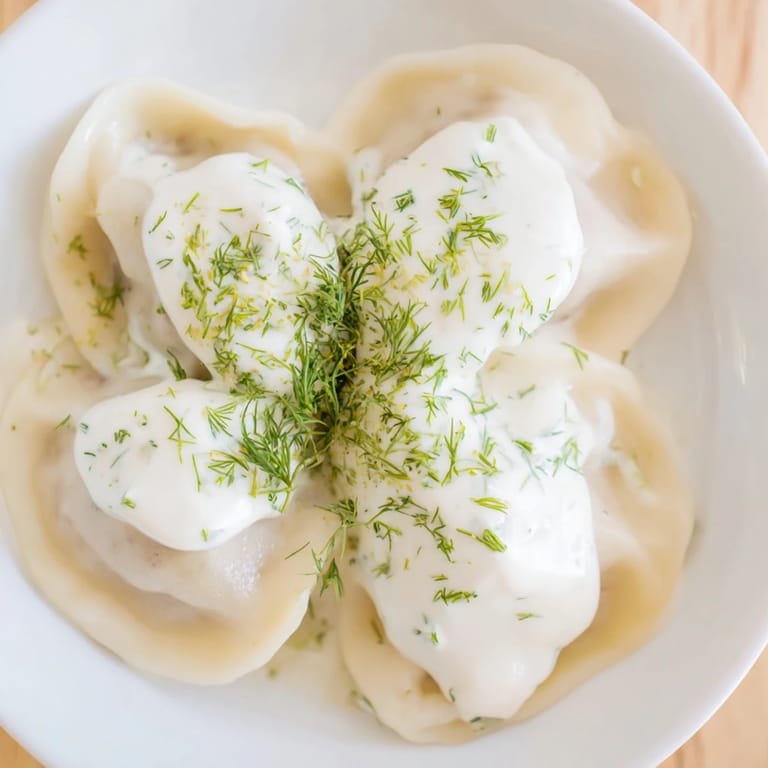
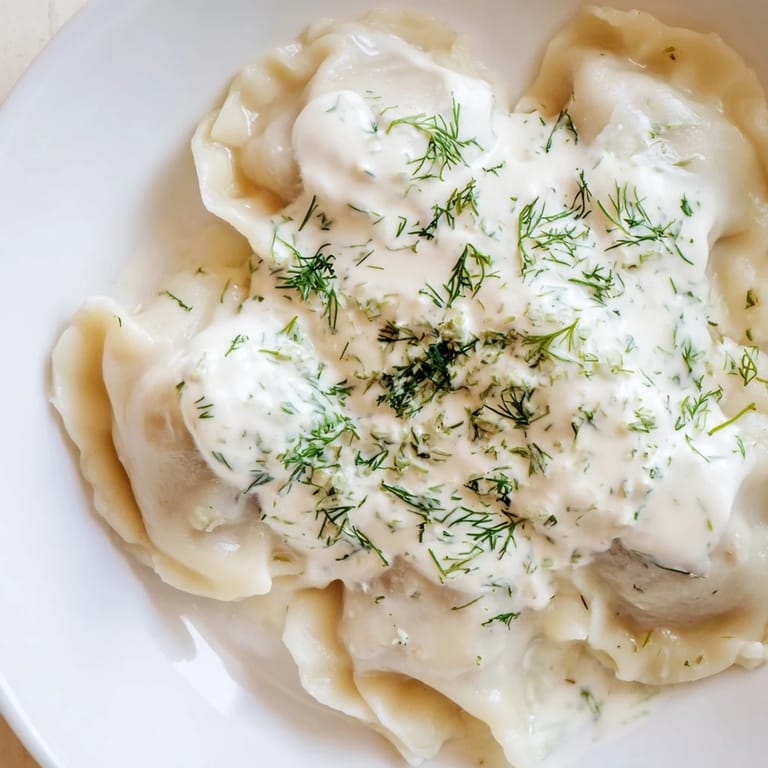
- Scoop them out with a slotted spoon and pile them into a warm bowl, then top with a generous dollop of sour cream and a sprinkle of dill. The warmth of the pelmeni will slightly warm the sour cream into a luscious sauce.
 Pin
Pin There's something almost meditative about the rhythm of folding these dumplings, and I've found that the repetitive motion somehow makes people calm and present in the kitchen together. When my neighbor stopped by unexpectedly and found me surrounded by little crescents of dough, she ended up staying for hours, learning the fold, and we didn't say much—just worked side by side until we'd made enough for both our families.
The Art of the Perfect Fold
The folding technique is genuinely a skill that improves with each dumpling you make, and there's no shame in the first batch looking a bit wonky. I've learned that pressing firmly along the sealed edges prevents any filling from leaking out during cooking, and that the classic double-pinch technique—first the curved edge, then the corners together—isn't just decorative. It actually creates a stronger seal that keeps everything contained.
Why Freezing Makes Life Easier
Making a huge batch and freezing them is one of those kitchen strategies that feels luxurious because you're giving yourself future gifts. The beauty of frozen pelmeni is that you can cook them straight from the freezer without thawing—just drop them into boiling water and add about 2 extra minutes to the cooking time, and they emerge just as tender as fresh ones.
Variations Worth Trying
While the classic meat filling is perfection, I've experimented with adding a tiny pinch of nutmeg to the mixture, which brings an almost mysterious warmth that my Russian friends actually smiled at—they said it reminded them of versions their babushkas made in different regions. You could also try ground lamb instead of pork, or even a vegetarian version with mushrooms and potato if you're feeding mixed diners.
- A splash of vinegar or melted butter alongside the sour cream adds traditional complexity that deepens the whole experience.
- Some people add extra sour cream mixed with a bit of beef broth to create a sauce rather than just a topping, which feels luxurious on a cold evening.
- Make extra filling and freeze it separately—you might find yourself craving these on a random Tuesday and grateful you planned ahead.
 Pin
Pin Pelmeni taught me that some of the most nourishing dishes are also the simplest, and that the real magic happens when you slow down enough to notice the small details. Whether you're making these for a special dinner or a quiet Tuesday night at home, there's something deeply satisfying about serving food you've folded with your own hands.
Recipe FAQ
- → What type of dough is best for pelmeni?
A tender but elastic dough made from all-purpose flour, egg, salt, and cold water works best to hold the filling securely and achieve that delicate texture.
- → How do you prevent pelmeni from sticking while boiling?
Adding salt to the boiling water and stirring gently during cooking helps prevent the pelmeni from sticking to each other or the pot.
- → Can I prepare pelmeni ahead of time?
Yes, pelmeni can be frozen before cooking. Freeze them on a tray first, then store in a sealed bag for up to three months to maintain freshness.
- → What meats are traditionally used in pelmeni filling?
Ground pork and beef combined with finely grated onion and garlic create a flavorful, juicy filling classic to Russian dumplings.
- → What sauces complement pelmeni well?
Sour cream with fresh dill is traditional, but melted butter or vinegar also add complementary flavors depending on personal taste.
- → How thick should the dough be rolled?
The dough should be rolled out to about 1/16 inch (2 mm) thickness to ensure delicate yet sturdy dumplings.