 Pin
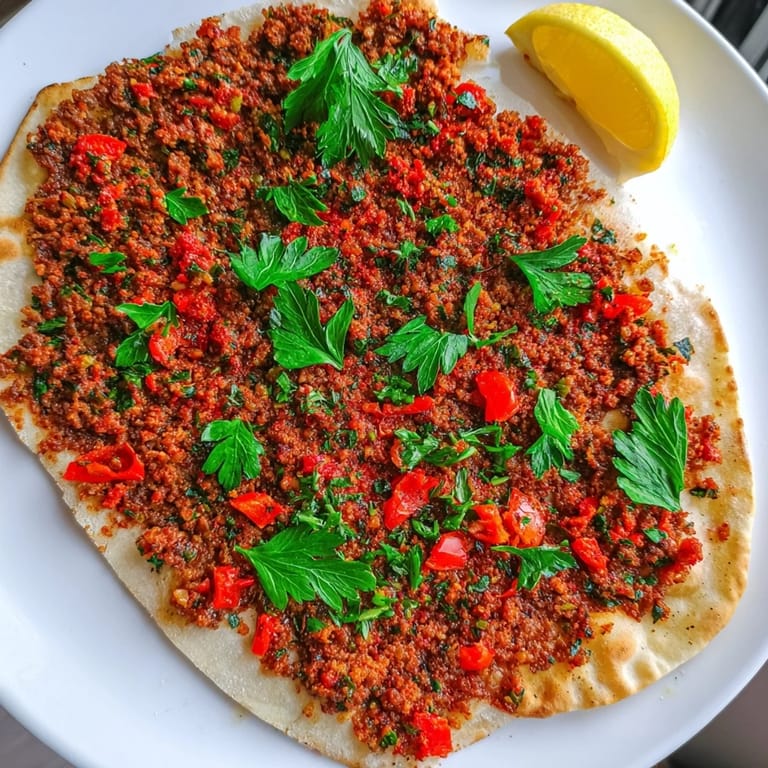
Pin The first time I encountered lahmacun was at a small Istanbul street stall on a rain-soaked evening, where a vendor worked with such practiced speed that the flatbreads emerged from the oven in what felt like seconds. I watched him stretch the dough impossibly thin, spread that fragrant meat mixture with the back of a spoon, and slide it onto a stone that glowed like an ember. Years later, I finally understood why those simple-looking rounds tasted so remarkable—it's all about the balance of heat, thinness, and that perfectly seasoned topping hitting warm dough.
I made these for friends on a Tuesday night when I wanted to prove that restaurant-quality Turkish food didn't require a wood-fired oven or impossible skill, just good timing and hot heat. Watching them fold the lahmacun around fresh herbs and squeeze lemon over the edge—that moment when someone bites in and their eyes widen—that's when cooking feels like magic.
Ingredients
- All-purpose flour (300 g): Choose a brand you trust for dough structure; it should feel slightly stretchy when you knead it.
- Warm water (180 ml): Too hot and it kills the yeast, too cool and nothing happens—aim for the temperature of a comfortable bath.
- Instant yeast (1 tsp): This small amount creates enough lift without overpowering the dough with yeasty flavor.
- Sugar and salt (1 tsp each): Sugar feeds the yeast, salt strengthens gluten—both matter more than they seem.
- Olive oil (2 tbsp for dough, 2 tbsp for topping): Good olive oil makes a real difference here, bringing richness to both components.
- Ground lamb or beef (300 g): Lamb gives a deeper, more authentic flavor, but beef works beautifully if that's what you have.
- Fresh vegetables (onion, garlic, tomato, bell pepper): Finely dicing these matters—they should almost dissolve into the meat mixture as it cooks.
- Tomato paste (2 tbsp): Concentrate of flavor that binds everything together.
- Fresh parsley (2 tbsp): Added at the end to keep its brightness and prevent it from turning dark during baking.
- Spices (cumin, paprika, black pepper, chili flakes): Cumin and paprika are non-negotiable for authentic taste; chili flakes are optional but they add a whisper of heat.
- Lemon wedges, fresh herbs, sliced onions, and sumac: These finishing touches turn lahmacun from good to unforgettable.
Tired of Takeout? 🥡
Get 10 meals you can make faster than delivery arrives. Seriously.
One email. No spam. Unsubscribe anytime.
Instructions
- Mix and knead the dough:
- Combine flour, sugar, and salt in a bowl. Dissolve the yeast in warm water, wait a minute so it's fully awake, then pour it with the olive oil into the dry ingredients. Mix until shaggy, then knead for 5–7 minutes until the dough becomes smooth and slightly elastic—you'll feel it transform under your hands.
- Let the dough rise:
- Cover the bowl loosely with plastic wrap or a damp cloth and set it somewhere warm for 30 minutes, until it's visibly puffy and almost doubled. You can peek after 20 minutes; there's no shame in checking.
- Build the meat topping:
- In a separate bowl, combine all the topping ingredients and mix thoroughly with your hands or a wooden spoon until everything is evenly distributed and the mixture feels almost paste-like. Taste a tiny pinch and adjust the salt and spice if needed—remember the dough is mild, so the topping should have personality.
- Heat your cooking surface:
- Preheat your oven to its maximum setting—ideally 250°C (480°F)—and place a pizza stone or baking tray inside to heat for at least 10 minutes. This radiant heat is what creates those impossibly crispy edges.
- Shape and top:
- Divide the risen dough into 8 equal pieces. On a lightly floured surface, take one piece and stretch it gently into a thin oval or round about 20 cm across—thinner than you think it should be is usually right. Spread a thin, even layer of meat mixture over the surface, leaving a small border.
- Bake with confidence:
- Carefully transfer each lahmacun to the preheated stone or tray (work in batches if needed; don't crowd the oven). Bake for 6–8 minutes—watch for the edges to turn golden and crispy while the meat topping loses its raw shine.
- Finish and serve:
- Remove from the oven immediately and top with fresh parsley, a squeeze of bright lemon, and optional sliced onions and sumac. Serve right away while the dough is still steaming and crisp.
 Pin
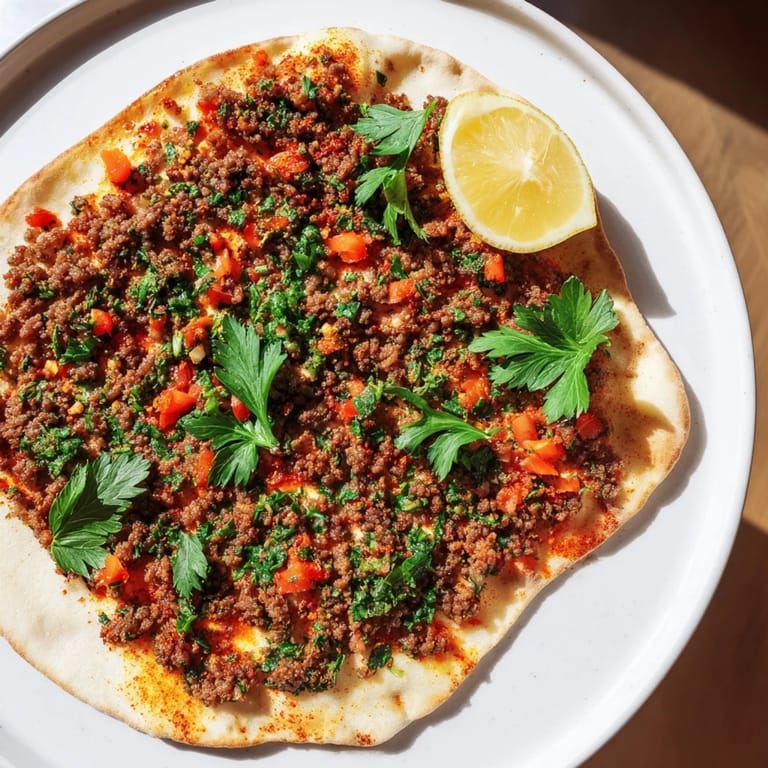
Pin There's something about watching someone tear into their first warm lahmacun, folding it around fresh mint and squeezing lemon into the spiced meat—it stops being just food and becomes a moment of connection. That's when you realize why this simple flatbread has survived centuries and crossed continents.
The Secret to Crispy Edges
The stone or tray needs to be genuinely hot before the lahmacun touches it, otherwise you're just baking it on warm metal and the bottom will never achieve that shatter-crisp texture that makes the dish. I learned this the hard way by being impatient, and now I always give the oven extra time to preheat. The sizzle you hear when you transfer the lahmacun is your confirmation that everything is right—if it doesn't sizzle, wait a few more minutes and try again.
Why Thin Dough Matters
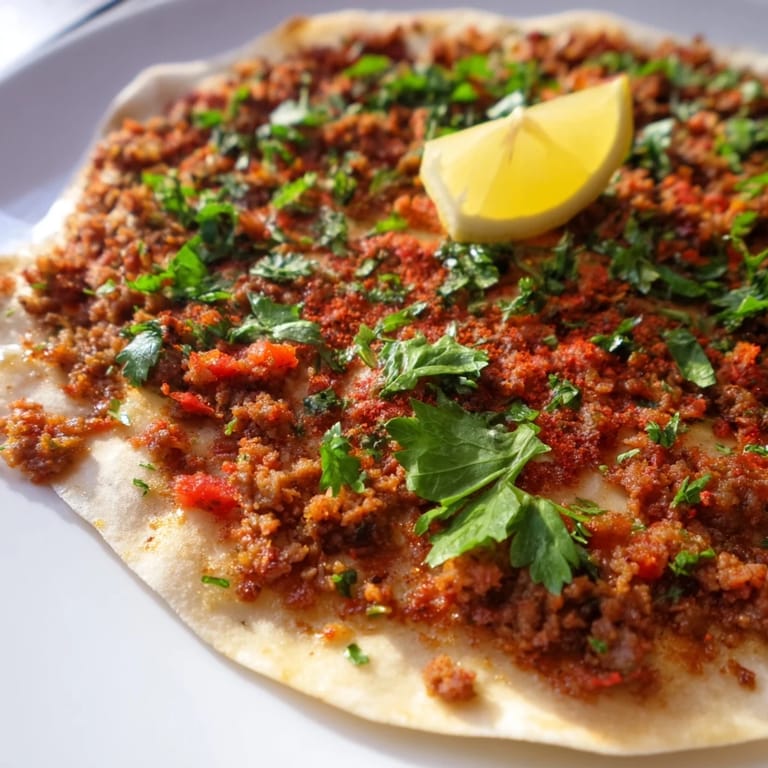
Lahmacun isn't bread; it's a vehicle for the topping, and that means the dough should be delicate enough to fold or roll. When I first made these, I rolled the dough too thick out of nervous habit, and they came out chewy instead of crispy. Now I stretch each piece until I can almost see light through it, which sounds dramatic but isn't quite that thin—just close. The dough will still cook all the way through because the oven is so hot and the cooking time is so brief.
Serving and Variations
Lahmacun is meant to be customized at the table—everyone gets their own blank canvas and builds their ideal bite with the herbs, onions, and lemon they want. I've served it alongside a simple cucumber salad and cold ayran, which cuts through the richness beautifully. If you have guests who don't eat meat, the vegetarian version using finely minced mushrooms and walnuts actually tastes wonderful and nobody feels left out.
- Serve immediately while the edges are still crackling and warm.
- Set out extra lemon, fresh mint or parsley, sliced onions, and sumac for everyone to customize their plate.
- Pair with ayran, a light salad, or a young red wine if you're feeling generous with the meal.
 Pin
Pin These flatbreads remind me that some of the most impressive meals come from restraint and precision, not elaborate techniques. Make these once and they'll become your go-to when you want to feel like you've traveled without leaving your kitchen.
Recipe FAQ
- → What is the best way to roll out the dough for a thin crust?
Use a lightly floured surface and a rolling pin to roll each dough ball into an oval or round about 20 cm in diameter, ensuring even thinness for crisp edges.
- → Can ground meats other than lamb or beef be used?
Yes, you can substitute with any ground meat of your choice, but traditional flavors come from lamb or beef for the best savory balance.
- → How do the spices affect the overall flavor?
Spices like cumin, paprika, and chili flakes provide warmth and depth, enhancing the meat topping without overpowering the fresh herbs and vegetables.
- → What is the ideal oven temperature for baking?
Bake at a high temperature around 250°C (480°F) to quickly crisp the edges and cook the topping evenly without drying out the flatbread.
- → Are there vegetarian alternatives for the topping?
Yes, replacing meat with a mixture of minced mushrooms and walnuts creates a satisfying vegetarian topping while maintaining texture and flavor.