 Pin
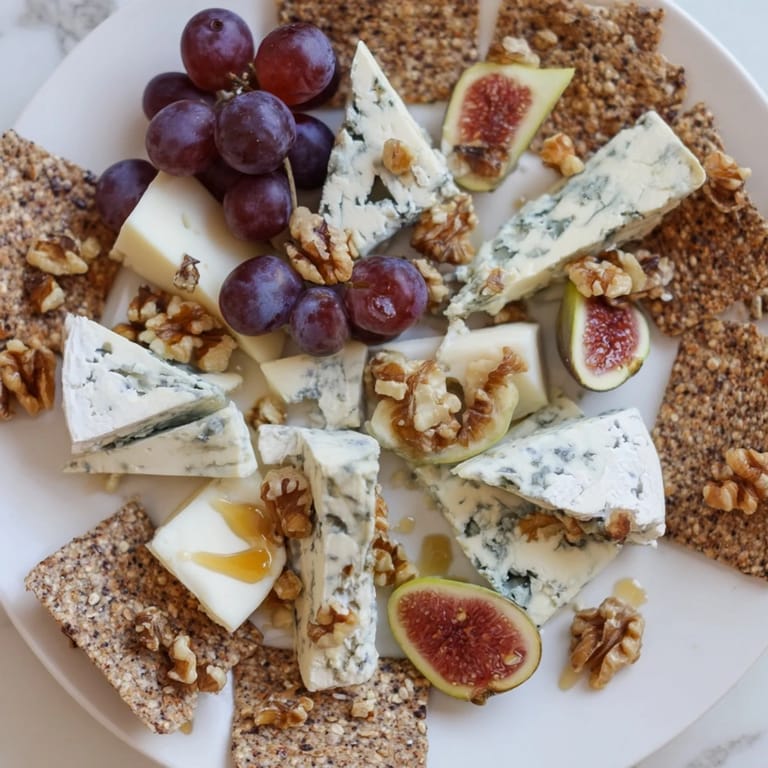
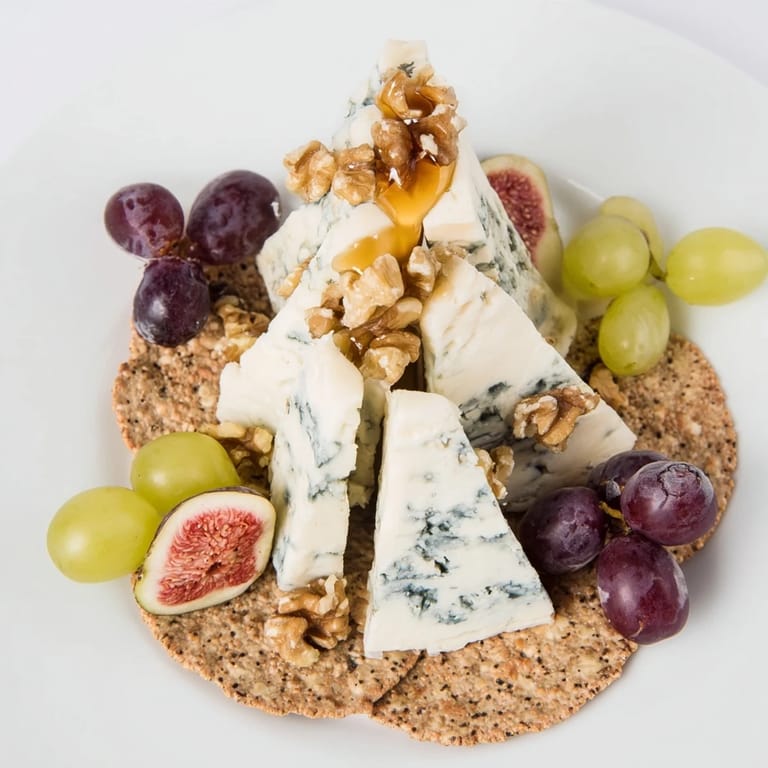
Pin I discovered this while rearranging my cheese board at a dinner party, when someone joked that my blue cheeses looked like a mountain range, and suddenly the whole platter made sense. The angular peaks of Roquefort, Gorgonzola, and Stilton naturally suggested peaks and ridges, so I leaned into it—staggering them higher and lower until they really did resemble the Blue Ridge. What started as a moment of playful improvisation became the most memorable appetizer I've served, partly because it looked like edible art but mostly because everyone wanted to know the story behind it.
I made this for my sister's housewarming last spring, and what surprised me most was watching my uncle—a man who usually avoids blue cheese entirely—reach for a Stilton wedge almost immediately. He said the presentation made it feel less intimidating somehow, like it was meant to be explored rather than feared. That moment taught me that how we present food matters just as much as what we put on the plate.
Ingredients
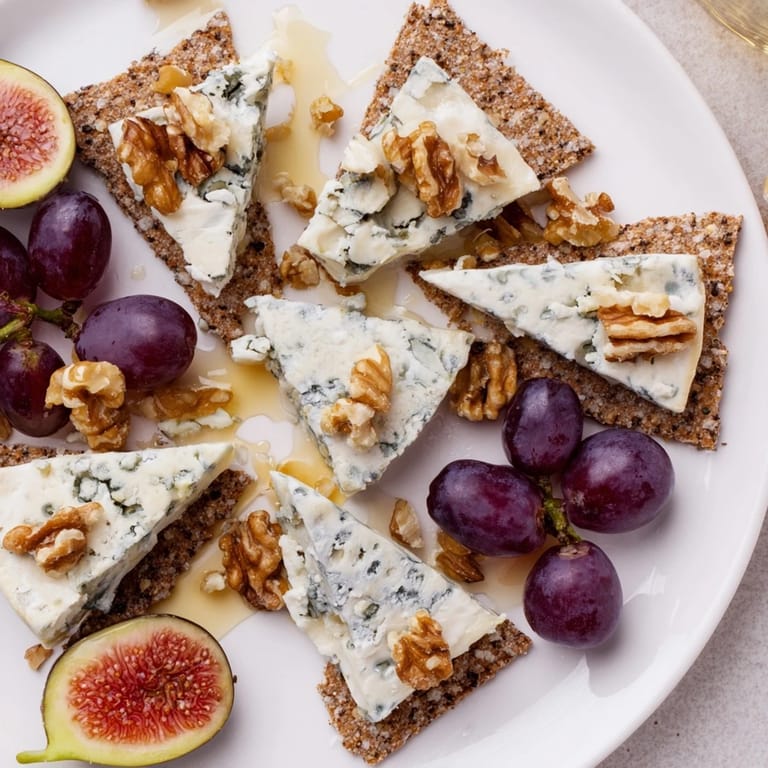
- Roquefort cheese (80 g): The sharpest of the bunch with a peppery finish; slice it thickly so the veining really shows through and creates visual drama on your platter.
- Gorgonzola cheese (80 g): Creamier and milder than Roquefort, it crumbles beautifully and creates nice irregular shapes that look naturally jagged.
- Stilton cheese (80 g): The English counterpart with a dense texture that holds its shape when sliced; it's almost sweet compared to the others and anchors the flavor journey.
- Bleu d'Auvergne cheese (80 g): Sits somewhere between sharp and creamy, with a delicate blue vein pattern that catches the light when positioned right.
- Artisanal whole-grain crackers (16): The foundation of your landscape; choose ones sturdy enough to hold the cheese without snapping but interesting enough in color to feel intentional.
- Honey (1 tablespoon): A thin drizzle balances the funk of the blues and adds shine to the composition; warm it slightly so it flows like golden syrup.
- Toasted walnuts, chopped (1 tablespoon): Provides textural contrast and their subtle bitterness complements the creamy cheese; toast them yourself if you have time, the aroma is worth it.
- Fresh grapes or sliced figs: These are your visual relief and palate cleanser; the grapes roll naturally between the peaks while figs add deeper color and an almost silky texture.
- Fresh rosemary sprigs (optional): A single sprig tucked into the arrangement adds dimension and hints at the earthy flavors within.
Tired of Takeout? 🥡
Get 10 meals you can make faster than delivery arrives. Seriously.
One email. No spam. Unsubscribe anytime.
Instructions
- Prepare your cheeses:
- Using a sharp knife (cold water helps it glide through without tearing), cut each cheese into irregular wedges and blocks that feel almost sculptural. The jaggedness is the whole point here, so embrace the imperfection.
- Build your sky:
- Lay crackers in a single layer across your platter or board, leaving enough space for the mountain range to sit naturally across the top. Think of this as your landscape canvas.
- Arrange the peaks:
- Place your four cheeses in a staggered row, varying their heights and angles so they truly resemble a mountain horizon. Step back frequently to see how it looks from a distance, rotating pieces if needed.
- Add the golden touch:
- Drizzle honey across the cheeses in thin, intentional lines; it should pool slightly in the crevices and catch light like snow on peaks. Scatter walnuts next.
- Scatter your accents:
- Distribute grapes or fig slices around the base of the range, filling in gaps and creating pockets of color that feel natural rather than forced.
- Final flourish and serve:
- If using them, tuck a rosemary sprig or two into the arrangement and bring it straight to the table, because this platter is made to be admired before it's devoured.
 Pin
Pin What I didn't expect was how the presentation actually changed the way people tasted it. One friend found herself lingering over each cheese individually instead of mixing them all together, discovering nuances she'd missed in casual cheese boards. The mountain range format almost forced a slower, more intentional approach to eating.
Why Blue Cheeses Work Together
Each of these four cheeses brings a different personality to the board, and standing them together like this creates a flavor journey from sharp to subtle. Roquefort opens with intensity, Gorgonzola settles into creaminess, Stilton offers unexpected sweetness, and Bleu d'Auvergne bridges them all with its refined middle ground. When people taste them in sequence like this, they start understanding that blue cheese isn't one monolithic flavor—it's a spectrum.
The Story Behind the Presentation
There's something about arranging food as a landscape that makes it feel less formal and more inviting, like you're sharing a secret corner of the world rather than just setting out appetizers. The mountain range concept works because it's specific enough to be memorable but simple enough that anyone can understand it at a glance. I've found that people eat more generously and with less self-consciousness when food feels like it's meant to be experienced as a whole rather than as individual components.
Serving and Pairing Suggestions
Serve this with a chilled Sauternes if your guests lean toward sweetness, or reach for a robust red wine to match the intensity of the cheeses. The crackers need to be sturdy enough to hold the weight without crumbling, but textured enough to feel substantial alongside the rich cheese. For non-drinkers, crisp apple juice or sparkling water with lemon creates a palate-cleansing contrast that works beautifully.
- If anyone has nut allergies, pumpkin seeds offer the same textural crunch as walnuts and a pleasant earthy flavor.
- Dried apricots or dates scattered through the arrangement add concentrated sweetness that balances the blue cheese funk perfectly.
- Make this no more than an hour before serving to keep the crackers crisp and the cheese at optimal temperature.
 Pin
Pin This platter reminds me that sometimes the best dishes aren't the ones with the longest ingredient lists or the most complicated techniques—they're the ones that make people pause and smile. Serve this when you want to spark conversation, not just appetite.
Recipe FAQ
- → Which cheeses create the mountain effect?
Roquefort, Gorgonzola, Stilton, and Bleu d'Auvergne are used, sliced into irregular wedges to mimic mountain peaks.
- → How should the crackers be arranged?
Arrange artisanal whole-grain crackers in a single layer to form a sky-like background beneath the cheeses.
- → What garnishes enhance the flavors?
Drizzle honey over the cheeses, sprinkle toasted walnuts, and scatter fresh grapes or fig slices for color and sweetness.
- → Can this platter be adapted for nut allergies?
Yes, omit walnuts or substitute with pumpkin seeds to keep the texture without allergens.
- → What beverages pair well with this cheese platter?
Chilled Sauternes or a robust red wine complement the creamy blue cheeses exceptionally well.
- → Is it possible to make this gluten-free?
Yes, using certified gluten-free crackers will make the platter suitable for gluten-sensitive guests.