 Pin
Pin I discovered Chains of the Mayflower during a quiet morning in my kitchen, surrounded by harvest farmers market bags overflowing with root vegetables. There was something magical about arranging those golden-roasted pieces on a platter—each one carefully placed like links in a story, just as my grandmother once described the connections that bind families together across time and distance. That Thanksgiving, I realized this dish wasn't just about feeding people; it was about honoring the journey we all share to arrive at the table together.
The first time I made this for my extended family, my aunt paused mid-bite and asked why I'd arranged everything in those overlapping rows. When I explained the symbolism, she reached across the table and squeezed my hand—no words needed. That's when I knew this recipe had become something more than instructions; it had become a bridge between past and present, between the historical Mayflower and our modern kitchen table.
Ingredients
- Boneless turkey breast, skin on (1.5 kg or about 3.3 lbs): The skin crisps up beautifully and keeps the meat incredibly moist inside—I learned this the hard way after years of skinless chicken. That golden, crackly exterior is non-negotiable.
- Olive oil (4 tbsp total): Good quality matters here because it's not just cooking; it's the foundation of flavor. I use it to create that deep golden color on both meat and vegetables.
- Dried thyme and sage (1 tsp each): These herbs whisper rather than shout, which is exactly what Thanksgiving should taste like—familiar, warm, understated wisdom.
- Carrots, parsnips, sweet potatoes, and celery root: This medley is the soul of the dish. Each vegetable contributes its own personality—carrots bring sweetness, parsnips add earthiness, sweet potatoes offer creaminess, and celery root brings a subtle mineral quality that ties everything together.
- Smoked paprika and ground cumin (1 tsp and ½ tsp): These spices don't overpower; they just gently remind you that vegetables can be just as interesting as any protein on the table.
- Chicken or turkey stock (500 ml): The stock is where the gravy gets its soul. If you have homemade, use it—the difference is real and worth it.
- Soy sauce or tamari (1 tbsp): This is my secret weapon. A tablespoon adds depth and umami that makes people ask what that delicious something is, even though they can't quite place it.
- Fresh parsley and pecans for garnish: The parsley brings brightness, and the toasted pecans add a slight crunch that keeps your palate interested with every bite.
Tired of Takeout? 🥡
Get 10 meals you can make faster than delivery arrives. Seriously.
One email. No spam. Unsubscribe anytime.
Instructions
- Set the stage:
- Preheat your oven to 200°C (400°F) and take a moment to arrange your workspace. Get your roasting pan and baking sheet ready. I like to line the baking sheet with parchment paper—it makes cleanup easier and prevents sticking.
- Season the turkey with intention:
- Pat the turkey breast dry with paper towels (this helps the skin crisp beautifully), then rub it generously with olive oil, dried thyme, sage, salt, and pepper. Let your hands work the seasonings in, feeling for that even coating. The skin should glisten.
- Start the turkey on its journey:
- Place your seasoned turkey in the roasting pan and slide it into the oven. Set a timer for 1 hour 15 minutes. The kitchen will soon fill with that unmistakable roasted poultry aroma that signals something important is happening.
- Prepare your vegetables while the turkey roasts:
- While you're waiting, peel and cut your root vegetables into uniform 1-inch pieces. Uniform size matters because everything will cook evenly, ensuring you don't end up with some pieces that are mushy and others that are crunchy. Toss them with olive oil, smoked paprika, cumin, salt, and pepper in a bowl, making sure every piece gets a light coating.
- Roast the root vegetables to golden perfection:
- About halfway through the turkey's cooking time (around 40 minutes in), spread your vegetables on a baking sheet in a single layer and slide them into the oven. Stir them halfway through their cooking time. You're looking for that deep golden-brown color and tender texture—about 40 to 45 minutes total. When a fork slides through a piece of celery root easily, you're there.
- Make a gravy that tastes like home:
- In a small saucepan over medium heat, melt your butter. Once it's foaming gently, whisk in the cornstarch until you have a smooth paste—this prevents lumps. Slowly add your stock while whisking constantly, as if you're coaxing flavors into conversation. Once it's smooth, add the soy sauce and let it simmer for 5 to 7 minutes until it coats the back of a spoon. Taste it and adjust the seasoning. This gravy should taste savory, slightly rich, and deeply comforting.
- Check the turkey and let it rest:
- The turkey is done when a meat thermometer inserted into the thickest part reads 74°C (165°F). Remove it from the oven, tent it loosely with foil, and let it rest for 15 minutes. This is crucial—it allows the juices to redistribute, keeping every slice tender and moist.
- Create your edible story:
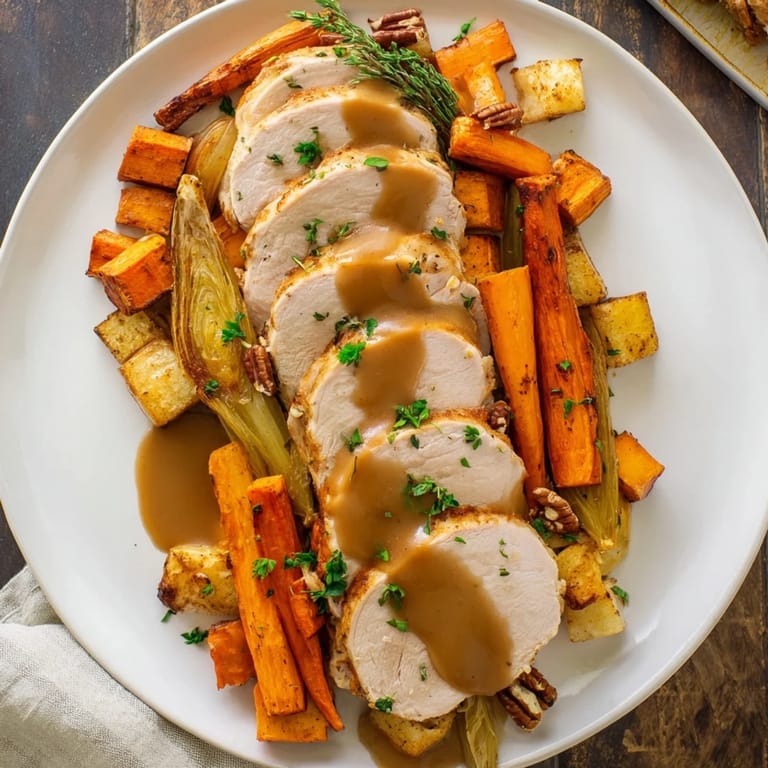
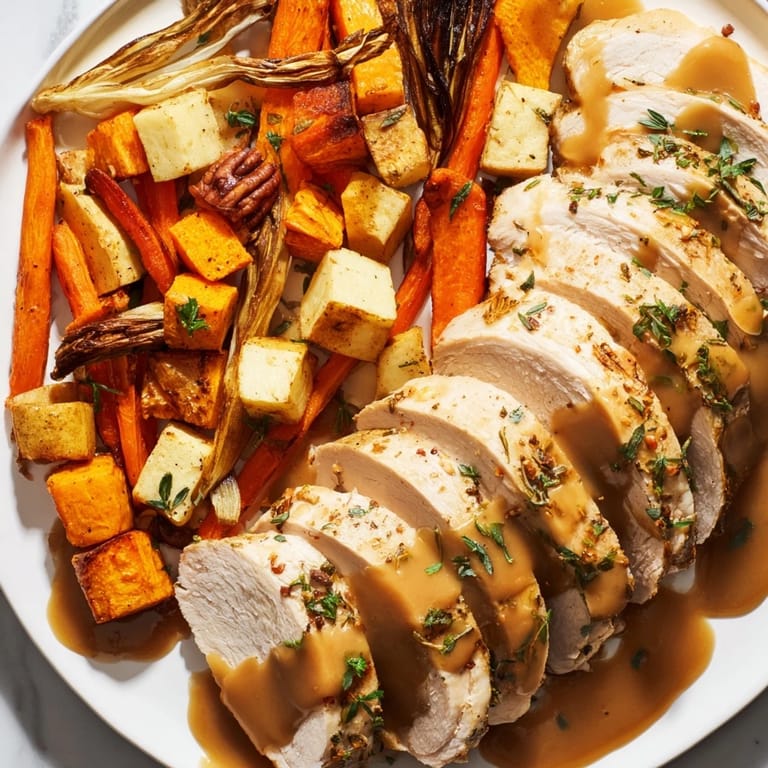
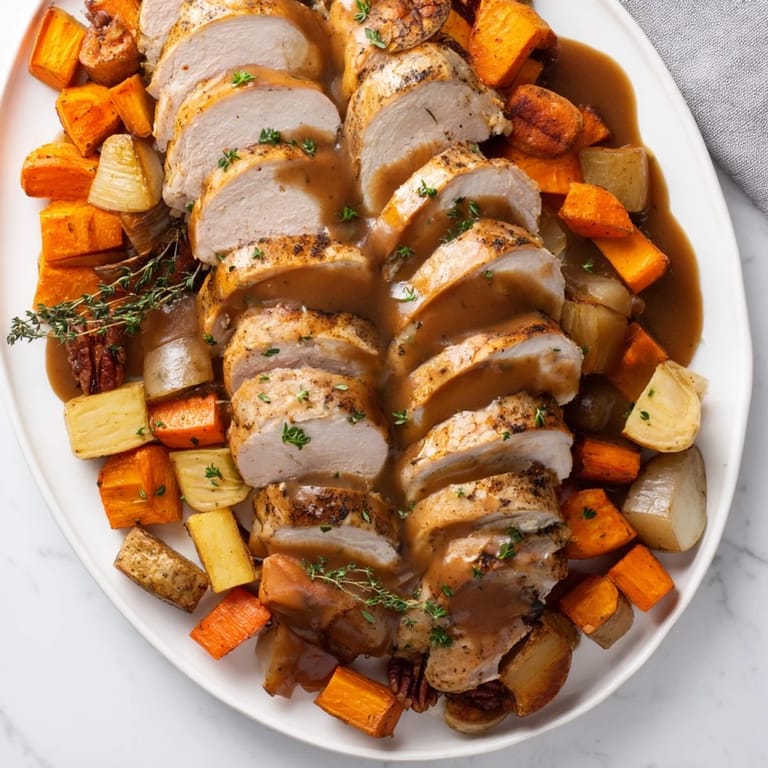
- Slice the turkey into ½-inch-thick pieces. On a large platter, begin arranging the turkey slices and roasted vegetables in overlapping, chain-like rows or concentric rings—each piece linked to the next, representing connection and journey. Drizzle the warm gravy over everything, letting it pool slightly in the valleys between pieces. Finish with a generous scatter of fresh chopped parsley and toasted pecans if using.
 Pin
Pin Years later, I served this dish to a friend who had recently lost her grandmother—a woman who spent every Thanksgiving in the kitchen. When she saw how the vegetables and turkey were arranged like links in a chain, she cried. She told me it reminded her of her grandmother's favorite saying: we are all connected, even across time. That's when I truly understood that this recipe was never just about Thanksgiving; it's about making someone feel less alone at the table.
Understanding the Symbolism Behind Your Plate
The chain-like arrangement of this dish is more than just pretty plating—it's a quiet conversation between you, your guests, and history. The Mayflower carried people seeking connection and community, and every time you arrange these vegetables and turkey in overlapping rows, you're recreating that same spirit on your platter. I've found that when people understand the 'why' behind how their food is presented, the meal becomes more meaningful. They slow down, they notice the colors, and they taste the intention behind every ingredient.
Why Root Vegetables Are the Unsung Heroes of Fall
Root vegetables are what the earth offers us in gratitude. Carrots, parsnips, sweet potatoes, and celery root are humble, often overlooked ingredients that deserve the spotlight. When roasted at high heat, their natural sugars caramelize into something almost magical—not overly sweet, but deeply satisfying. I've learned that roasting brings out flavors that boiling or steaming never can. The smoked paprika and cumin aren't there to mask anything; they're there to whisper encouragement to those natural, earthy flavors.
The Secret to a Gravy That Makes People Ask for the Recipe
Gravy is where most people stumble, and I understand why—it seems so simple that it must be impossible. The secret is patience and constant whisking. Don't rush the cornstarch into the fat, and don't dump the stock in all at once. Treat it like a conversation: introduce each ingredient slowly, listen to how the gravy responds, and adjust as you go. The soy sauce is your secret weapon—just one tablespoon adds umami depth that makes people taste something delicious without being able to name it.
- Always taste your gravy before serving and adjust the salt; different stocks have different sodium levels, so there's no one-size-fits-all answer
- If your gravy breaks or gets lumpy, pour it through a fine-mesh strainer and start fresh with another pan—there's no shame in this
- Make the gravy last so it's still warm when you pour it over the plated dish; cold gravy changes everything about the experience
 Pin
Pin This dish reminds me that the best meals are the ones where food becomes a language all its own. Chains of the Mayflower says to the people you serve: you matter to me, your journey matters, and we are connected. Make this recipe when you want your table to feel like home.
Recipe FAQ
- → How do you ensure the turkey stays juicy?
Rubbing olive oil and herbs on the turkey breast before roasting helps retain moisture. Resting the meat covered with foil after roasting allows juices to redistribute for tenderness.
- → What vegetables are best for roasting in this dish?
Carrots, parsnips, sweet potatoes, and celery root provide a mix of earthy sweetness and texture when roasted with smoked paprika and cumin.
- → Can the gravy be made gluten-free?
Yes, using gluten-free tamari or soy sauce along with cornstarch ensures the gravy remains thickened and safe for gluten-free diets.
- → What is the significance of the linked chain presentation?
The overlapping arrangement symbolizes the bonds of community and the historic Mayflower journey, adding meaningful visual appeal.
- → Are there vegetarian alternatives?
Roasted portobello mushrooms can replace turkey, and vegetable stock can be used in the gravy to maintain rich flavors.