 Pin
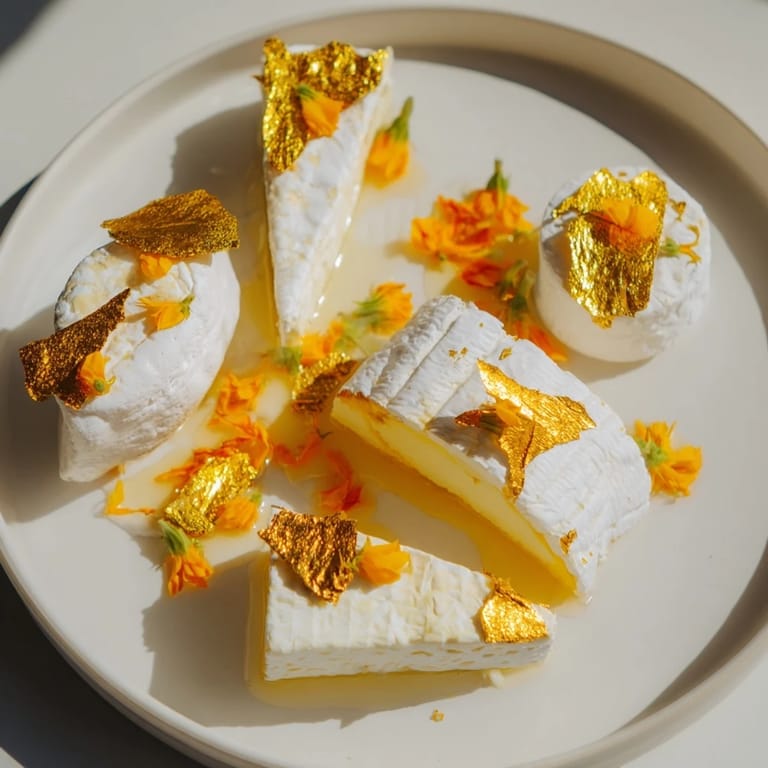
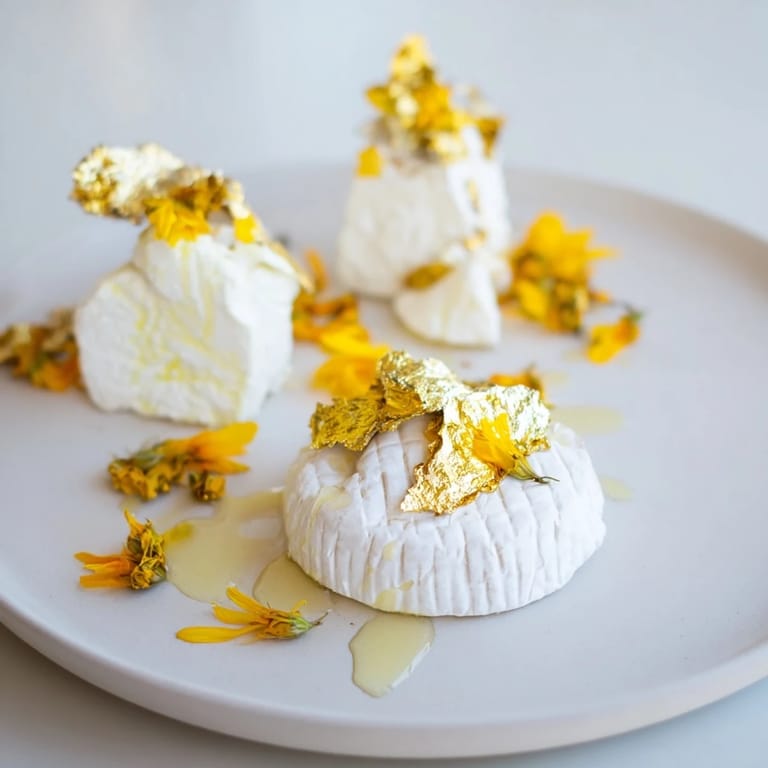
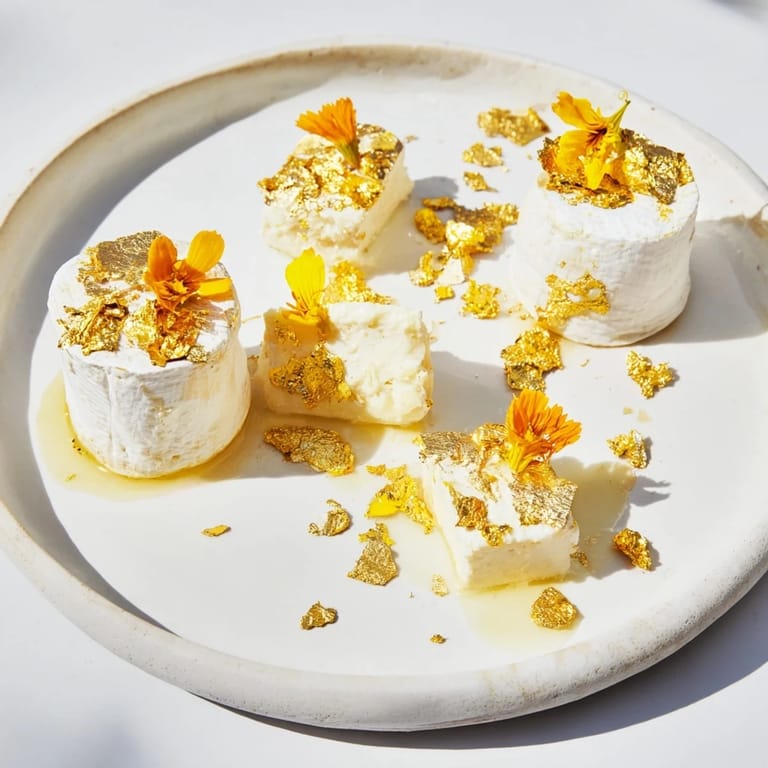
Pin I discovered this platter by accident one evening when I was arranging cheeses for a dinner party and realized I had far too many varieties. Rather than hiding them away, I grabbed tweezers, a sheet of edible gold leaf I'd been saving, and a handful of yellow petals from my neighbor's garden. What emerged felt like edible jewelry, and the look on my guests' faces when they arrived made me understand that sometimes the most memorable dishes are born from happy improvisation.
I made this for my sister's engagement announcement, and watching her face light up when she saw the gold-dusted cheeses on the table told me something: presentation matters, especially when you're celebrating someone. She kept saying it looked too beautiful to eat, but the brie didn't last long.
Ingredients
- Goat cheese log (chèvre), 150 g: The tangy foundation that keeps things from feeling too rich; let it come to room temperature so it spreads like silk.
- Triple-cream brie, 150 g: This is your luxurious anchor, nearly decadent on its own, so you only need a modest wedge.
- Fresh ricotta, 150 g: Its mild sweetness and pillowy texture balance the funkier notes from the goat cheese and feta.
- Feta block, 150 g, drained: The salty wake-up call that makes everything taste more like itself.
- Edible gold leaf, 1–2 sheets: Source from a reputable supplier; cheap versions can taste metallic, and you want pure gold or a certified substitute.
- Yellow edible flower petals, 2 tbsp: Marigold and calendula have subtle peppery notes that complement cheese beautifully; verify they're truly edible before using.
- Honey, 2 tbsp, optional: A final touch of sweetness that makes people wonder what you did differently this time.
- Fresh microgreens or herbs, optional: I prefer peppery arugula or delicate dill fronds for a whisper of fresh bite.
- Baguette, 1, thinly sliced: Toast the slices lightly if you want them to hold up better, or keep them soft if you prefer that rustic feel.
- Assorted crackers: Choose ones you actually like eating; people will taste every flavor here.
Tired of Takeout? 🥡
Get 10 meals you can make faster than delivery arrives. Seriously.
One email. No spam. Unsubscribe anytime.
Instructions
- Arrange your cheese foundation:
- Place each cheese on the platter with intention, leaving space between them so they feel like individual moments of luxury rather than a crowd. I like to use odd numbers and vary the heights a little so your eye travels around the board.
- Apply the gold leaf with care:
- Use clean, dry tweezers and work in small pieces—think delicate gestures, not coverage. The gold should kiss the surface, catching light and looking almost accidental in its placement.
- Scatter the flower petals:
- Let them fall naturally across the cheeses and the negative space around them, creating pockets of color. This is where you can be a little playful.
- Finish with honey and herbs:
- A light drizzle of honey adds sheen and sweetness, while microgreens contribute a fresh, almost shocking contrast to all that richness.
- Bring it to the table:
- Serve immediately with warm baguette slices and crackers on the side, and watch people decide which cheese speaks to them first.
 Pin
Pin There's a moment that happens at every dinner when someone tries the goat cheese with a petal on top and just closes their eyes. That small gesture of pleasure, born from something so simple, reminds me why I love cooking: it's about creating moments, not perfection.
When to Make This
Pull this together for engagements, anniversaries, or any moment when you want to feel celebratory without spending hours in the kitchen. I've also made it on quiet Tuesday nights just to remind myself that eating well doesn't require an occasion—sometimes you're the occasion.
Building Your Perfect Board
The beauty of a cheese platter is that it adapts to what moves you. I've added candied walnuts for crunch, sliced pears for freshness, and even a tiny pot of truffle honey on the side. The gold and flowers are your signature—they say this is intentional, that you thought about how to make something beautiful.
Pairing and Serving Secrets
This platter sings with chilled Champagne or a crisp Sauvignon Blanc, but I've also served it alongside still cider and watched people nod in quiet approval. Keep everything cold until the moment before serving, and don't be afraid to refresh the platter halfway through—a fresh arrangement tells guests you're not just serving food, you're tending to the experience.
- Set out small cheese knives so people feel invited to cut rather than grab.
- Keep a small bowl of extra flower petals nearby for anyone who wants to sprinkle more.
- Pair with one standout wine rather than three mediocre options—quality over quantity always wins.
 Pin
Pin This platter exists to make you feel like the person you want to be: generous, creative, unrushed. Serve it with conviction, and watch it become the thing people remember most about the evening.
Recipe FAQ
- → What cheeses are used in the platter?
The platter features goat cheese log (chèvre), triple-cream brie, fresh ricotta, and block-style feta.
- → How is the edible gold leaf applied?
Using clean tweezers or a fine brush, small pieces of edible gold leaf are carefully placed on the surface of each cheese.
- → Can the flower petals be substituted?
Yellow edible flower petals such as marigold, calendula, or chrysanthemum are recommended for color and safety; sourcing from reputable suppliers is important.
- → Are there accompaniment suggestions?
Thinly sliced baguette and assorted crackers pair well, with gluten-free options available.
- → Is this suitable for special diets?
Yes, it's vegetarian and gluten-free if appropriate bread options are used; vegan alternatives can be selected by swapping cheeses.