 Pin
Pin I'll never forget the St. Patrick's Day party at my neighbor's house when I was seven years old. Everything was green, everything was lucky, and I was mesmerized by a platter of these little four-leaf clover snacks arranged like tiny edible wishes. Years later, when I wanted to recreate that magic for my own gatherings, I discovered how simple and joyful it is to build these from scratch. Now, every time I make them, I'm that kid again, believing in a little bit of luck on a plate.
I made these for my daughter's school potluck last spring, and watching her friends gather around the clover snacks before touching anything else taught me something: presentation isn't shallow, it's love made visible. One little boy asked if they were real clovers, and when I showed him it was actually food, he felt like he'd discovered treasure.
Ingredients
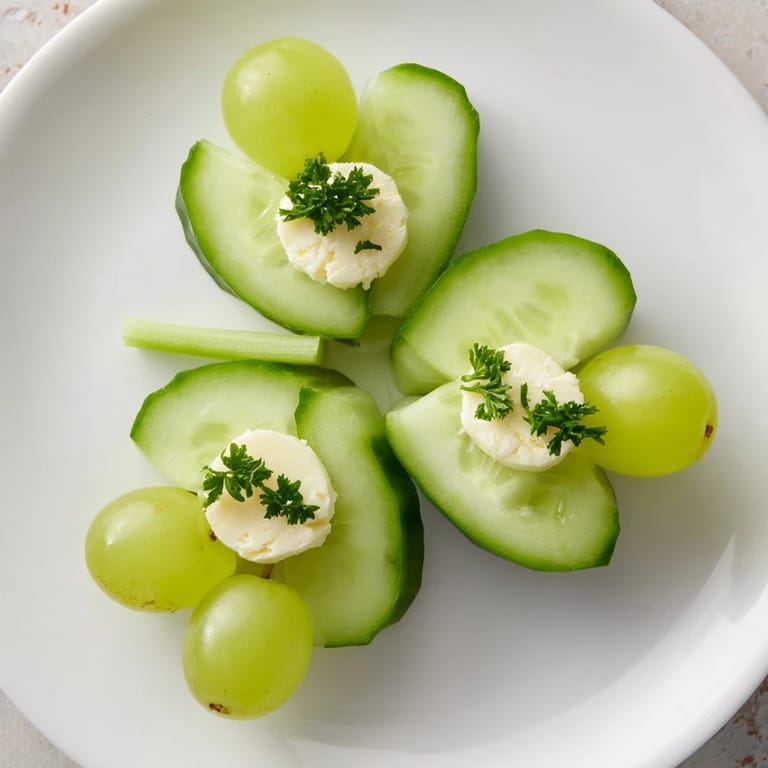
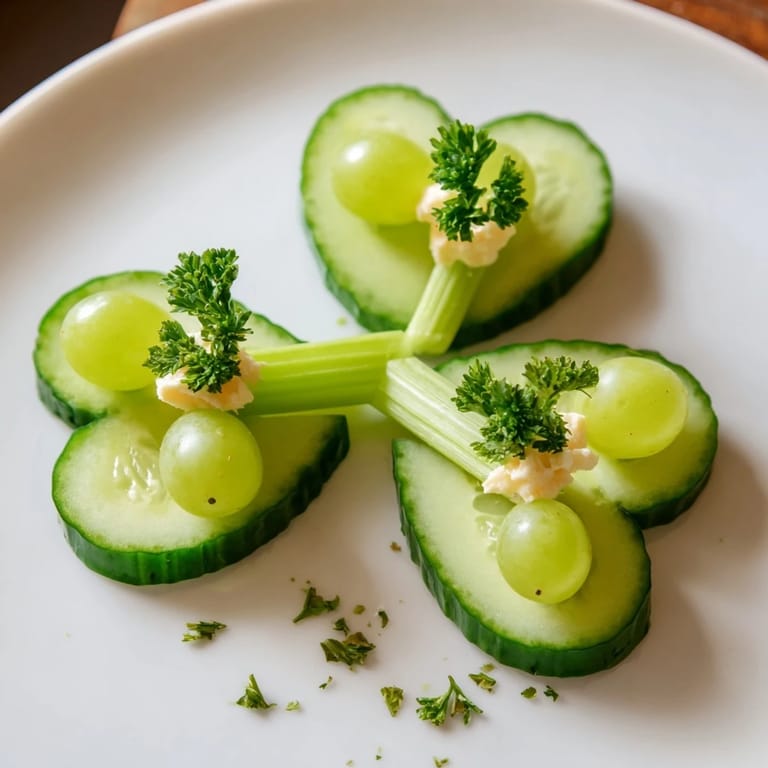
- Cucumber slices (16 total, about 1/4-inch thick): These form the actual leaves of your clover and provide a cool, crisp base. Slice them right before assembly so they stay firm and fresh—a dull knife will bruise them, so use something sharp.
- Cheddar cheese rounds (16 thin slices, same size as cucumbers): The cheese adds richness and that golden color that makes clovers unmistakably lucky. If you don't have a cookie cutter, a paring knife works just fine for cutting rounds.
- Green grapes or cherry tomatoes (4, halved): This is the heart of each clover, the center point where all four leaves meet. Green grapes taste slightly sweet, while cherry tomatoes bring a savory pop—choose based on your mood.
- Celery sticks (4, cut to 3 inches) or pretzel rods (4, same length): The stem grounds your clover and makes it instantly recognizable. Celery brings earthiness; pretzels bring a salty crunch. I use celery for healthier crowds and pretzels when I want that indulgent snack feel.
- Cream cheese or hummus (2 tablespoons): This is your edible glue, the ingredient that holds everything together so your clover stays intact on the journey from kitchen to table to someone's plate. Use it sparingly—just a tiny dab does the job.
- Fresh herbs like parsley or dill (finely chopped): A light sprinkle adds color contrast and fresh flavor that brings the whole thing to life. This is optional, but it's the difference between a clover and a fancy clover.
Tired of Takeout? 🥡
Get 10 meals you can make faster than delivery arrives. Seriously.
One email. No spam. Unsubscribe anytime.
Instructions
- Set up your workspace:
- Gather all your ingredients and tools around you like you're about to create edible art. Slice your cucumbers into even rounds—consistency matters here because all four leaves should look balanced. Cut your cheese into rounds the same size, halve your grapes or tomatoes, and cut your celery or pretzels to exactly 3 inches. Having everything prepped means you can move quickly and stay in that creative flow.
- Build the clover leaf pattern:
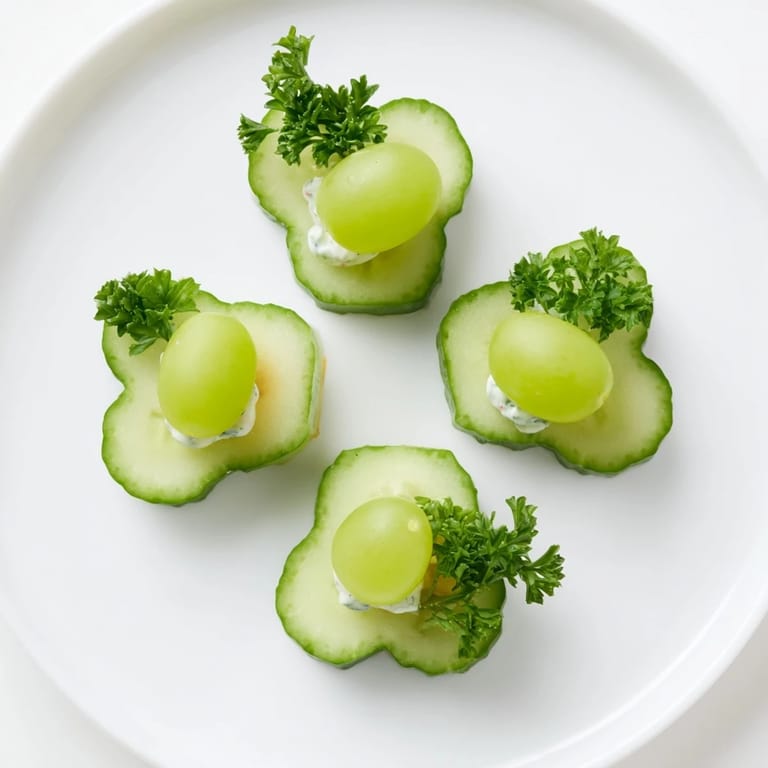
- On your serving plate, arrange four cucumber slices so their edges overlap just slightly in the center, creating that unmistakable four-leaf clover shape. Think of it like you're drawing with food—the overlap in the middle is where the magic happens. Stand back and look at it; this is your template.
- Add the cheese leaves:
- Top each cucumber slice with a cheddar cheese round. Press gently so it settles into place. The white plate, green cucumber, and golden cheese are already starting to tell a story of luck and harvest.
- Place the clover heart:
- Set your grape or tomato half right in the center where all four leaves meet. This is the beating heart of your clover, the part that catches light and draws the eye. It's small, but it's mighty.
- Add the stem:
- Tuck your celery stick or pretzel rod underneath one of the clover leaves so it looks natural and anchored. If it's not staying put, use a tiny dab of cream cheese underneath to hold it steady. The stem should look like it grew there naturally.
- Secure if needed:
- If any components are feeling loose, use just the smallest amount of cream cheese or hummus as edible glue. A light touch here—you're not building a structure, you're just ensuring nothing shifts during the journey to the table.
- Add your finishing touch:
- Sprinkle your fresh herbs over the whole creation. This is where personality enters the picture. Green dill or parsley adds brightness and suggests this wasn't just assembled, it was thoughtfully composed.
- Repeat the magic:
- Create three more clovers following the same pattern. By the second one, your hands will know the rhythm. By the fourth, you'll feel like you've been arranging food into lucky shapes your whole life.
 Pin
Pin The first time I served these at a dinner party, I watched my friend's seven-year-old daughter pick one up carefully, like it was actually a four-leaf clover that would grant a wish. She didn't eat it right away—she held it, looked at it, and then announced she was making a wish before biting in. That moment, when food became ritual, when presentation became permission to believe in something magical, that's when I understood why people put care into how they arrange things on a plate.
Mix and Match Your Clover
The beauty of this recipe is how forgiving it is to your creativity. I've made these with turkey rounds instead of cheese for friends watching their dairy intake, and they looked just as striking. I've swapped the cherry tomatoes for a thin slice of red pepper, and suddenly the clovers looked like they'd been painted with sunset. One time, I used thin slices of avocado instead of cheese, and while they were slightly softer to work with, the flavor combination of cool cucumber and buttery avocado became my new favorite version. Think of the basic structure as a framework, not a rule—use it to build clovers that match what you have on hand and what tastes good to your people.
Why Clovers, Why Now
There's something about serving food that's been shaped and arranged with intention that changes the whole experience of eating it. A cheese round on a cucumber is just an appetizer. A cheese round on a cucumber arranged as a four-leaf clover is a moment of levity, a small wish, a sign that someone cared enough to make the ordinary into something playful. These snacks work magic not because of any ingredient, but because of what they represent: taking time to make something feel special.
From Simple to Celebration
I've learned that the snacks that get remembered aren't always the most complicated or the most expensive. They're the ones that make people smile before they taste them, that give them something beautiful to hold in their hands, that make a regular Tuesday or a holiday gathering feel just a little bit more intentional. These clovers do that work quietly and with grace. You can build them while listening to music, while your kids draw pictures at the table, while you're feeling rushed and need to remember why cooking can be joyful even when there's not much time.
- Assemble these right before serving so everything stays fresh and firm, not soggy
- If you're making them for a lunch box, pack the components separately and let someone assemble their own clover at eat time—it's half the fun
- Double the batch if you're feeding more than four people; these disappear faster than you'd expect, and everyone wants a clover of their own
 Pin
Pin These little clovers are a reminder that luck isn't something we find, it's something we create through small acts of care and creativity. Make them, share them, and watch what happens when people bite into something that was made with both hands and heart.
Recipe FAQ
- → Can I substitute the celery sticks for another stem option?
Yes, thin pretzel rods work well as a crunchy alternative, but note pretzels contain gluten, so choose celery for a gluten-free option.
- → How can I keep the layers from sliding apart?
Using a small amount of cream cheese or hummus between layers acts as a natural adhesive to hold components securely together.
- → Are there protein enhancements possible for this snack?
Yes, you can replace the cheddar cheese rounds with turkey or ham slices for added protein and flavor variety.
- → What herbs work best for garnishing these snacks?
Fresh parsley or dill finely chopped bring bright color and a subtle herbaceous note that complements the creamy and crisp elements.
- → Is this snack suitable for gluten-free diets?
Absolutely, simply use celery sticks instead of pretzel rods to maintain a gluten-free option without sacrificing taste or presentation.