 Pin
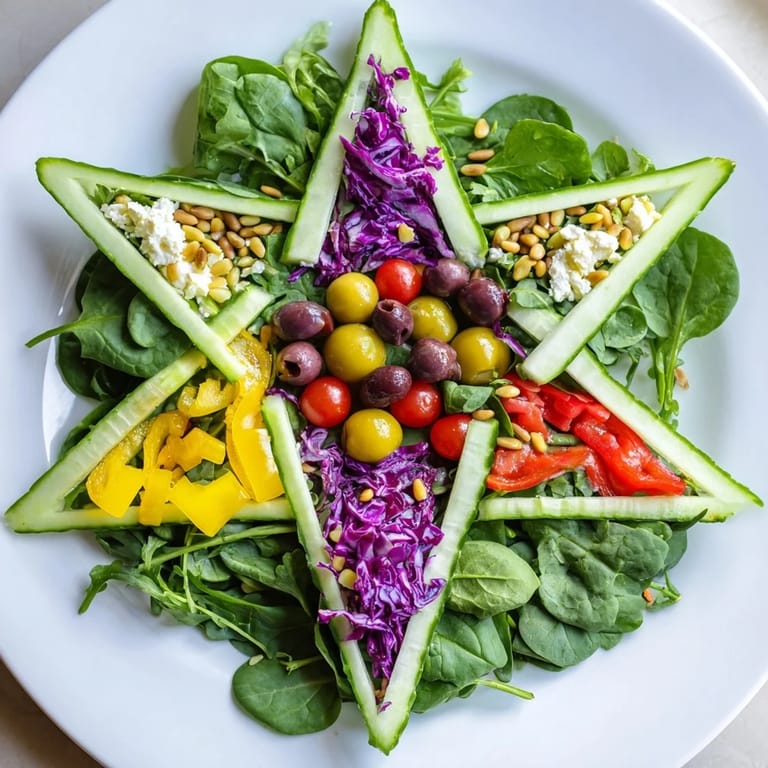
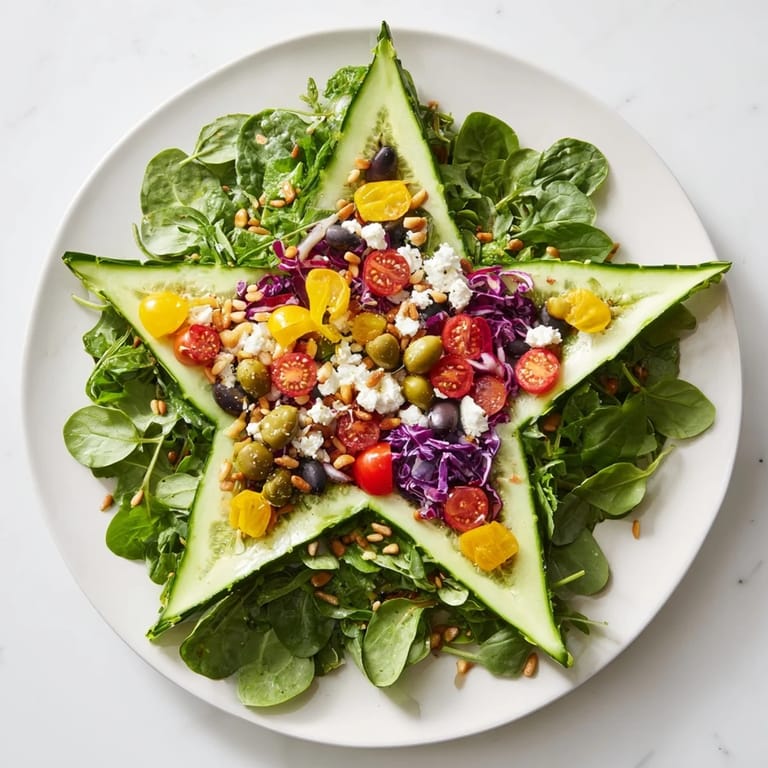
Pin I first created this Star of David salad platter during my sister's Hanukkah celebration a few years ago, when I wanted to make something that honored the occasion while celebrating the fresh, vibrant ingredients I loved. As I arranged the cucumbers into two overlapping triangles, I realized I was creating something more than just food—a edible work of art that made everyone at the table pause and smile before diving in. It's become my go-to showstopper whenever I want to bring both beauty and nourishment to a festive table.
I'll never forget when my nephew, who usually picks at salads, asked for seconds of this star platter. His eyes had lit up at the presentation, but what surprised me was that he stayed engaged with every bite, noticing the different textures and flavors I'd woven throughout. That's when I knew this wasn't just about making something beautiful—it was about creating an experience that made fresh vegetables feel exciting and special.
Ingredients
- Baby spinach and arugula: These tender greens create a soft, flavorful bed that lets the other vegetables shine. I always wash and dry them thoroughly—wet greens will wilt under the weight of the toppings and make your star droop by serving time.
- Cucumbers: Slice these thin and uniform so they create clean lines for your triangles. I use an English cucumber when I can because it has fewer seeds and slices beautifully without crumbling.
- Cherry tomatoes: Halving them keeps them from rolling around while you're arranging, and it exposes their sweet, juicy centers. Choose ones that feel firm but give slightly when pressed.
- Bell peppers: The yellow and red create striking visual contrast within the star. I slice them thin enough to be tender but thick enough to hold their shape during the arrangement.
- Purple cabbage: This adds an unexpected pop of deep color and a satisfying crunch that keeps the salad interesting throughout the meal.
- Red onion: A whisper of sharpness that balances the sweetness of the tomatoes. Use it sparingly—you're looking for flavor, not tears.
- Feta cheese and olives: These are your anchors, both visually and flavor-wise. They ground the star in Mediterranean tradition and add the salty, umami notes that make every bite complete.
- Pine nuts: Toasted pine nuts add a buttery richness that elevates this from simple salad to special occasion worthy. Toast them yourself if you can—it makes all the difference.
- Olive oil and lemon dressing: This is the soul of the dish. Fresh lemon juice and good olive oil let the vegetables speak while the mustard and honey create balance and depth.
Tired of Takeout? 🥡
Get 10 meals you can make faster than delivery arrives. Seriously.
One email. No spam. Unsubscribe anytime.
Instructions
- Choose your canvas:
- Select a large, flat platter or tray that's at least 14 inches across. I prefer something with a slight rim so nothing rolls off during arrangement. Take a moment to visualize where your star will sit—you want room to breathe around the edges.
- Create your green base:
- Layer the baby spinach and arugula evenly across the platter, creating a soft, peppery foundation. Don't just dump it on—let your hands guide it into a roughly even layer that covers the entire surface. This base should feel luxurious and full, like a garden at the height of summer.
- Map out your star:
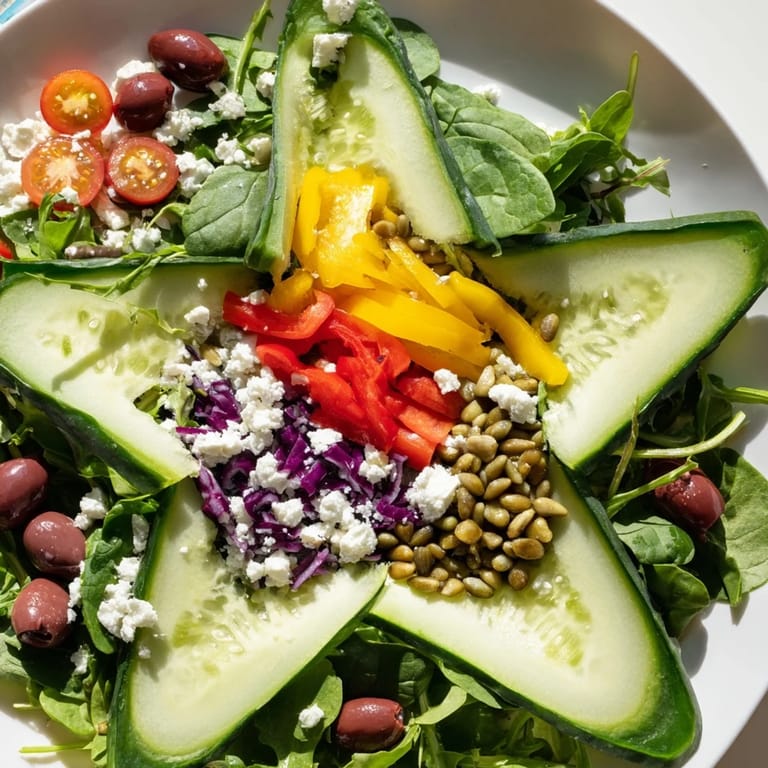
- Using your cucumber slices, carefully arrange two overlapping equilateral triangles to form the six-pointed Star of David. If you're nervous, lightly sketch the outline with a wooden skewer first. The triangles should be bold and clear, about 2 inches at the widest points. This is where precision matters—take your time here.
- Fill the geometric sections:
- Working methodically, fill each triangular section with your vegetables, thinking about color balance. Use cherry tomatoes in one section, bell peppers in another, and cabbage in a third. Step back frequently and look at your work like you're viewing a painting. The colors should dance together, not compete.
- Accentuate with cheese and garnish:
- Now scatter your feta, olives, capers, and toasted pine nuts around the points and edges of the star. This is your chance to add glamour and texture. Let some ingredients peek through the vegetables beneath, creating depth and visual interest.
- Make your dressing:
- In a small bowl, whisk together olive oil, lemon juice, red wine vinegar, honey, and Dijon mustard. Add salt and pepper, then taste and adjust. The dressing should taste bright and balanced—not too sharp, not too sweet. This is the moment you're bringing all the elements together harmoniously.
- The final touch:
- Just before serving, drizzle your dressing evenly over the star, or better yet, serve it alongside so your guests can control how much they want. This preserves the visual drama of the presentation and lets each person customize their bite.
 Pin
Pin What moved me most about this salad was the moment of quiet before the feast began—when everyone at the table took a breath and just appreciated what was in front of them. It reminded me that sometimes the most meaningful meals aren't about complexity or expensive ingredients, but about intention and presentation and care.
The Geometry of Flavor
Creating the Star of David with your vegetables isn't just about aesthetics—it's about understanding how color, texture, and flavor work together in a composition. When you arrange vegetables deliberately, you're creating flavor pathways that guide someone through different taste experiences with each forkful. The softness of the greens contrasts with the crispness of the peppers, the sweetness of the tomatoes plays against the brine of the olives, and the creamy feta acts as a bridge between everything else. This kind of intentional arrangement makes people slow down and actually taste their food instead of just eating it.
Making It Your Own
While the Star of David shape is iconic and beautiful, the real magic of this platter is how adaptable it is to what you have on hand and what your guests love. I've made versions in summer when heirloom tomatoes are at their peak, with multiple colors of cherry tomatoes creating a rainbow effect within the star. I've added cooked chickpeas for protein and crunch, scattered fresh herbs like dill and parsley across the surface, and even swapped in goat cheese when I wanted something tangier than feta. The structure of the star gives you a framework, but the filling is entirely yours to play with.
Serving and Storage Wisdom
This salad is best served immediately after dressing, when everything is at peak freshness and the star is at its most visually stunning. I've learned that the presentation is half the pleasure of eating it, so don't rush the serving moment. Take it to the table while it's still perfect, let people admire it, then serve. If you have leftovers—though you likely won't—store the undressed components separately and reassemble before eating again.
- Keep your vegetables crisp by storing them separately in the refrigerator until you're ready to assemble
- Make your dressing up to a day ahead, but don't dress the salad until just before serving
- If you're making this for a potluck or party, bring the components in separate containers and assemble it on-site for maximum impact
 Pin
Pin Every time I make this salad, I'm reminded that food is really about connection—about gathering people around something beautiful and nourishing and saying, without words, that they matter enough to deserve your care. This star on a platter is just the beginning of that conversation.
Recipe FAQ
- → How do I create the Star of David shape on the salad platter?
Arrange thin cucumber slices to outline two overlapping equilateral triangles on the base layer of greens, forming the six-pointed star. Use the natural shapes and adjust for symmetry.
- → Can I substitute the feta cheese to make it dairy-free?
Yes, using vegan feta alternatives or other plant-based cheeses preserves the texture and flavor while keeping the dish dairy-free.
- → What purpose do the pine nuts serve in this salad platter?
Toasted pine nuts add a crunchy texture and a subtle nutty flavor that complements the fresh vegetables and creamy feta.
- → Is there a recommended dressing for this platter?
A simple dressing made from extra virgin olive oil, lemon juice, red wine vinegar, honey, Dijon mustard, salt, and pepper brings brightness and balances the flavors.
- → Can this salad platter be prepared ahead of time?
To maintain freshness and texture, arrange the salad components shortly before serving, and add the dressing just prior to presentation.
- → Are there any suggested additions to increase protein content?
Adding cooked chickpeas or grilled chicken strips can boost protein while complementing the fresh ingredients without altering the visual appeal.