 Pin
Pin I'll never forget the summer afternoon when my neighbor brought over this stunning watermelon slice platter to our garden party. At first glance, I thought she'd somehow carved an actual watermelon into a decorative slice, but as I got closer, I realized it was an edible artwork made entirely from fresh fruit and cheese. The genius of it hit me immediately, and I knew I had to learn how to create this magical illusion myself. Now, whenever I'm hosting a summer gathering, this is the first thing I think to make, because it never fails to make everyone pause and smile before diving in.
I made this for the first time at a Fourth of July potluck, and I watched a little girl's face light up when she realized the watermelon slice was actually made of real food she could recognize. Her mom asked for the recipe right then and there, and now it's become a tradition at their family barbecues too. Those small moments of bringing joy through food are what cooking is really about.
Ingredients
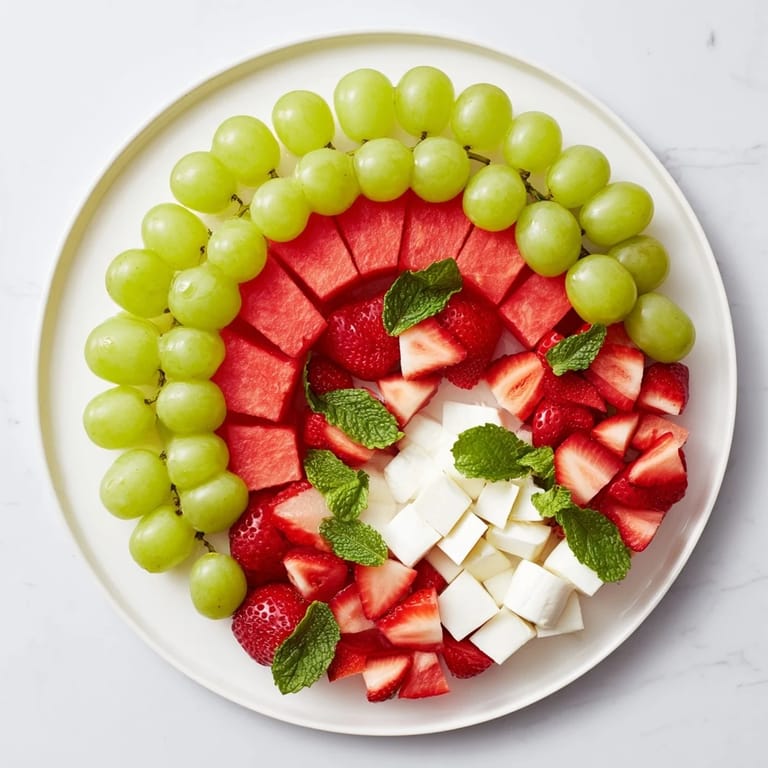
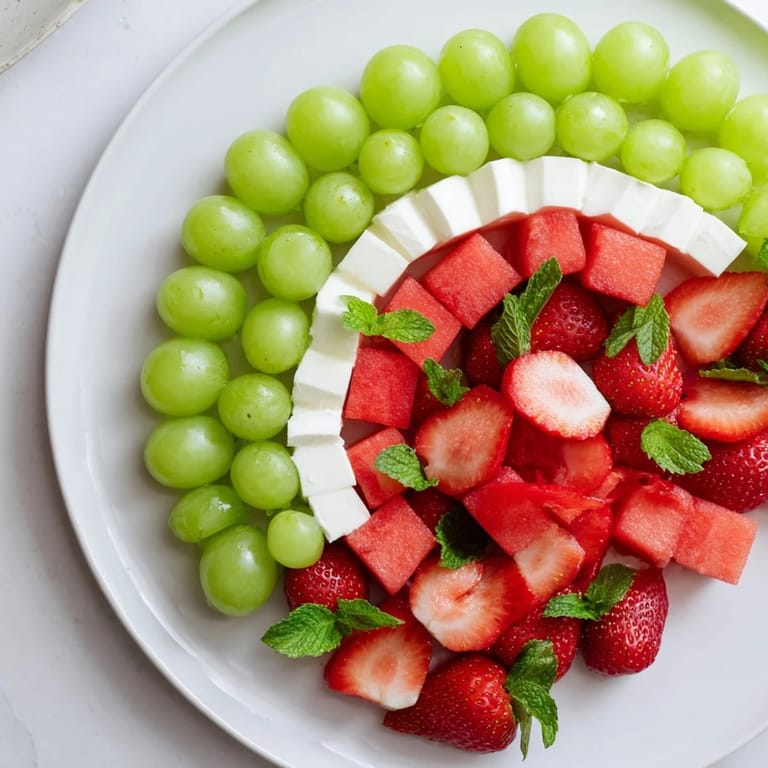
- Green grapes or pitted green olives (1 cup): These form the rind of your watermelon slice and provide that authentic briny bite. I prefer using grapes for a sweeter version, but olives give you that earthier, more sophisticated flavor. Make sure they're roughly similar in size so your outer ring looks intentional and polished.
- Fresh mozzarella cheese or feta (150 g): This creamy white layer is what makes people do a double take. Fresh mozzarella gives you a delicate, milky taste, while feta brings tanginess that plays beautifully with the sweet fruit. Slice the mozzarella into thin rounds or crumble the feta by hand, depending on which direction your platter is heading.
- Seedless watermelon cubed or balled (2 cups): This is your star ingredient, the juicy heart of everything. If you can find a really good, sweet watermelon, it elevates the entire experience. A melon baller creates those charming little balls that look intentional and professional, but honestly, rustic chunks taste just as good.
- Seedless strawberries, halved (1 cup): The strawberries add tartness and a beautiful blush color that deepens the watermelon illusion. Choose firm, ripe berries and halve them just before assembly so they don't oxidize or weep.
- Fresh mint leaves (1 tablespoon, optional): A whisper of mint tied everything together the first time I made this, adding an herbaceous freshness that makes people wonder what that subtle fragrance is. It's optional, but I never skip it now.
Tired of Takeout? 🥡
Get 10 meals you can make faster than delivery arrives. Seriously.
One email. No spam. Unsubscribe anytime.
Instructions
- Set your stage with the right platter:
- Grab your largest round serving platter, one that feels substantial and spacious. Take a moment to imagine a watermelon slice on it, perhaps drawing a gentle line with your finger to show where the semicircle will live. This little visualization step keeps everything balanced and intentional-looking.
- Create the rind with grapes or olives:
- Starting at the outer edge of your imaginary slice, arrange your green grapes or olives in a neat curved band. Think of this as painting with your hands, letting each piece nestle slightly against its neighbor. They should form a clear, recognizable border that immediately reads as a watermelon rind to anyone who looks at it.
- Layer in the white cheese:
- Just inside your green ring, place your mozzarella slices in overlapping circles or crumbles of feta in a gentle band. This is the white flesh of the rind, and it should be substantial enough to see but not so thick that you've covered half your platter. Step back and look, because this band is what sells the illusion most convincingly.
- Fill the interior with fruit:
- Now comes the rewarding part, filling the center with your watermelon cubes or balls and strawberry halves. Mix them as you go, distributing the colors evenly so no section looks too red or too pink. This is where the platter really comes alive, becoming an actual inviting mosaic of summer fruit.
- Finish with mint and chill:
- Scatter your fresh mint leaves across the top if you're using them, letting them land where they will. Slide the whole platter into the refrigerator for at least fifteen minutes, allowing everything to chill and the flavors to meld just slightly. It makes a difference, I promise.
- Present with confidence:
- Bring it to the table as the centerpiece it deserves to be. The moment of revelation, when people realize what they're looking at, never gets old.
 Pin
Pin The most touching moment came when I made this for my mother's birthday dinner, and my teenage nephew, who usually scrolls through his phone at family gatherings, put it down to photograph the platter from every angle. He told me it was too pretty to eat, then immediately went back for thirds. That's when I understood the real power of this recipe, that it creates a bridge between food as nourishment and food as art, making memories rather than just feeding people.
Why This Works as a Summer Centerpiece
There's something about summer gatherings that calls for food that's both beautiful and effortless, and this platter delivers on both fronts. It doesn't require a stove, which means you're not sweating in the kitchen while everyone else is outside enjoying the weather. The combination of cool, hydrating fruit with salty cheese and briny olives feels refreshing and light, exactly what people crave when it's hot. And visually, it commands attention in the best way, becoming an instant focal point that makes your table feel thoughtful and intentional.
The Art of Arrangement
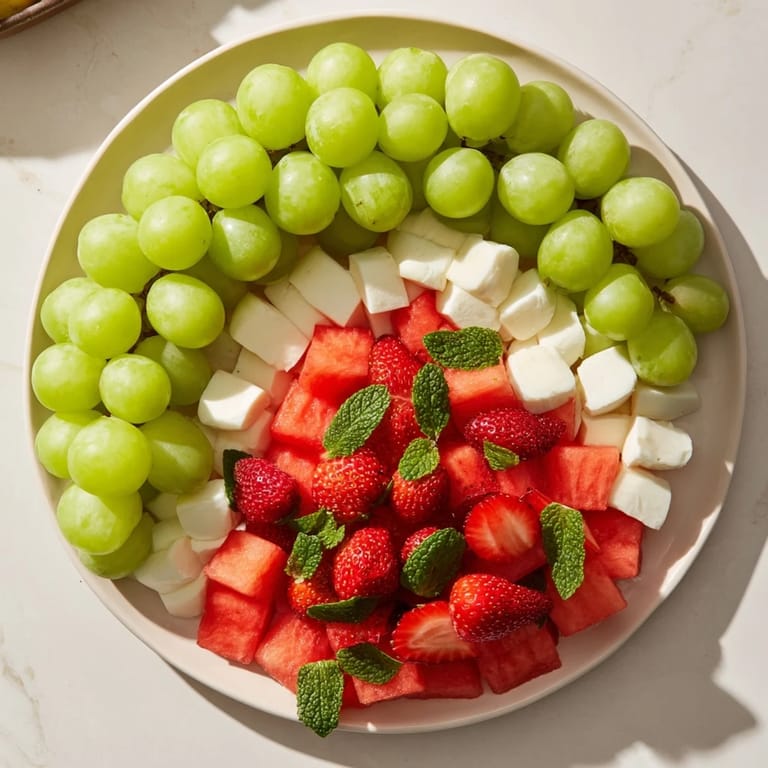
The secret to making this look impressive isn't any special skill, it's simply taking the time to place things intentionally rather than randomly scattering them. Spend an extra two minutes creating clean lines and even distribution, and the difference is remarkable. Your eye naturally wants order and pattern, so give it that, and suddenly a simple fruit platter reads as sophisticated and deliberate. I've learned that the space between ingredients matters as much as the ingredients themselves, creating rhythm and visual interest across the platter.
Variations and Customizations
Once you understand the basic structure of this platter, you can play with it endlessly. I've made versions with vegan cheese for friends with dietary restrictions, swapped in blueberries for extra color variation, and even experimented with different herbs like basil or tarragon when I'm feeling adventurous. The beauty of this recipe is that it's a framework rather than a strict formula, so honor your preferences and your guests' needs without fear.
- Swap mozzarella for vegan cheese or cashew cream if you're serving dairy-free guests, and the platter remains just as stunning and delicious.
- Add a handful of black olives or blueberries scattered through the fruit center to mimic watermelon seeds, which adds an extra touch of playfulness and realism.
- Pair this with crisp white wine, sparkling water, or even a light rosé, and you've got the perfect summer opening course that refreshes the palate.
 Pin
Pin This recipe has become my answer to the question of how to make people happy without spending hours in the kitchen. It's simple enough for a weeknight gathering, impressive enough for a formal dinner, and delicious enough that everyone comes back for more. That's the kind of recipe worth keeping close.
Recipe FAQ
- → What ingredients create the watermelon rind effect?
The rind effect is created using green grapes or pitted green olives arranged along the platter's edge.
- → Can I substitute the cheese used in the middle layer?
Yes, fresh mozzarella or feta cheese can be used; vegan cheese is a suitable alternative for dairy-free needs.
- → How do I achieve the seed-like appearance in the fruit center?
Adding black olives or blueberries scattered among the watermelon and strawberries mimics watermelon seeds for added realism.
- → Is this platter suitable for gluten-free diets?
Yes, all ingredients used are naturally gluten-free, making it a safe choice for gluten-sensitive guests.
- → What tools help with preparation and presentation?
A large round serving platter, sharp knife, and melon baller or spoon are helpful for shaping and arranging the layers.