 Pin
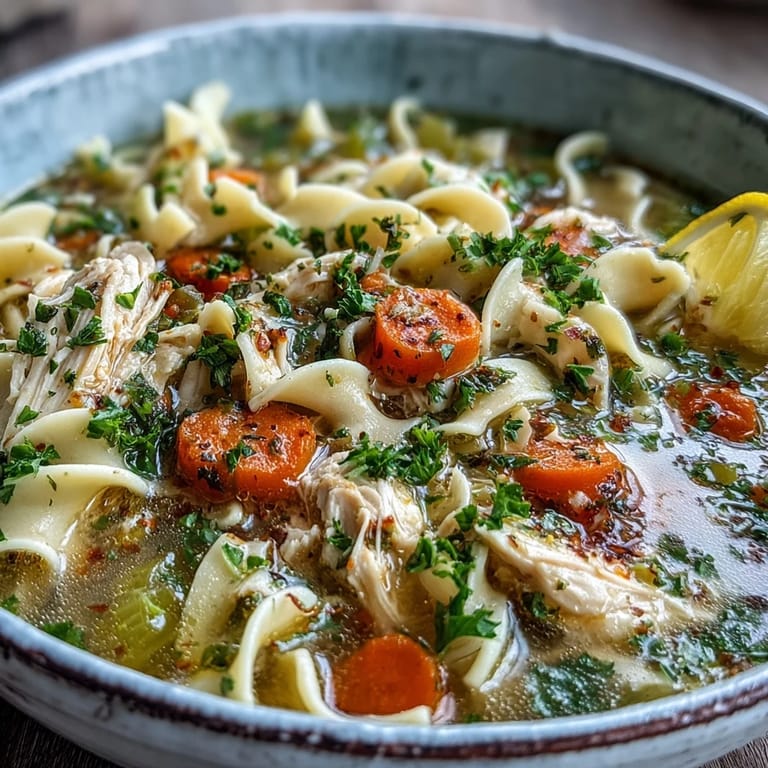
Pin There's something about the smell of chicken simmering with carrots and celery that instantly takes me back to my grandmother's kitchen on rainy afternoons. She'd have this soup going while I did homework at her table, and by the time the noodles hit the pot, the whole house smelled like comfort itself. I've made countless versions since then, but this one—simple, honest, and ready in just over an hour—is the one I keep coming back to when I need something that feels like a hug in a bowl.
I learned to make this properly when my friend Sarah showed up at my door with a cold that wouldn't quit. I had all the ingredients but no confidence, so she stood in my kitchen and walked me through it step by step. By the time we served it in mismatched bowls with stale bread from my freezer, she was laughing and saying it was the best thing anyone had made for her in years. It wasn't fancy, but it was exactly what she needed.
Ingredients
- Bone-in chicken thighs or breasts (1 ½ lbs): Thighs give you richer, more forgiving meat that stays tender longer, while breasts cook faster if you're in a hurry—mix them if you want the best of both.
- Low-sodium chicken broth (8 cups): This is your foundation, so taste it first and pick one you'd actually drink on its own.
- Yellow onion, carrots, and celery: This trio is the holy trinity of soup making, and together they create a flavor base that feels homemade without trying.
- Garlic cloves (3, minced): Don't skip the garlic or use powder—fresh cloves wake up the whole pot.
- Bay leaves, thyme, and rosemary: These dried herbs do the heavy lifting while you're not looking, building layers of flavor as everything simmers.
- Wide egg noodles (6 oz): The width matters because they hold onto the broth better and feel more substantial than thin noodles.
- Fresh parsley and lemon juice: These finishing touches brighten everything up right at the end, cutting through the richness with just enough acidity.
Tired of Takeout? 🥡
Get 10 meals you can make faster than delivery arrives. Seriously.
One email. No spam. Unsubscribe anytime.
Instructions
- Get the broth started:
- Drop your chicken and broth into a large pot and turn the heat to medium-high until it bubbles gently. You'll see some white foam float to the surface—skim it off with a spoon or ladle so your final soup stays clear and clean.
- Build the flavor base:
- Toss in your onion, carrots, celery, garlic, and all those dried herbs, then lower the heat to a gentle simmer. Cover it and let it work quietly for 25 to 30 minutes, until the chicken is cooked through and the vegetables are soft enough to break with a wooden spoon.
- Shred and return:
- Fish the chicken out with tongs and let it cool just enough to handle, then use two forks to pull it apart into bite-sized pieces. Discard any bones and skin, then send the shredded meat back into the pot where it belongs.
- Bring it back up:
- Crank the heat to medium-high and let the soup come to a gentle boil again. This is when you know everything is ready for the noodles.
- Add the noodles:
- Stir in your egg noodles and cook for 8 to 10 minutes, tasting as you go so they stay tender but not mushy. The noodles will absorb some broth as they cook, which is exactly what you want.
- Finish and serve:
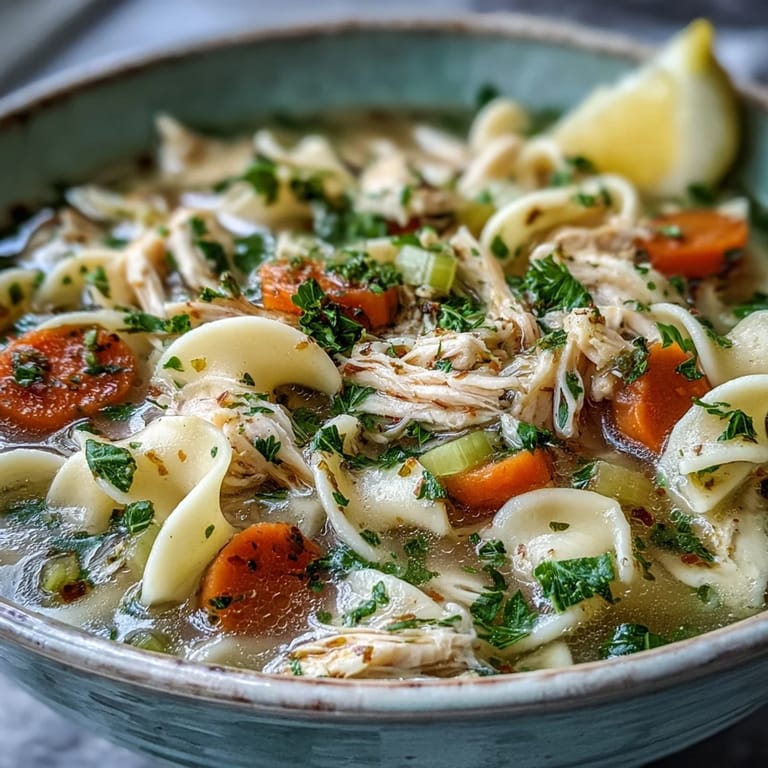
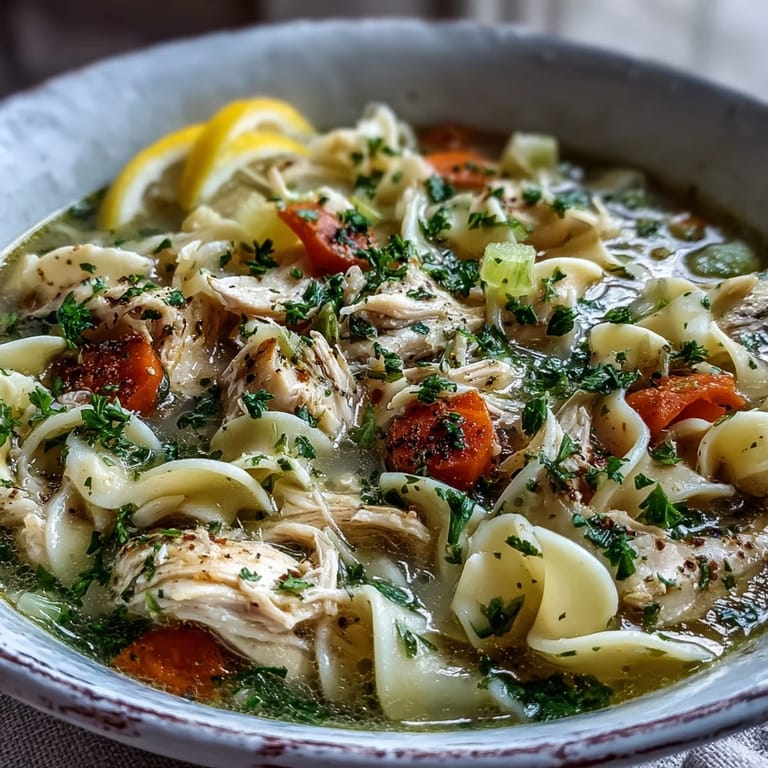
- Stir in the fresh parsley and a squeeze of lemon juice if you're using it, then taste and adjust the salt and pepper to your liking. Fish out those bay leaves, ladle it into bowls, and serve it hot.
 Pin
Pin My neighbor brought a big pot of this soup over after my daughter was born, and I remember sitting on the couch at three in the morning, eating it straight from a mug because it was the only thing that felt manageable. It was so simple, so perfectly balanced, that it didn't feel like cooking—it felt like care.
Why Bone-in Chicken Matters
The first time I made this with boneless breasts because that's what I grabbed at the store, I was disappointed by how thin and wispy the broth tasted. When I switched to bone-in thighs, everything changed—the broth turned silky and rich from the gelatin in the bones, and the meat stayed so tender it practically dissolved on my tongue. It's not about cooking longer or adding more salt, it's about letting the bones do what they're meant to do.
Timing and Temperature Control
The secret to this soup is keeping everything at a gentle simmer rather than a rolling boil. I learned this the hard way after turning up the heat to rush things and watching my chicken turn stringy and gray instead of staying pale and tender. Now I set the heat low enough that I barely see bubbles breaking the surface, and somehow everything cooks through perfectly while developing real depth of flavor.
Making It Your Own
This is one of those recipes that invites you to play around and make it feel like your own kitchen creation. I've added everything from a pinch of cayenne for warmth to a handful of spinach stirred in at the end, and each version felt right for the moment. The foundation is so solid that you can trust your instincts without worrying you'll mess it up.
- A squeeze of fresh lemon juice at the end brightens everything without overpowering the broth.
- Swap the noodles for rice, orzo, or gluten-free pasta depending on what you have on hand or what you're craving.
- Add diced potatoes, green beans, or mushrooms during the simmering stage if you want more vegetables.
 Pin
Pin This soup has saved me more times than I can count, whether I was feeding a sick friend, comforting my own tired self, or just needing something honest and warm. That's why it lives in my regular rotation and probably always will.
Recipe FAQ
- → Can I make this ahead of time?
Absolutely. The flavors actually deepen overnight. Store cooled soup in the refrigerator for up to 4 days. If planning to freeze, consider cooking noodles separately and adding them when reheating to prevent them from becoming too soft.
- → What's the best cut of chicken to use?
Bone-in, skinless thighs or breasts work beautifully because the bones create a richer broth. Thighs add more flavor and stay tender during longer simmering, while breasts yield leaner meat. A combination of both gives you the best of both worlds.
- → Can I use other types of noodles?
Wide egg noodles are traditional, but you can substitute with egg-free ribbon noodles, rice noodles for gluten-free versions, or even small pasta shapes like ditalini or shells. Adjust cooking time based on the package directions.
- → How do I store and reheat leftovers?
Cool completely before transferring to airtight containers. Refrigerate for up to 4 days or freeze for 3 months. Reat gently on the stovetop over medium heat, adding a splash of broth if it seems too thick. The noodles will continue to soften as they sit.
- → What vegetables can I add or swap?
Feel free to add diced potatoes, parsnips, or turnips along with the carrots. A handful of fresh spinach or kale stirred in during the last 2 minutes adds vibrant color and nutrition. Leeks can replace some of the onions for a milder sweetness.
- → Is the lemon juice necessary?
It's optional but highly recommended. The acidity cuts through the rich broth and brightens all the flavors, making each taste more vibrant. Start with a small amount and adjust to your preference.