 Pin
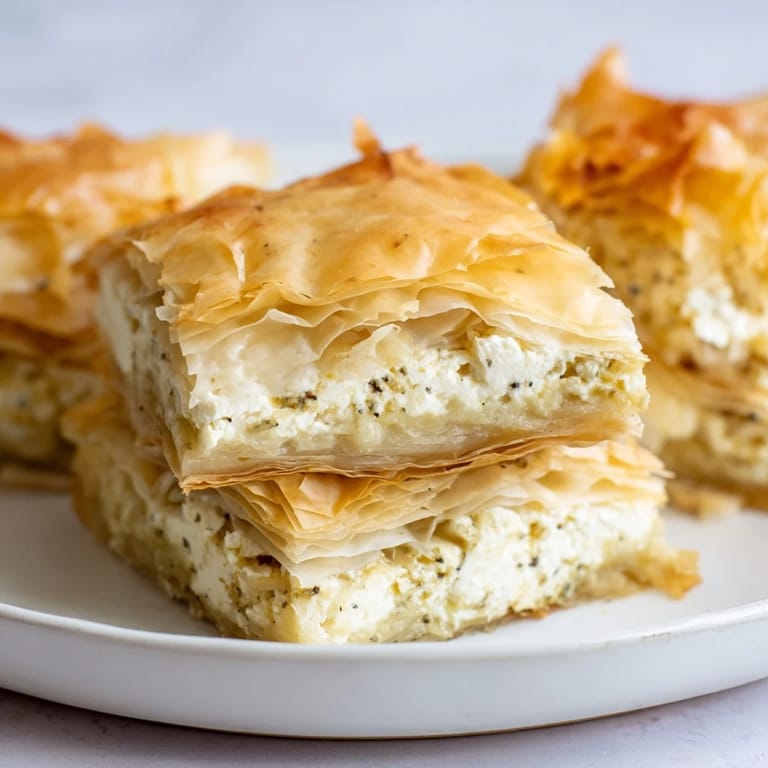
Pin The first time I pulled a tray of banitsa from the oven, I wasn't expecting the kitchen to smell like my grandmother's house in Sofia. That sharp, salty cheese aroma mixing with butter-toasted phyllo—it transported me instantly, even though I'd never actually learned the recipe from her hands. Years later, I finally understood why: banitsa isn't complicated, but it rewards patience and respect for its layers, both literal and emotional.
I made this for a Sunday brunch once when I wanted to impress someone who'd grown up eating the real thing. My hands shook a little as I cut those first squares, worried the filling would seep out or the layers would collapse. When they closed their eyes after the first bite and smiled—not politely, but genuinely—I knew I'd gotten something right. It's still the dish I reach for when I want to say thank you without words.
Ingredients
- Feta cheese (400 g, crumbled): This is where the soul of banitsa lives; its saltiness and tanginess are what make people go back for another piece, so don't reach for something mild.
- Eggs (4 large): They're the binder that transforms the filling from crumbles into something creamy and luxurious, but they also need the yogurt and milk to stay tender.
- Plain yogurt (250 ml): This is the secret weapon that keeps the filling moist and adds a subtle sourness that balances the cheese beautifully.
- Phyllo dough (1 package, about 400 g, thawed): Don't skip the thawing step; rushing it makes the sheets tear like paper in your hands, which teaches you to be patient in other ways too.
- Unsalted butter (60 g, melted): Use real butter here—it's worth it for how it browns and crisps the phyllo into something almost caramelized.
- Whole milk (50 ml): Just enough to make the egg mixture silky without making the filling watery or loose.
- Salt (1/2 tsp) and freshly ground black pepper (1/4 tsp): Season the filling generously because the cheese alone isn't enough; the pepper especially comes through in every layer.
Tired of Takeout? 🥡
Get 10 meals you can make faster than delivery arrives. Seriously.
One email. No spam. Unsubscribe anytime.
Instructions
- Get your space ready:
- Preheat the oven to 180°C (350°F) and brush your baking dish with melted butter so nothing sticks and every edge gets golden. Have everything else measured and within arm's reach because phyllo dough waits for no one.
- Make the filling:
- Whisk together the eggs, yogurt, milk, salt, and pepper until it's smooth and light, then fold in the crumbled feta gently—you want it distributed but not pounded into submission. The mixture should look almost creamy, with little clouds of white cheese throughout.
- Protect your phyllo:
- Unroll it carefully and drape a barely damp kitchen towel over the stack so the sheets stay pliable while you work. This one trick stops the frustration of brittle dough shattering in your hands.
- Build the base:
- Place one phyllo sheet in the dish, brush it lightly with butter, then repeat three more times, layering and buttering each one so you have four golden-to-be layers underneath. This creates a sturdy foundation that won't get soggy.
- Add your first filling layer:
- Spread about one-quarter of the cheese mixture evenly across the phyllo base, leaving a tiny border so it doesn't seep out the sides during baking.
- Repeat the layering dance:
- Add three to four more buttered phyllo sheets, then another portion of filling, and keep going until you've used all the filling, ending with three to four dry phyllo sheets on top brushed with that final bit of butter. Each cycle takes just a minute but makes all the difference in texture.
- Cut before baking:
- Using a sharp knife, score the entire surface into squares or diamond shapes—this stops the phyllo from shattering unpredictably when you try to serve it later. Cut all the way to the bottom so the heat reaches every crevice.
- Add the finishing butter:
- Pour any remaining melted butter over the scored top, letting it seep into the cuts so the phyllo crisps evenly from every angle.
- Bake until golden:
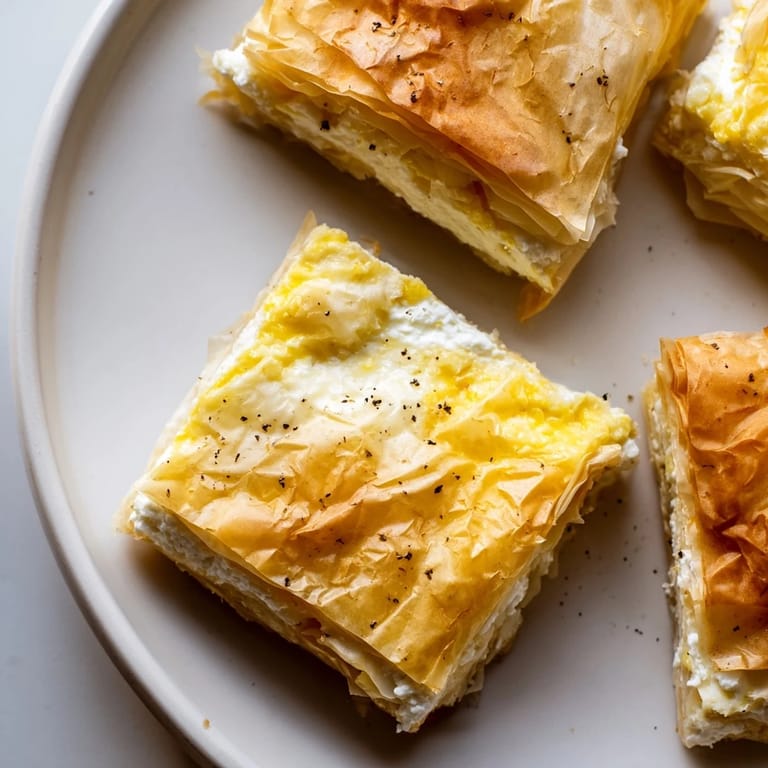
- Put it in the oven for 30 to 35 minutes until the top is deep golden brown and the whole kitchen smells like butter and cheese. The phyllo should sound crispy when you tap it, almost like tapping on wood.
- Let it rest:
- Give it about 10 minutes on the counter before you cut into pieces so the filling sets slightly and holds together instead of running all over the plate.
 Pin
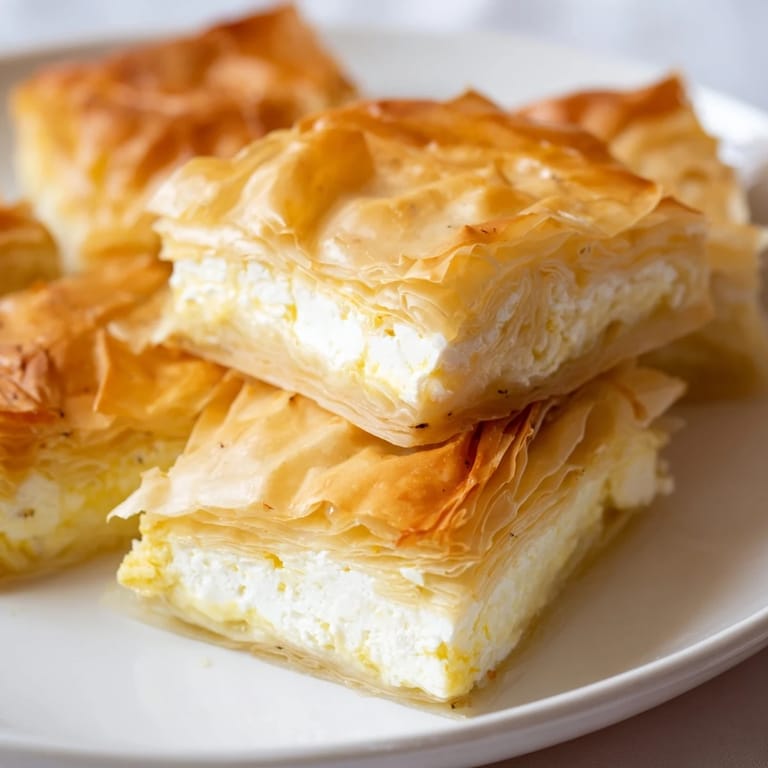
Pin There's a moment when you pull banitsa from the oven and the whole dish shifts from looking golden to looking like something worth defending. I realized then that this dish isn't about impressing anyone; it's about saying I took the time, I did this carefully, and I want you to feel it.
The Magic of Layering
Every layer in banitsa teaches you something about patience. The phyllo wants to crack, the filling wants to seep, the butter wants to burn at the edges—but when you respect each step, something happens that feels almost deliberate, like the pastry knows what it's becoming. I've learned that the layers aren't just texture; they're a promise that good things take time.
Flavor Pairings and Serving Ideas
Banitsa deserves companionship—serve it with a glass of cold ayran, that tangy yogurt drink that cuts through the richness and makes you want another bite. A simple tomato and cucumber salad works too, bright and cool against the warm, salty pastry. Some mornings I eat it straight from the pan with my hands, no plate, no apologies, just because that's when it tastes best.
Making It Your Own
The beauty of banitsa is that it welcomes small changes without losing its identity. Fresh dill or parsley folded into the filling adds an herbal note that feels Mediterranean in the best way, while using half Bulgarian sirene cheese and half feta creates a milder, almost creamy version. You could even sneak in some roasted red peppers or spinach if the mood strikes—banitsa is forgiving that way.
- Add a few tablespoons of chopped fresh dill or parsley to the filling for an herbaceous edge.
- Substitute half the feta with Bulgarian sirene or ricotta if you prefer a gentler, less salty version.
- Make it the night before and reheat gently—it actually tastes better after sitting, like the layers have gotten to know each other.
 Pin
Pin Banitsa is proof that simple ingredients, treated with attention, become something memorable. Make it, eat it warm, and let the butter and cheese do their quiet work.
Recipe FAQ
- → What type of cheese is used in Bulgarian banitsa?
Feta cheese is traditionally used, providing a tangy and creamy flavor that complements the pastry layers.
- → How should phyllo dough be handled during preparation?
Keep phyllo dough covered with a damp towel to prevent drying and handle gently to avoid tearing.
- → Can I add herbs to the filling?
Yes, fresh chopped dill or parsley can be added to enhance the flavor without overpowering the dish.
- → What is the ideal baking temperature and time?
Bake at 180°C (350°F) for 30–35 minutes until the top is golden and crisp.
- → How is banitsa typically served?
It can be enjoyed warm or at room temperature, often paired with a yogurt drink or fresh salad.