 Pin
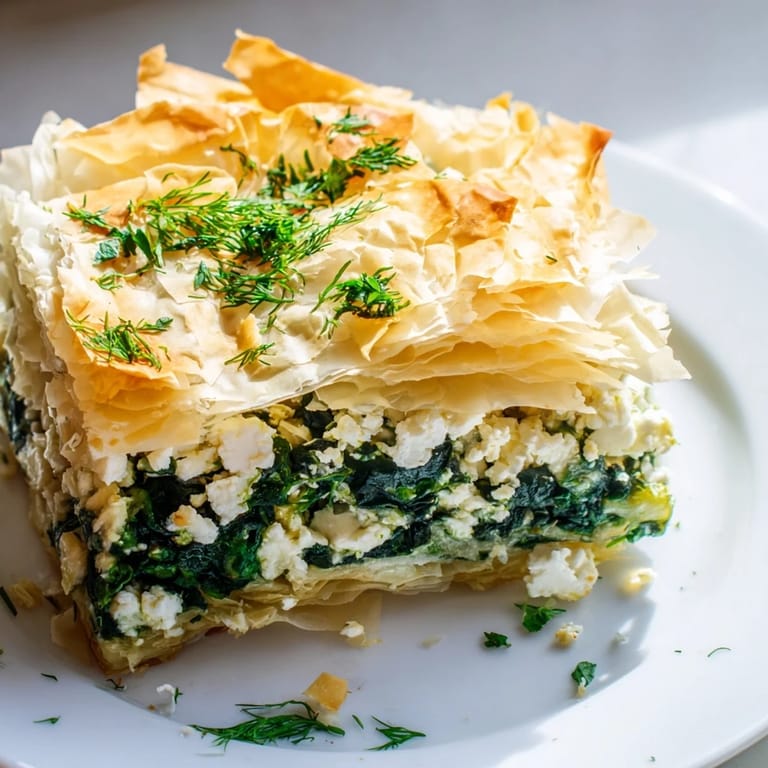
Pin The first time I made spanakopita, I wasn't trying to be traditional—I just had a pile of spinach that was about to turn, some feta crumbles in the fridge, and a box of phyllo dough I'd been meaning to use. What came out of the oven forty minutes later was a revelation: crispy, buttery layers that shattered under my fork, giving way to this savory, herbaceous filling that tasted like someone had managed to bottle a whole Mediterranean afternoon. It became the recipe I make when I want to feel like I actually know what I'm doing in the kitchen.
I remember bringing this to a neighborhood potluck on a sticky summer evening, and somehow it was the first thing to disappear from the table. Someone asked if I'd bought it from a Greek restaurant, and I got to say I hadn't, which might have been the best compliment I've received in my kitchen.
Ingredients
- Fresh spinach: Two pounds of the loose, leafy kind makes a difference in flavor compared to the bagged stuff—it's more delicate and less watery, though frozen works perfectly fine if that's what you have on hand.
- Yellow onion and scallions: The onion brings sweetness and depth, while the scallions add brightness and a whisper of sharpness that keeps the filling from feeling heavy.
- Fresh dill: This is where the magic lives—dried dill does the job, but fresh dill makes people pause mid-bite and ask what that incredible herb flavor is.
- Feta cheese: Use real feta if you can; it has a tanginess that blocks of pre-crumbled cheese sometimes lack, and it doesn't disappear into the filling.
- Ricotta or cottage cheese: This is optional, but it transforms the filling from crumbly to creamy without making it heavy—I add it almost every time now.
- Eggs: These bind everything together and give the filling a subtle richness that makes it cohesive rather than scattered.
- Nutmeg: Just a pinch, but it's what makes people tilt their head and say 'something tastes amazing, what is that?'
- Phyllo dough: Buy it frozen and thaw it in the fridge overnight, not on the counter—it thaws more evenly and stays pliable without getting gummy.
- Olive oil for brushing: This is what creates the shatter-crispy texture; don't skimp or try to use less, it actually needs that oil to get golden.
Tired of Takeout? 🥡
Get 10 meals you can make faster than delivery arrives. Seriously.
One email. No spam. Unsubscribe anytime.
Instructions
- Prepare your space:
- Preheat your oven to 350°F and lightly grease that 9x13-inch baking dish—the dish needs just enough oil to prevent sticking, not a full coating. Have your pastry brush waiting nearby because phyllo waits for no one.
- Sauté the aromatics:
- Heat olive oil in a skillet over medium heat, then add your chopped onion and scallions. You're looking for them to become soft and golden, which takes about five minutes and fills your kitchen with the most inviting smell.
- Wilt the spinach:
- Add your chopped spinach to the pan in batches if you're using fresh—it looks like an impossible amount of greens, but it shrinks dramatically as it cooks. Stir occasionally and let the heat draw out the moisture; you want the pan relatively dry when you're finished.
- Cool and combine:
- Once the spinach cools enough to handle, squeeze out any remaining moisture with your hands or a clean kitchen towel—this step matters more than people think, because excess water turns crispy phyllo soggy. In a bowl, fold together the spinach mixture, dill, parsley, crumbled feta, ricotta if you're using it, beaten eggs, black pepper, nutmeg, and a pinch of salt.
- Layer the phyllo base:
- Lay one sheet of phyllo in your dish, letting it drape over the edges, then brush it lightly with olive oil. You'll repeat this about seven times, each sheet getting its own light coating—this is meditative work, actually.
- Spread the filling:
- Once your base is ready, spread the spinach mixture evenly across it, pressing gently so it settles into an even layer.
- Top and tuck:
- Layer the remaining phyllo sheets on top, brushing each one with oil, just like you did the base. Once they're all in place, tuck any overhanging edges down into the sides of the dish so they don't burn.
- Score with intention:
- Using a sharp knife, score the top phyllo layers into squares or diamonds, cutting only through the top few layers, not all the way through to the filling. This makes serving cleaner and lets people know where the natural break points are.
- Bake until golden:
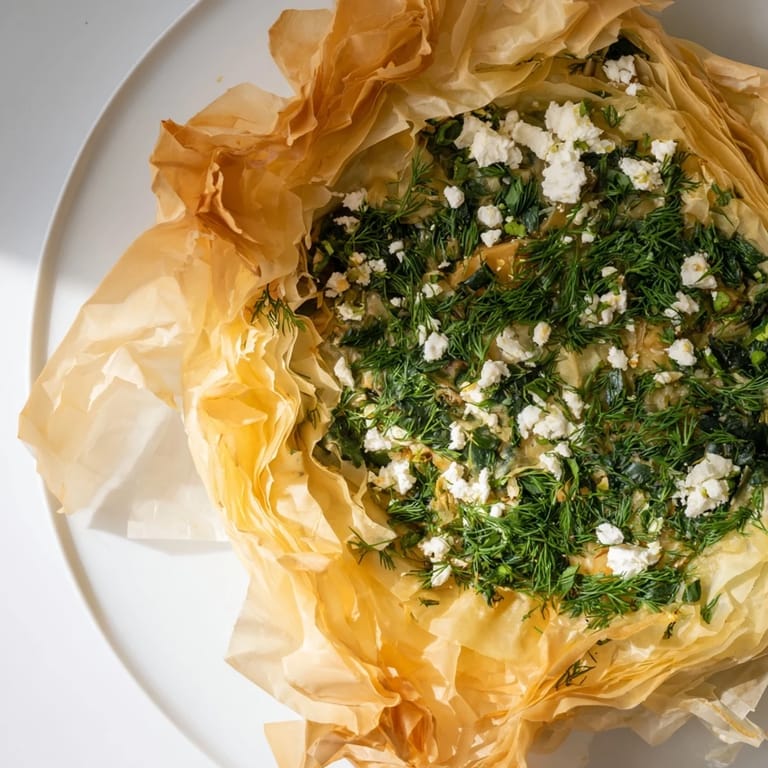
- Slide it into the oven for 35 to 40 minutes, and you'll know it's done when the phyllo is deep golden and crisp all over. Let it rest for ten minutes after it comes out—this isn't just for texture, it gives the filling time to set so it holds together when you cut into it.
 Pin
Pin There's a moment when you pull this out of the oven and the smell hits you—it's not just food at that point, it's the feeling of doing something from scratch and getting it right. That's when spanakopita stops being a recipe and becomes something you'll make again and again.
Variations That Work
The beauty of this recipe is how adaptable it is—I've made it with chard, kale, and even collard greens when spinach wasn't available, and each one brought its own character to the filling. Some people swap in mizithra cheese for a sharper edge, or add pine nuts and raisins if they want sweetness to play a role. I once added roasted red peppers and caramelized leeks on a whim, and honestly, it was one of my best decisions.
Serving and Timing
This is genuinely flexible about when it gets eaten—serve it warm, at room temperature, or even cold the next day straight from the fridge. I've brought it to picnics, made it for weeknight dinners, and cut it into tiny squares for parties. A crisp white wine like Assyrtiko or a sauvignon blanc turns it into an actual meal, but it's equally good on its own as a quick lunch.
The Details That Actually Matter
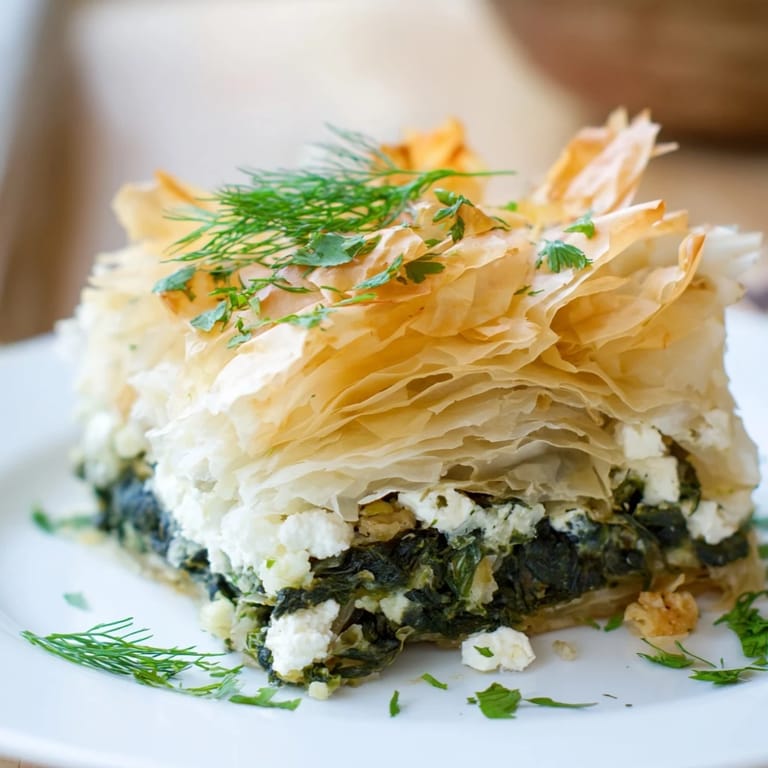
Phyllo dough is temperamental until you understand it, but it's not difficult—once it's thawed and you start layering, it becomes almost meditative. The key is patience: brush each layer gently, don't rush the layering, and trust that all those thin sheets are doing their job. The contrast between the crispy exterior and the creamy, herb-forward filling inside is where this dish becomes memorable.
- Make sure your phyllo is fully thawed before opening the box, which takes overnight in the fridge, not hours on the counter.
- If you notice phyllo sheets tearing as you layer, just use them anyway—overlaps are fine and actually make sturdier sections.
- Scoring the top gives it visual appeal and makes serving cleaner, but skip this step entirely if it feels stressful; it tastes just as good unscored.
 Pin
Pin Spanakopita has a way of becoming a staple in your kitchen because it proves that simple, quality ingredients and patience create something that tastes genuinely impressive. Make it once, and you'll find reasons to make it again.