 Pin
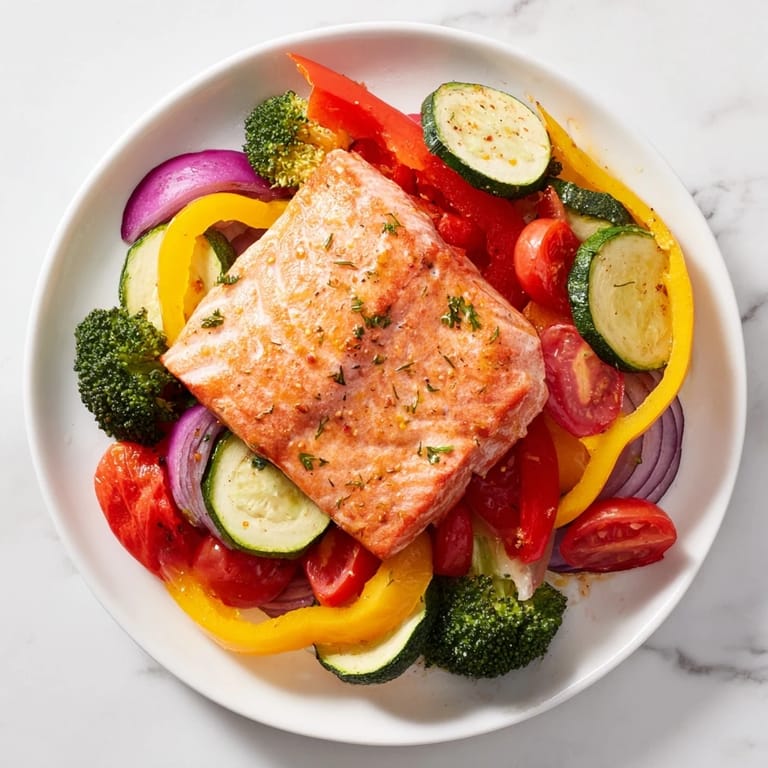
Pin I discovered this recipe on a Tuesday evening when I had salmon thawing and absolutely no energy for complicated cooking. My partner was working late, and I wanted something that felt restaurant-quality but required minimal fussing around the kitchen. I threw together whatever vegetables were looking fresh in the crisper drawer, tossed them with lemon and dill, and the entire meal came together while I changed out of work clothes. That single sheet pan has become my go-to move when I want healthy food that tastes effortless.
I made this for my sister last month when she mentioned offhandedly that she was trying to eat more fish. She arrived skeptical about "healthy dinner," but the aroma alone changed her mood. When we pulled it out of the oven, the lemon and dill hit us both at once, and watching her face light up made me realize how simple food can be the best kind of gift.
Ingredients
- Salmon fillets: Six ounces each, skinless so they cook evenly and the flesh stays delicate without any texture fighting you.
- Olive oil: This carries all the flavor, so use something you actually enjoy tasting, not the bargain bottle.
- Lemon: Both zest and juice matter here, the zest adds brightness to the fish and the juice keeps everything from feeling heavy.
- Dill: Fresh is incomparably better than dried if you can grab it, but dried works in a pinch and your kitchen will still smell incredible.
- Garlic powder: A quiet background note that prevents the dish from tasting one-dimensional.
- Bell peppers, red and yellow: The colors aren't just pretty, they add sweetness as they roast that balances the savory salmon.
- Red onion: Cut into wedges so the layers hold together and caramelize instead of becoming stringy.
- Zucchini: Slice it thin enough that it cooks through in 20 minutes without turning to mush.
- Cherry tomatoes: Halved so they release their juices and become these little flavor bombs scattered through the pan.
- Broccoli florets: The hearty vegetable that holds its texture and adds earthiness to the bright flavors around it.
- Fresh parsley and lemon wedges: The finishing touch that makes people think you spent way more time than you actually did.
Tired of Takeout? 🥡
Get 10 meals you can make faster than delivery arrives. Seriously.
One email. No spam. Unsubscribe anytime.
Instructions
- Get your pan ready:
- Heat the oven to 425°F and line your sheet pan with parchment paper, which is the lazy person's trick to avoid scrubbing later. If you have foil, that works too, just give it a light spray of cooking spray so things don't stick.
- Make your magic sauce:
- In a bowl, whisk together the olive oil, lemon zest, lemon juice, dill, garlic powder, salt, and pepper. Taste a tiny bit on your fingertip and adjust if you want more lemon or salt, because you can't fix it once it's on the fish.
- Scatter the vegetables:
- Dump all your chopped vegetables onto the sheet pan and toss them with half of that seasoned oil. The vegetables need to be mostly in one layer so they roast instead of steam, so resist the urge to pile them up.
- Nestle in the salmon:
- Arrange the salmon fillets on top of and around the vegetables, then brush them with the remaining oil mixture. Try to space them so air can circulate, and make sure they're not completely buried under vegetables or they won't get that light, flaky texture.
- Let the oven do the work:
- Roast for 18 to 20 minutes, until the salmon flakes apart with the gentlest pressure from a fork and the vegetables have some color. Set a timer because those last two minutes make a huge difference between perfectly cooked and overdone.
- Finish with flair:
- Pull everything out, scatter fresh parsley over the top, and add lemon wedges around the pan. Serve it straight from the pan if you're feeling casual, or transfer to a platter if you want to feel fancy.
 Pin
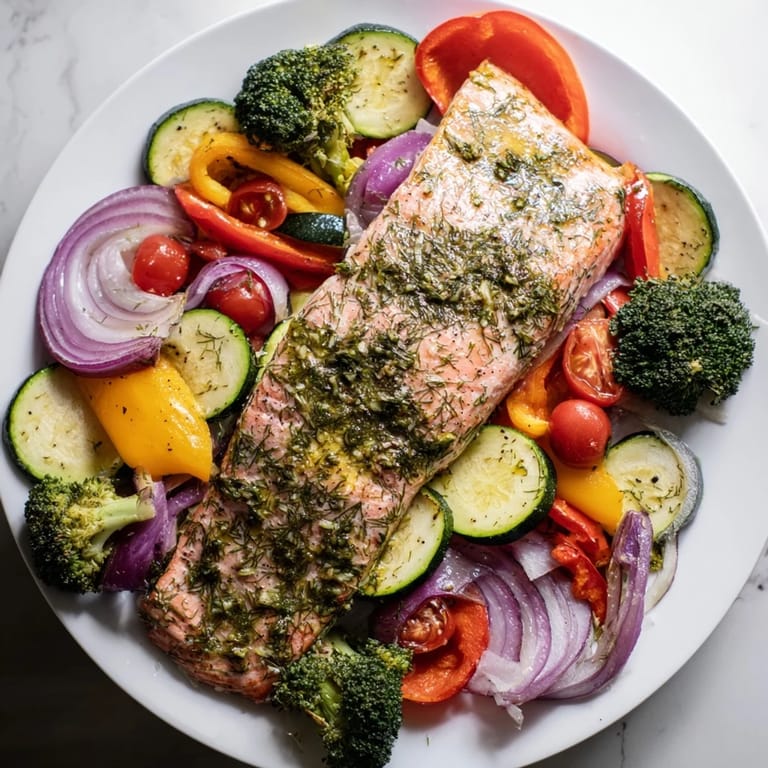
Pin What started as a lazy weeknight shortcut has become my answer to "what should we make?" when someone's coming over and I want to seem like I have my life together. There's something about handing someone a warm plate with a perfectly cooked salmon fillet surrounded by jewel-toned vegetables that makes you feel like a better cook than you actually are.
Why This Became My Go-To Move
The beauty of this recipe is that it never feels repetitive even though I make it constantly. I change the vegetables based on what's at the market or what's about to go bad in my fridge, so it's different every time but always easy. The process is so hands-off that you can actually enjoy cooking instead of spending the whole time stress-watching something on the stove.
Making It Your Own
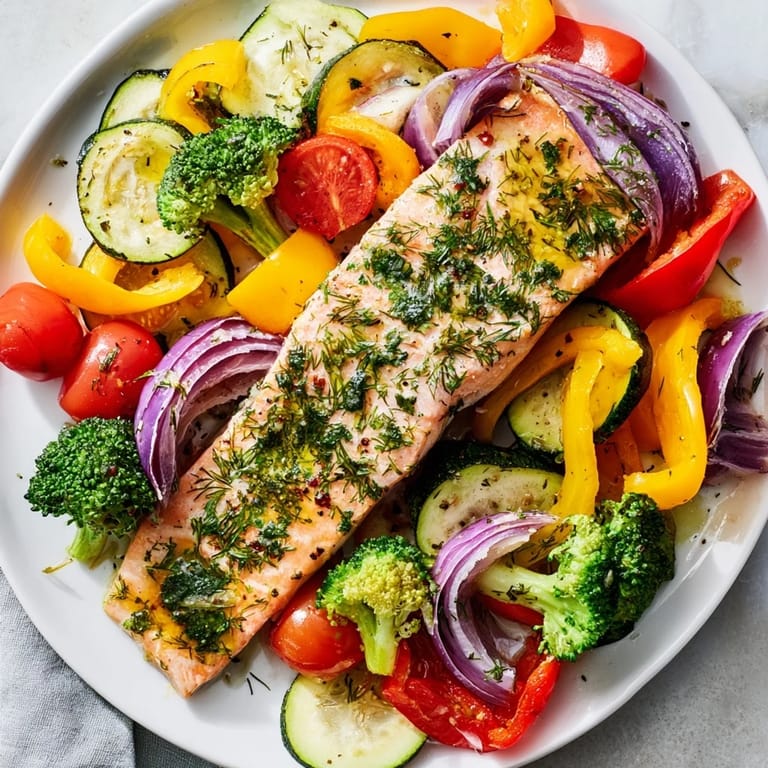
Once you make this once, you'll start seeing all the ways you can bend it to match whatever you have around. Spring calls for asparagus and peas, summer begs for zucchini and tomatoes, fall wants roasted root vegetables, and winter still works great if you use Brussels sprouts and butternut squash. The lemon and dill stay constant because they're the backbone of the flavor, but everything else is negotiable.
Extra Touches That Surprise People
I've started experimenting with small additions that turn this from "healthy dinner" into something people actually get excited about. A scatter of capers adds a salty, briny pop that contrasts beautifully with the sweet roasted vegetables, or a crumble of feta cheese at the end brings creaminess without weighing anything down. Sometimes I finish it with a drizzle of really good olive oil right after it comes out of the oven, which sounds unnecessary but makes you taste the quality of the oil in the best way possible.
- Try adding capers or feta for extra flavor complexity.
- A final drizzle of good olive oil right from the oven elevates the whole dish.
- Pair it with crusty bread to catch all those vegetable juices at the bottom of the pan.
 Pin
Pin This recipe taught me that the meals people remember aren't the complicated ones, they're the ones that taste like you know what you're doing without it ever being complicated. Make this whenever you need to feel like you've got things under control in the kitchen.
Recipe FAQ
- → What temperature is best for roasting salmon and vegetables?
Roasting at 425°F (220°C) ensures the salmon becomes tender and flaky while vegetables cook evenly and caramelize slightly.
- → Can I substitute the vegetables?
Yes, seasonal vegetables like asparagus, green beans, or carrots can be swapped in for variety and freshness.
- → How can I enhance the flavor of this dish?
Sprinkling feta cheese or capers over the salmon and vegetables before serving adds a tangy depth to the flavors.
- → What is a good pairing for this meal?
A crisp Sauvignon Blanc or a light Chardonnay pairs beautifully with the bright citrus and herb notes in the dish.
- → Is this dish suitable for gluten-free diets?
Yes, all ingredients are naturally gluten-free, making it suitable for gluten-sensitive individuals.