 Pin
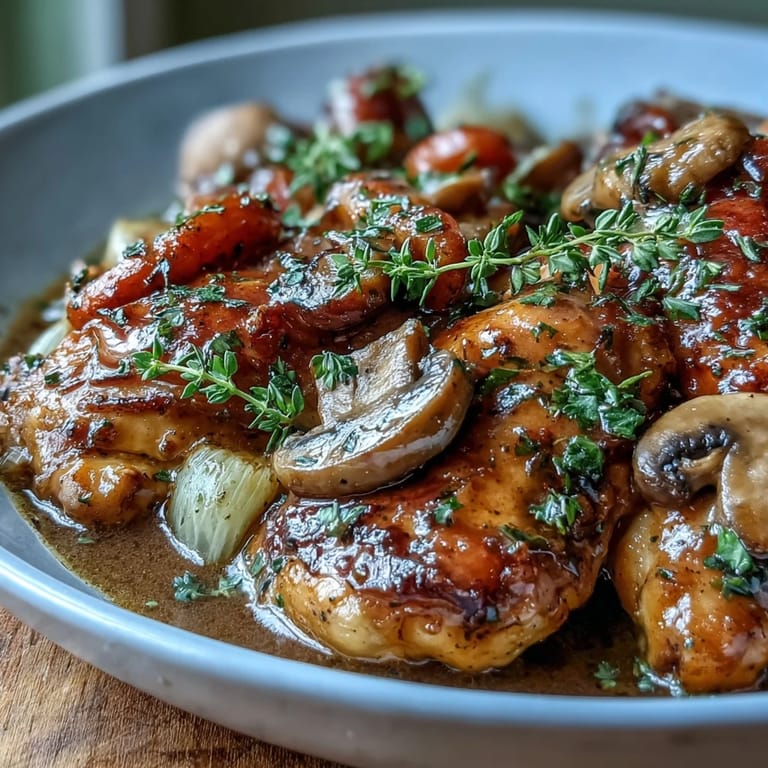
Pin A friend once served me coq au vin at a dinner party on a cool spring evening, and I watched how the deep burgundy sauce caught the candlelight. Years later, I wanted to recreate that magic but with something lighter, so I experimented with rosé instead, which turned out to be a revelation. The wine's delicate floral notes paired beautifully with cream, creating something that felt both classic and unexpectedly modern. What started as a kitchen experiment became the dish I return to whenever I want to feel a little fancy without spending all day cooking.
I made this the first time my in-laws visited our new apartment, and honestly, I was nervous about the verdict. But something magical happened when that cream swirled into the wine and mushrooms—the kitchen filled with this elegant aroma that made everyone gather around before we'd even sat down. My mother-in-law asked for the recipe that night, which felt like a quiet victory.
Ingredients
- Chicken pieces (1.5 kg bone-in, skin-on thighs and drumsticks): Bone-in thighs have more flavor than breasts and forgive you if the cooking time runs a bit long because they stay moist and tender no matter what.
- Dry rosé wine (500 ml): Look for something you'd actually drink, not the cheapest bottle you can find, because that subtle flavor difference really shows in the sauce.
- Heavy cream (200 ml): This is what transforms the braising liquid into something silky and luxurious, so don't skip it or substitute it halfway through.
- Cremini or button mushrooms (200 g, quartered): Cremini has more depth than white buttons, but honestly either works if that's what's in your produce section.
- Carrots, onion, and leek: These three build the flavor foundation, and slicing them evenly means they'll soften at the same pace.
- Tomato paste (2 tbsp): This adds subtle depth without making the dish taste tomatoey, but a tablespoon goes a long way so measure carefully.
- Fresh thyme and rosemary: Dried herbs will work in a pinch, but fresh herbs here make a noticeable difference in the final flavor.
- Bay leaf: One is enough, and remember to fish it out before serving so no one gets a surprise in their bowl.
Tired of Takeout? 🥡
Get 10 meals you can make faster than delivery arrives. Seriously.
One email. No spam. Unsubscribe anytime.
Instructions
- Dry and season your chicken:
- Pat the pieces completely dry with paper towels so they'll brown properly instead of steaming. A quick sprinkle of salt and pepper at this stage sets you up for success.
- Brown the chicken in batches:
- Heat your oil until it shimmers, then lay chicken skin-side down first and let it sit for about three minutes before flipping. You're building fond on the bottom of the pot, which is liquid gold for flavor later.
- Sauté your aromatic vegetables:
- Once the chicken rests on a plate, add onions, carrots, and leek to the same pot where all those browned bits live. The texture should be tender but not mushy when you add the mushrooms.
- Build the sauce base:
- Garlic and tomato paste go in next, cooking just long enough that the raw smell disappears and you get something deeper and richer. If you're using flour, sprinkle it now and stir until everything's coated.
- Deglaze and return the chicken:
- Pour in that rosé wine and use your wooden spoon to scrape up every brown bit stuck to the bottom. The chicken nestles back in, along with your bay leaf and herb sprigs.
- Braise low and slow:
- Cover the pot and drop the heat to low, letting everything simmer gently for 45 minutes until the chicken is falling-apart tender. You'll know it's ready when a fork glides through the thigh meat without resistance.
- Finish with cream:
- Fish out the bay leaf and herb sprigs, then stir in cream and let it bubble gently uncovered for 5 to 10 minutes. The sauce will thicken slightly and take on this gorgeous pale pink color that looks restaurant-quality.
- Taste and adjust:
- Season with more salt and pepper if needed, then shower everything with fresh parsley right before serving.
 Pin
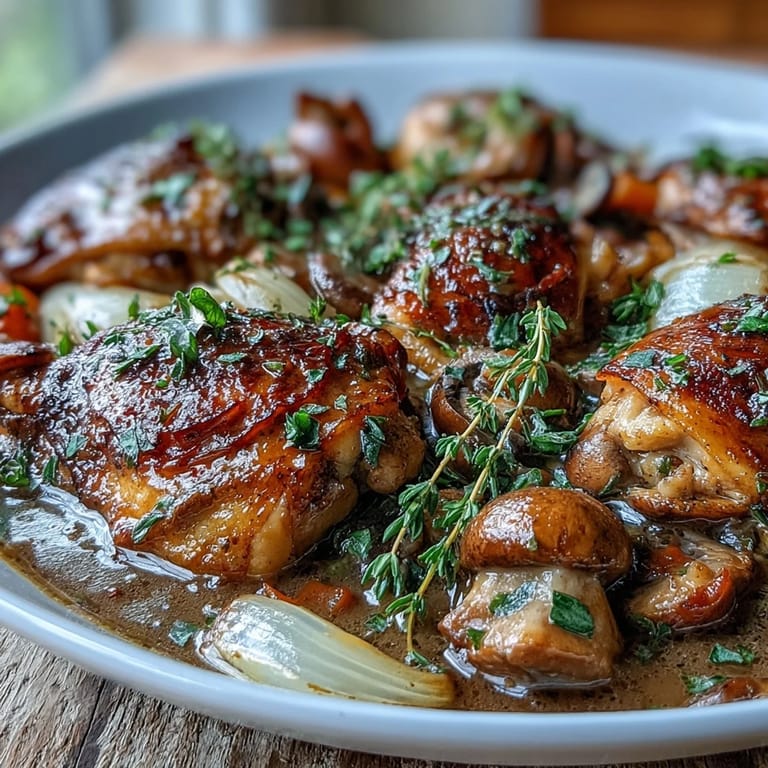
Pin There's a moment right when the cream swirls into that rosé-wine reduction where the whole dish transforms—it shifts from rustic to refined in about ten seconds. That moment never gets old, and it's the reason I keep making this dish.
What to Serve Alongside
Buttered egg noodles or creamy mashed potatoes are the obvious choices, and they catch that beautiful sauce perfectly. But honestly, crusty bread works just as well if you want something simpler, and it gives you an excuse to mop up the last of the pan.
How to Make It Your Own
A splash of cognac stirred in at the very end adds warmth and complexity, or you could replace some of the rosé with chicken stock if you want a less wine-forward flavor. Some cooks add pearl onions or lardons, which is delicious, but I like keeping it simple so the rosé stays the star.
Storage and Leftovers
This dish actually tastes better the next day after the flavors have mellowed together, so don't hesitate to make it ahead. Store it in an airtight container in the fridge for up to three days, or freeze it for up to two months and reheat gently on the stove with a splash of stock or wine.
- Let the chicken cool to room temperature before refrigerating so condensation doesn't make the skin soggy.
- Reheating on low heat instead of high keeps the cream from breaking or curdling.
- A sprinkle of fresh parsley right before serving makes leftovers taste like you just finished cooking.
 Pin
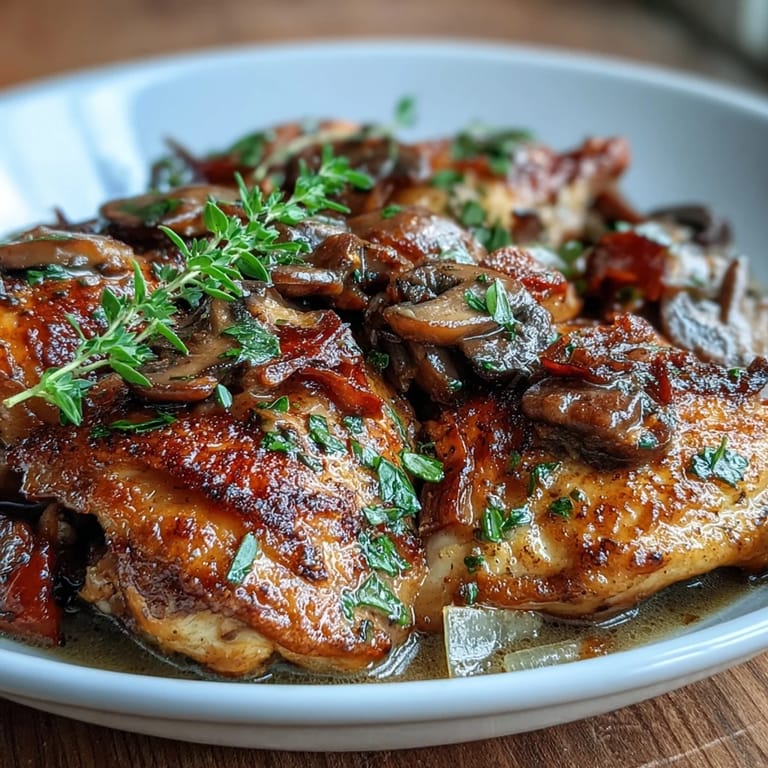
Pin This is the kind of dish that makes you feel like you've accomplished something real in the kitchen, even though the technique is straightforward and nothing fancy is required. Serve it with good company and watch how something this elegant can also be this comforting.
Recipe FAQ
- → Can I use chicken breasts instead of thighs and drumsticks?
Yes, but bone-in, skin-on thighs and drumsticks are recommended as they remain more tender and flavorful during the longer braising time. If using breasts, reduce cooking time to 30-35 minutes to avoid drying out.
- → What type of rosé wine works best for this dish?
Choose a dry rosé wine with good acidity. Avoid sweet or overly fruity rosés. A Provence-style rosé or dry Spanish rosado works beautifully. Use a wine you'd enjoy drinking.
- → Can I make this dish ahead of time?
Absolutely. This dish actually improves when made a day ahead as the flavors meld together. Prepare through step 7, cool completely, and refrigerate. Reheat gently and add the cream just before serving.
- → How can I thicken the sauce if it's too thin?
If the sauce needs more body, remove the chicken and simmer the sauce uncovered for an additional 10-15 minutes to reduce. Alternatively, mix 1 tablespoon of cornstarch with 2 tablespoons of cold water and stir into the simmering sauce.
- → What side dishes pair well with Coq au Vin Rosé?
Classic accompaniments include buttered egg noodles, creamy mashed potatoes, roasted fingerling potatoes, or crusty French bread to soak up the delicious sauce. Steamed green beans or glazed carrots also complement the dish nicely.
- → Can I substitute the heavy cream with a lighter option?
Yes, you can use half-and-half, crème fraîche, or even Greek yogurt stirred in at the end for a lighter version. Keep in mind this will affect the richness and texture of the final sauce.