 Pin
Pin There was a Tuesday evening when my roommate came home exhausted from work, and I had nothing in the fridge but mushrooms, pasta, and a jar of miso I'd been meaning to use. Something told me to combine them, and that one spontaneous decision turned into this creamy mushroom stroganoff that now appears on our table whenever we need comfort without fuss. The kitchen filled with this earthy, savory aroma that made everything feel intentional, even though I was largely improvising. That night taught me that the best dishes often come from happy accidents rather than careful planning.
I made this for friends during a rainy weekend dinner, and watching their faces light up when they tasted the sauce was the moment I realized this wasn't just another pasta dish. Someone asked for the recipe mid-bite, and I remember thinking how funny it was that something so straightforward could feel like such a discovery to share. That evening shifted how I approached cooking—not as following instructions, but as creating moments people would remember.
Ingredients
- Fettuccine or wide egg noodles (350 g): Wide ribbons catch the sauce better than thin pasta, and the egg content adds richness that complements the creamy stroganoff perfectly.
- Mixed mushrooms (500 g): Use cremini, shiitake, and button varieties for complexity—each releases moisture and flavor at slightly different rates, building depth as they cook.
- Yellow onion (1 medium): Finely chopping ensures even cooking and lets the onion dissolve into the sauce rather than leaving noticeable chunks.
- Garlic (2 cloves, minced): Mince it finely so it distributes throughout the oil without burning, which would turn it bitter and overpower the delicate miso.
- Olive oil and unsalted butter (2 tbsp plus 1 tbsp): The combination of oil and butter creates a better sauté surface while the butter adds a subtle sweetness that balances the umami.
- White miso paste (1 tbsp): This is the secret—miso adds a fermented depth that makes people ask what the mystery ingredient is, and it bridges the gap between Asian and European flavors.
- Soy sauce (1 tbsp): Adds saltiness and additional umami without needing to oversalt the dish.
- Dijon mustard (1 tsp): A small amount cuts through richness and adds a subtle sharpness that prevents the sauce from feeling one-dimensional.
- Vegetable broth (150 ml): Use homemade if possible—store-bought can be salty, so taste as you go and adjust seasoning accordingly.
- Sour cream or crème fraîche (200 ml): Sour cream adds tang that lifts the dish, while crème fraîche brings smoothness; don't skip the acidity or it'll taste flat.
- Smoked paprika (1 tsp): The smoke adds a subtle depth that hints at something you can't quite identify, making the dish feel more complex than its ingredient list suggests.
- Fresh parsley (2 tbsp, chopped): The brightness cuts through richness and reminds your palate that this is still a vegetable-forward dish.
Tired of Takeout? 🥡
Get 10 meals you can make faster than delivery arrives. Seriously.
One email. No spam. Unsubscribe anytime.
Instructions
- Get the pasta water ready:
- Salt your pasta water generously—it should taste like the sea—and cook the fettuccine just until al dente, with a slight firmness still present. Reserve half a cup of the starchy water before draining; this liquid is your secret weapon for creating a silky, cohesive sauce.
- Build the aromatic base:
- Heat olive oil and butter over medium-high heat until the butter froths slightly, then add your finely chopped onions and let them soften for 3–4 minutes, stirring occasionally. You want them translucent and slightly caramelized at the edges, which takes patience but rewards you with sweetness.
- Brown the mushrooms:
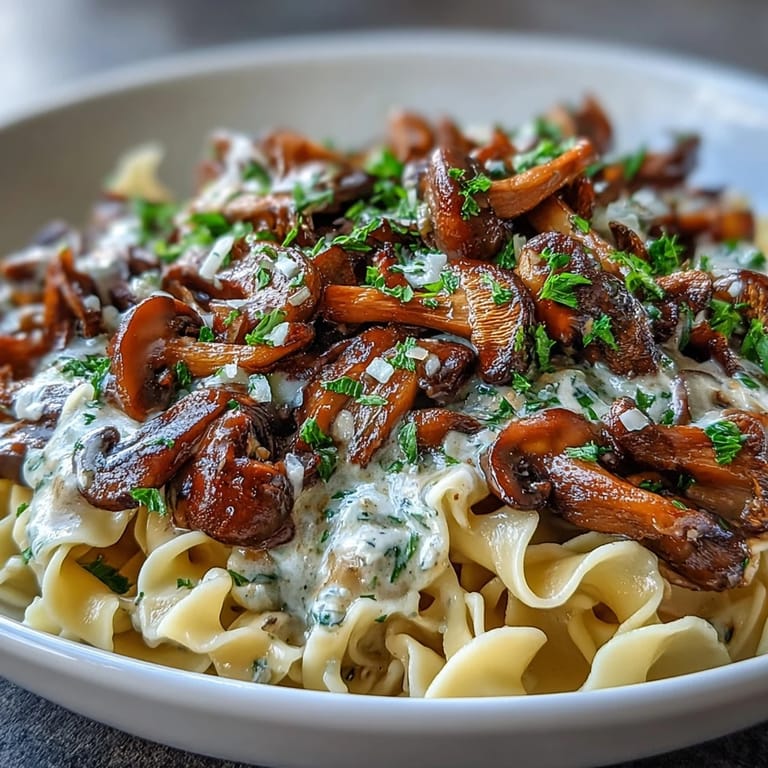
- Add minced garlic for just a minute to release its aroma, then tumble in all your mushrooms at once. Resist the urge to stir constantly; let them sit for a minute or two to brown properly, which concentrates their flavor before you toss and continue cooking for another 5–6 minutes until they've released their liquid and begun to caramelize.
- Introduce the umami layer:
- Lower the heat to medium and stir in the white miso, soy sauce, and Dijon mustard, coating the mushrooms evenly and letting the paste dissolve into the oil slightly. This step unlocks all the depth; the miso should smell fermented and complex, not harsh.
- Deglaze and simmer:
- Pour in the vegetable broth while scraping up any browned bits stuck to the skillet—this builds flavor—then sprinkle in the smoked paprika and let everything simmer gently for 2–3 minutes. The sauce should reduce slightly and smell deeply savory.
- Create creaminess without breaking:
- Reduce heat to low, then pour in your sour cream or crème fraîche while stirring gently and continuously—boiling will cause it to break and curdle. The transformation from thin to luxurious happens in about a minute, and you'll see why this step matters.
- Combine and finish:
- Add the cooked pasta directly to the skillet and toss gently, adding reserved pasta water a little at a time until the sauce coats every strand with a silky sheen. Taste, adjust salt and pepper, then serve immediately while everything is hot and unified.
 Pin
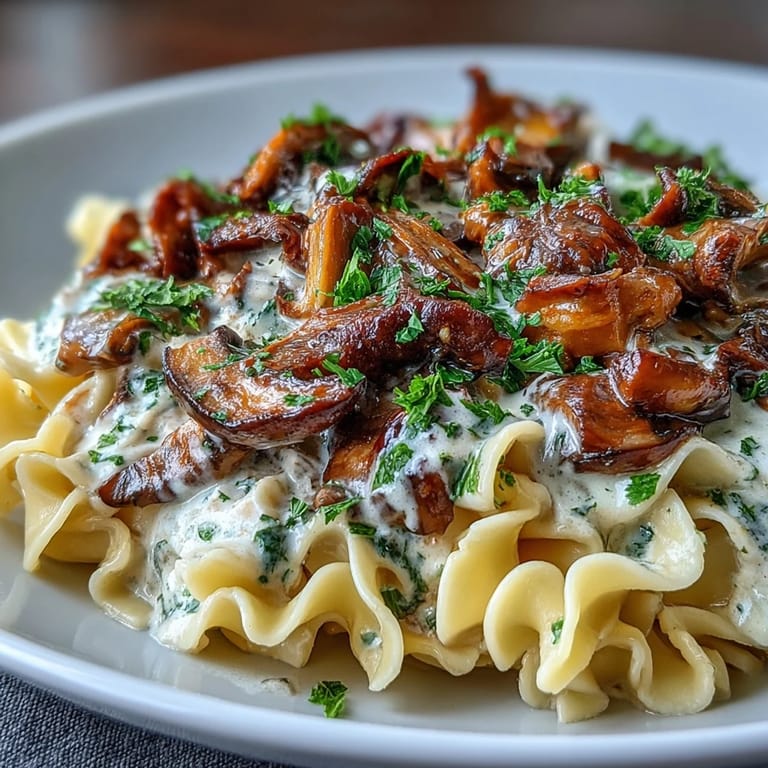
Pin I've served this dish to people who claim they don't love mushrooms, and every single one has asked for seconds. There's something about the way the creamy sauce, the fermented miso, and the browned mushrooms come together that feels like comfort without being heavy—it's sophisticated enough for guests but easy enough for any Tuesday night.
Why Miso Is the Unsung Hero
Most stroganoff recipes rely entirely on sour cream and butter for richness, which is lovely but one-dimensional. Miso paste adds a fermented complexity that makes people pause and ask what they're tasting—it deepens the umami without adding Asian flavors if you use it sparingly, instead creating a bridge between what feels European and what feels somehow more interesting. I discovered this by accident when I found miso in my pantry and thought, why not, and it completely changed how I approach creamy sauces in general. Now I add a small spoonful of miso to almost any sauce where I want depth without additional fat.
The Mushroom Question: Quality Over Variety
You don't need five different mushroom types to make this excellent—a mix of three keeps it simple while still building flavor complexity. Each mushroom variety releases liquid and browns at slightly different rates, which creates layers of flavor as they cook. Cremini mushrooms provide earthiness, shiitake add umami and chewiness, and button mushrooms contribute mild sweetness and a tender texture. If you can only find one variety, use it without hesitation; the stroganoff will still be delicious because the sauce itself is strong enough to carry the dish.
Pasta Water: Liquid Gold You Shouldn't Ignore
The starch in pasta water is what turns a separated, oily sauce into something cohesive and silky that costs restaurants their reputations to achieve. Add it slowly after you've combined everything, stirring constantly, until the sauce reaches that perfect sheen where it clings to the pasta rather than pooling at the bottom. This technique applies to almost any creamy pasta dish—it's one of those small kitchen habits that makes enormous differences in results.
- Always salt your pasta water generously; unsalted water produces bland pasta that can't be fixed later.
- Reserve the pasta water while the pasta is still hot, before draining, so you capture the maximum starch.
- If you add too much pasta water and the sauce becomes runny, let it simmer gently for another minute to reduce.
 Pin
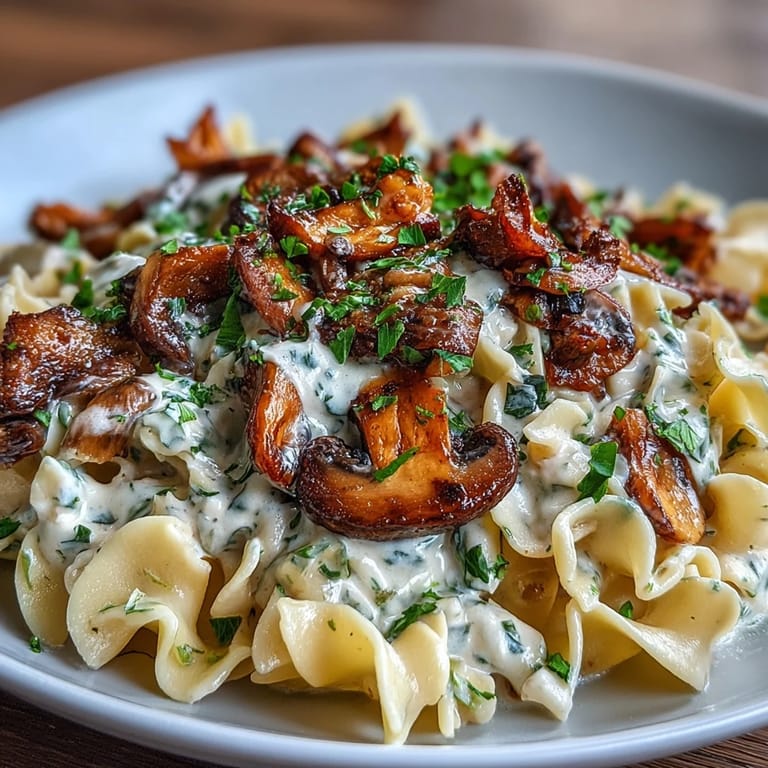
Pin This stroganoff proves that comfort food doesn't require complicated technique or a long ingredient list—just thoughtful choices and the patience to brown your mushrooms properly. Make it once, and it'll become a reliable favorite you return to whenever you want something that tastes like care but feels effortless.
Recipe FAQ
- → Can I use different types of mushrooms?
Yes, you can use any combination of mushrooms you prefer. Cremini, shiitake, button, porcini, or oyster mushrooms all work beautifully and each adds its own unique flavor profile to the dish.
- → How do I make this vegan?
Simply substitute plant-based butter and dairy-free sour cream for the butter and sour cream. The miso and soy sauce already provide plenty of umami depth, making it just as flavorful.
- → What pasta works best for stroganoff?
Wide egg noodles or fettuccine are traditional choices as their broad surface area holds the creamy sauce beautifully. However, pappardelle or even penne would work well too.
- → Can I make this gluten-free?
Absolutely. Use your favorite gluten-free pasta and replace soy sauce with tamari, which is naturally gluten-free. Always verify that your miso paste is also gluten-free by checking the label.
- → Why add miso paste to stroganoff?
Miso paste adds incredible depth and umami richness to the sauce, enhancing the earthy mushroom flavors. It creates a more complex taste profile that elevates this vegetarian dish beyond traditional versions.
- → How do I prevent the sour cream from curdling?
The key is to reduce the heat to low before adding the sour cream and avoid boiling the sauce afterwards. Stir gently and heat just until warmed through for a perfectly smooth, creamy consistency.