 Pin
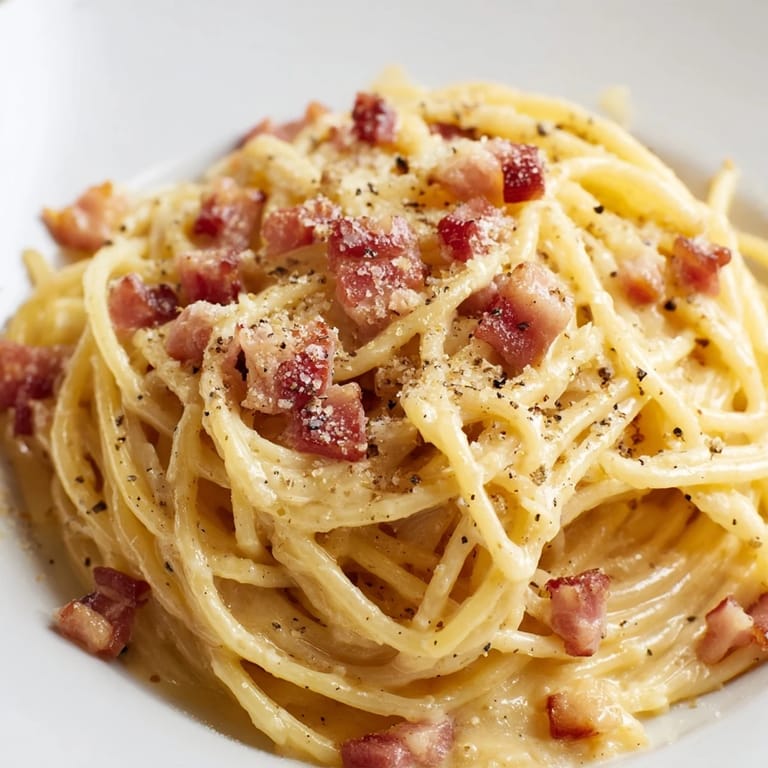
Pin There's something almost magical about carbonara—the way a handful of simple ingredients transforms into something so silky and rich that you'd swear cream was involved, when really it's just eggs doing their thing. I discovered this version on a Tuesday night when I had exactly twenty minutes and a fridge that was running low on options. No complicated techniques, no long ingredient list, just pasta, eggs, bacon, and cheese conspiring to make dinner feel effortless.
I made this for my partner on a random weeknight, and the moment they took that first bite, their eyes lit up in a way that made the whole five minutes of prep feel worth it. They kept saying, "Wait, how is this creamy?" between forkfuls, genuinely confused by the alchemy of it all. That's when I knew this recipe was a keeper—not just because it tastes good, but because it makes people slow down and actually pay attention to what they're eating.
Ingredients
- 200 g spaghetti: Dried works perfectly here; it holds up to the vigorous tossing without falling apart.
- 2 large eggs: Room temperature if you can manage it—they'll emulsify more smoothly and create that silky sauce you're after.
- 40 g freshly grated Parmesan cheese: Grate it yourself from a block if possible; pre-grated cheese has anti-caking agents that interfere with the sauce.
- 1/4 tsp freshly ground black pepper: Crack it fresh—it makes a real difference in the final taste.
- 100 g bacon or pancetta, diced: Pancetta is traditional and slightly milder, but crispy bacon works beautifully too.
- Extra Parmesan and cracked black pepper for serving: These aren't just garnish; they're your finishing touch that brings everything into focus.
Tired of Takeout? 🥡
Get 10 meals you can make faster than delivery arrives. Seriously.
One email. No spam. Unsubscribe anytime.
Instructions
- Get the Water Ready:
- Fill a large pot with salted water—it should taste like the sea. Bring it to a rolling boil, add your spaghetti, and cook until it's tender but still has a little bite to it, usually a couple minutes before the package says it's done.
- Make the Egg Mixture:
- While the pasta cooks, whisk your eggs, grated Parmesan, and black pepper together in a bowl until completely combined. This is your sauce, and it needs to be smooth and ready to go the moment your pasta is done.
- Crisp the Bacon:
- Heat a large skillet over medium heat and add your diced bacon. Cook it until the edges are golden and crispy, about three to four minutes, stirring occasionally so it cooks evenly.
- The Critical Moment:
- Drain your pasta, but save about a third of a cup of that starchy cooking water—it's liquid gold for this sauce. Immediately add the hot drained pasta to the skillet with the bacon, then remove from heat before pouring in the egg mixture.
- Toss Like Your Life Depends On It:
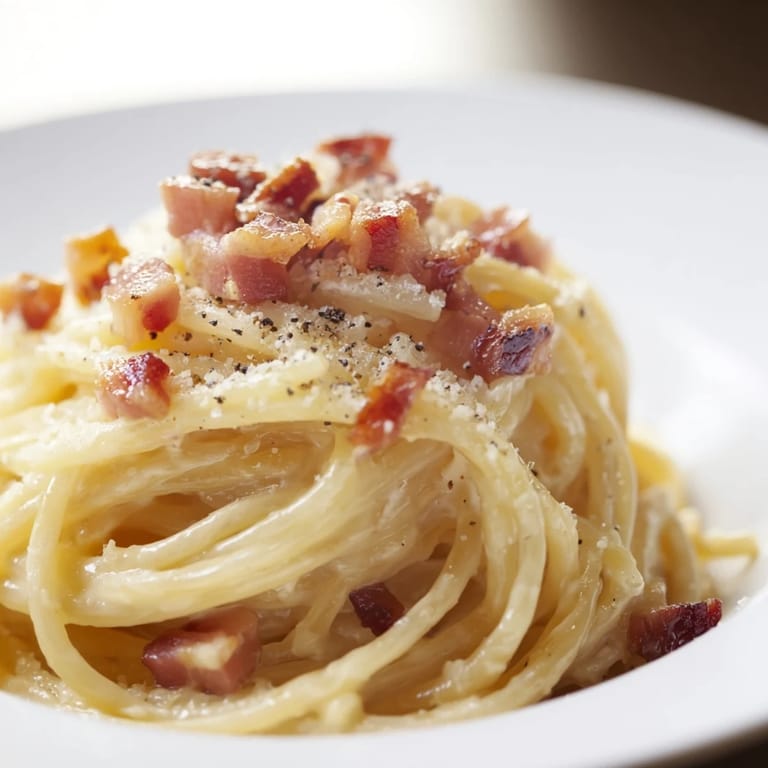
- Working quickly and with energy, toss the pasta and eggs together, adding the reserved pasta water a splash at a time. The heat from the pasta will gently cook the eggs into a creamy coating rather than scrambling them.
 Pin
Pin There was one night when I made this for friends who swore they didn't like pasta, and watching them actually go back for seconds while barely pausing the conversation felt like a small victory. Carbonara has this way of disappearing from your plate before you're even aware you're eating it—that's when you know you've nailed it.
Why Speed Matters Here
The beauty of express carbonara is that it thrives on quickness. Once your pasta is drained, every second counts because you're working with the residual heat to create that creamy sauce. This isn't a recipe where you can multitask or take your time—the speed is actually what makes it work. I used to think rushing through cooking was a bad thing, but carbonara taught me otherwise.
The Sauce Secret
What makes this so different from other pasta dishes is that there's no cream, no olive oil-heavy coating, just eggs emulsifying into something silky through the heat of the pasta and the starch from the pasta water. It's essentially a warm mayonnaise, and once you understand that, you'll never be confused about how it works again. The egg yolks provide richness, the whites help it cling to the pasta, and the Parmesan adds both flavor and helps with that silky texture.
Timing and Variations
If you want to add garlic, mince one clove and let it infuse with the bacon for a minute, then remove it before tossing so you get the flavor without bits catching on your fork. Some people swear by Pecorino Romano instead of Parmesan—it's sharper and slightly saltier, which leans into the authentic Roman roots of this dish. The beauty is that once you understand the core technique, you have room to play.
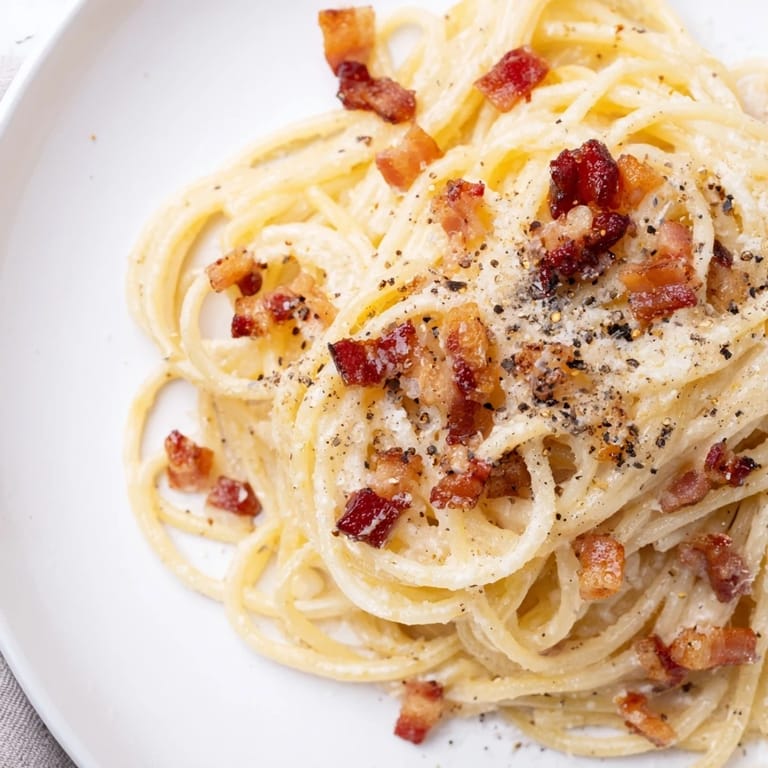
- Fresh cracked black pepper at the end is non-negotiable; it changes everything about the final taste.
- Don't skip reserving the pasta water, even if you think you won't need it—you always will.
- Serve immediately while everything is still warm and the sauce is at its silkiest.
 Pin
Pin Twenty minutes from start to finish, and you've made something that tastes like it took hours. That's the real magic of carbonara, and why it's become my answer to "What's for dinner?" more often than I'd like to admit.
Recipe FAQ
- → How do I prevent the eggs from scrambling?
Toss the pasta off the heat with the egg and cheese mixture quickly, adding reserved pasta water little by little to create a smooth, creamy sauce.
- → Can I substitute bacon with another ingredient?
Pancetta is a traditional alternative that offers a similar savory, crispy texture and flavor.
- → What is the purpose of reserved pasta water?
It helps to loosen the sauce, giving it a silky consistency that coats the spaghetti evenly.
- → Is it necessary to use freshly grated Parmesan?
Freshly grated Parmesan melts better and delivers a richer flavor than pre-grated varieties.
- → Can garlic be added to this dish?
Yes, adding minced garlic while frying bacon enhances aroma; remove before combining with pasta to avoid overpowering.