 Pin
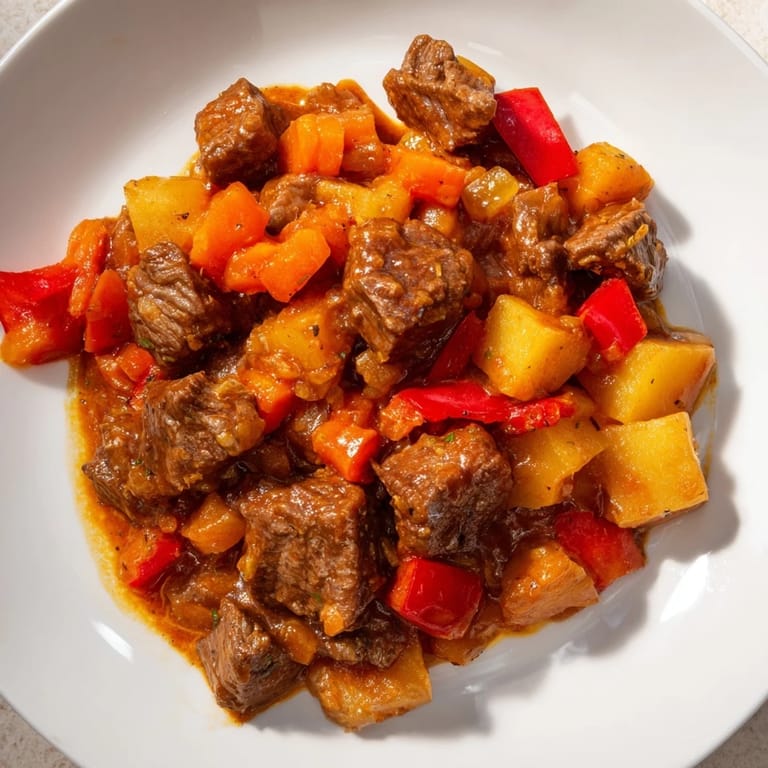
Pin My first real encounter with Hungarian goulash wasn't in Budapest, but in my friend Elena's cramped kitchen on a snowy February evening. She'd just returned from visiting her grandmother in Hungary and was determined to recreate the stew she'd eaten there, muttering instructions in broken English while paprika-dusted her apron a deep rust color. I watched her work with an almost meditative focus, understanding then that this wasn't just a recipe—it was a conversation between generations, told through the language of caramelized onions and that distinctive, earthy spice. Since that night, I've made this stew countless times, and it never fails to fill my kitchen with the kind of warmth that makes people linger at the table.
I learned the true magic of this dish when I made it for my neighbor Tom after his wife had surgery. He took one spoonful and got quiet, the kind of quiet that means food has touched something deeper. Years later, he still asks when I'm making goulash next, and I always make extra, knowing it's become shorthand for "I'm thinking of you."
Ingredients
- 2 lbs beef chuck, cut into 1-inch cubes: Chuck is your best friend here—it has just enough marbling to become tender and almost silky after two hours of gentle simmering.
- 2 large onions, finely chopped: These aren't just supporting players; they caramelize into the stew's foundation, adding natural sweetness that balances the paprika's earthiness.
- 2 medium carrots, sliced: They soften into the broth while adding subtle sweetness and a touch of natural body to the sauce.
- 1 large red bell pepper, diced: Red peppers are sweeter than green and will almost dissolve into the stew, enriching the sauce without overwhelming it.
- 2 cloves garlic, minced: Fresh garlic added early becomes almost creamy and sweet, nothing like raw garlic's sharp bite.
- 2 medium potatoes, peeled and cubed: Optional but worth it—they act like edible sponges, soaking up all the flavor while turning buttery soft.
- 3 tbsp Hungarian sweet paprika: This is non-negotiable—use real Hungarian paprika, not the generic supermarket powder, or you'll be missing the soul of the dish.
- 1 tsp caraway seeds: A whisper of anise-like warmth that feels uniquely Central European.
- 1 tsp dried marjoram: More delicate than oregano, marjoram adds herbaceous depth without shouting.
- 1/2 tsp freshly ground black pepper: Freshly ground makes all the difference—pre-ground loses its punch.
- 1 tsp salt plus more to taste: Start conservative; you can always add more at the end.
- 1 bay leaf: This scents the entire pot and should be fished out before serving (it's there for flavor, not eating).
- 4 cups beef broth: Use broth you'd actually taste on its own—the quality matters more in dishes this simple.
- 2 tbsp tomato paste: A small amount adds umami and color without making the stew taste tomato-forward.
- 2 tbsp vegetable oil or lard: Lard is traditional and creates a richer base, but good vegetable oil works fine.
Tired of Takeout? 🥡
Get 10 meals you can make faster than delivery arrives. Seriously.
One email. No spam. Unsubscribe anytime.
Instructions
- Start with the onions:
- Heat your oil in a large heavy pot over medium heat and add the chopped onions. You'll know they're ready when they're golden and almost translucent, about 8 minutes—they should smell sweet and caramelized, not sharp.
- Build your aromatics:
- Stir in the garlic and cook just until fragrant, maybe 1 minute. Don't let it brown or it'll taste bitter.
- Brown the meat:
- Add your beef cubes and let them sit undisturbed for a minute or two before stirring—this creates a brown crust that locks in flavor. Work in batches if your pot feels crowded; overcrowding means steaming instead of browning.
- Bloom the paprika:
- Sprinkle the paprika directly over the meat and onions, then stir quickly and continuously for about 30 seconds. This step is crucial—you're coaxing out the paprika's depth without letting it scorch and turn bitter.
- Layer in the flavor:
- Stir in the tomato paste, caraway seeds, marjoram, black pepper, and salt. The mixture should smell intensely aromatic and slightly darkened from the paste.
- Add the vegetables and liquid:
- Toss in the carrots, bell pepper, and bay leaf, then pour in the beef broth while scraping up any browned bits stuck to the bottom—that's pure flavor. The liquid should cover everything by about an inch.
- First simmer:
- Bring everything to a gentle simmer, then cover and turn the heat to low. You want barely a bubble breaking the surface, not a rolling boil. Let this go for 1 hour, stirring occasionally so nothing sticks.
- Add potatoes and finish:
- After 1 hour, add your potato cubes (if using) and uncover the pot. Simmer for another 45 to 60 minutes until the beef is fork-tender and the potatoes are creamy inside. The sauce should have thickened slightly from evaporation.
- Taste and adjust:
- Fish out the bay leaf, then taste carefully. Add more salt and pepper if it needs it—remember, the flavors develop as it cools.
 Pin
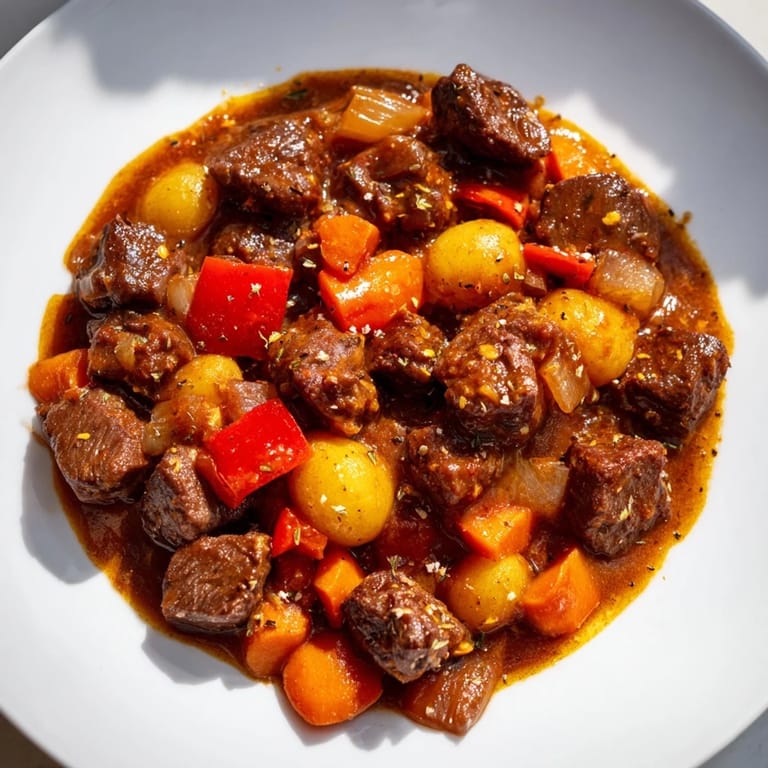
Pin There's a moment in every goulash story when someone's eyes close while tasting it, and you know the dish has done what it's supposed to do. That's when I know I've gotten it right—when food becomes memory, and memory becomes comfort.
Serving Suggestions and Pairings
This stew is forgiving about what you serve it with. Crusty bread is the simplest choice—it's there to soak up every last drop of sauce. Egg noodles turn it into something almost luxurious, their soft texture catching the paprika-rich broth. Traditional Hungarian csipetke (tiny pinched dumplings) are wonderful if you want to go all-in on authenticity, but honestly, the stew stands beautifully on its own in a bowl.
Storage and Reheating
Goulash is one of those rare dishes that actually improves as it sits in the refrigerator for a day or two, flavors deepening and settling into each other. It keeps for up to 4 days in an airtight container, and it freezes beautifully for up to 3 months. When you reheat it, do so gently on the stovetop over medium-low heat, adding a splash of broth if it's thickened too much.
Adjusting the Recipe to Your Taste
This is a template, not a mandate. If you like heat, stir in a pinch of hot paprika or a chopped fresh chili right after you bloom the sweet paprika. Some people swear by adding a splash of red wine or a small spoonful of sugar to balance the earthiness. The beauty of goulash is how it absorbs what you give it.
- For a brothier version, add an extra cup of liquid and skip the potatoes or reduce them.
- Prefer it thicker and more stew-like? Simmer uncovered longer and skip some of the broth.
- Not a fan of caraway? Leave it out; the marjoram alone is enough to anchor the spices.
 Pin
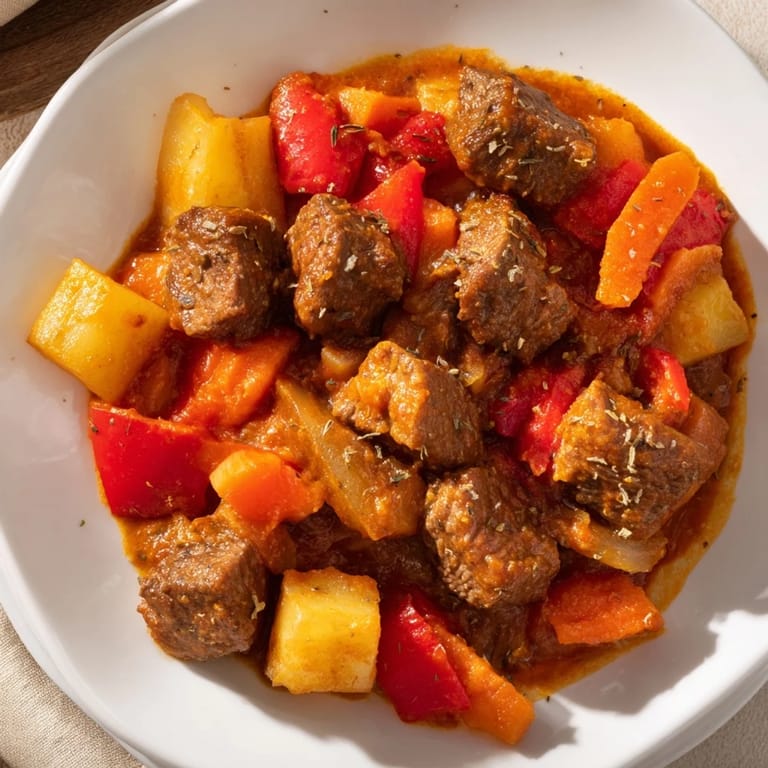
Pin After all these years, this stew still feels like a small miracle—how simple ingredients become something so deeply satisfying, so entirely comforting. Make it, and you'll understand why my kitchen smells like Elena's kitchen now, and why that's the greatest compliment I could ask for.
Recipe FAQ
- → What cut of beef is best for this dish?
Beef chuck cut into 1-inch cubes works best as it becomes tender and flavorful after slow simmering.
- → Can I add potatoes to the stew?
Yes, adding peeled and cubed potatoes during the last hour of cooking adds extra heartiness and texture.
- → What gives the stew its distinctive flavor?
Sweet Hungarian paprika combined with caraway seeds and marjoram creates the rich, aromatic base.
- → What are suitable side dishes to serve with this?
Rustic bread, egg noodles, or traditional Hungarian csipetke dumplings complement the stew perfectly.
- → Is the dish gluten or dairy-free?
Yes, this dish contains no gluten or dairy ingredients, making it suitable for those dietary needs.