 Pin
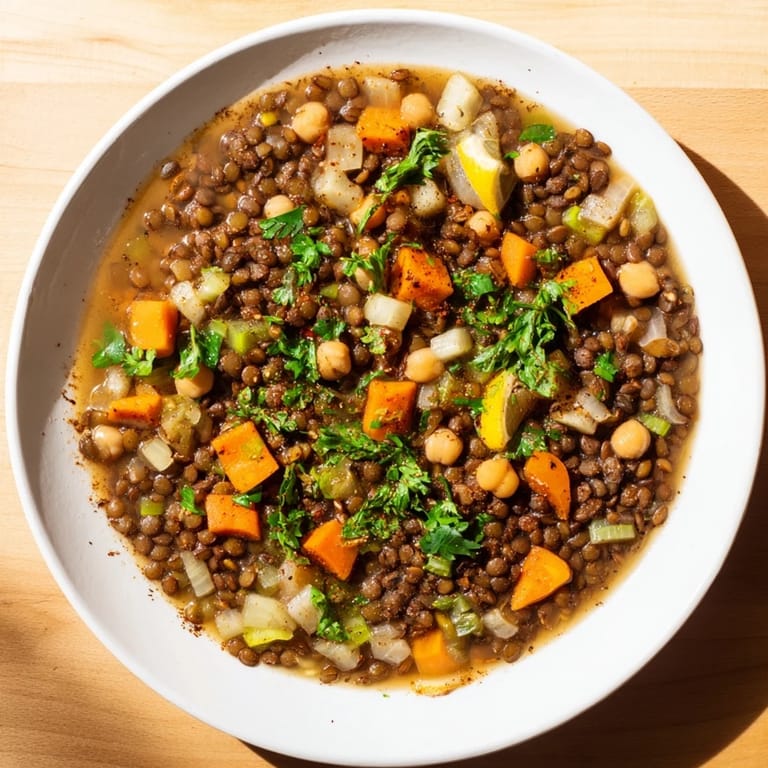
Pin There's something about the smell of sumac hitting hot oil that stops me mid-afternoon. A friend brought me a jar from a market in Istanbul, and I stood there staring at it for weeks before I figured out what to do with it. One quiet Sunday, I decided to build a stew around it, layering in lentils and chickpeas, and the result was this warm, lemony comfort that tasted like I'd unlocked a secret. Now it's what I reach for when I want something that feels both grounding and alive.
I made this for my neighbor during a particularly gray November, and she came back the next day asking for the recipe written down. Watching her face when she tasted the first spoonful—that pause before she smiled—reminded me why I love cooking for people. It's the kind of dish that brings folks around a table without any fuss.
Ingredients
- Brown or green lentils, 1 cup: They hold their shape beautifully and stay tender without turning to mush, unlike red lentils which would disappear into the broth.
- Canned chickpeas, 1 can (15 oz): Drained and rinsed well to remove excess starch, they add body and protein without the overnight soak.
- Olive oil, 2 tablespoons: The foundation for everything else, warming the aromatics and coaxing out their sweetness.
- Yellow onion, 1 large: Finely chopped so it melts into the broth and builds a gentle base of flavor.
- Garlic cloves, 3: Minced small so they distribute evenly and soften into the stew rather than announcing themselves in chunks.
- Carrots, 2 medium: Diced uniform so they soften at the same pace as everything else.
- Celery stalks, 2: The secret whisper that makes people ask what they're tasting without being able to name it.
- Ground sumac, 1 ½ teaspoons: This is the heart of the dish—tart, slightly fruity, and utterly essential, with no real substitute except extra lemon zest in a pinch.
- Ground cumin, 1 teaspoon: Adds warmth and earthiness that ties everything together.
- Ground coriander, ½ teaspoon: A subtle citrus note that plays beautifully with the sumac.
- Smoked paprika, ½ teaspoon: For depth and a whisper of smoke.
- Salt and black pepper: Season gradually as you go, tasting as the flavors build.
- Cayenne pepper, ¼ teaspoon (optional): Just a pinch if you want a gentle heat that sneaks up on you.
- Vegetable broth, 4 cups: Use a good quality broth you'd actually drink, not the thin salty kind.
- Water, 1 cup: Balances the broth and lets the spices shine.
- Lemon juice, 1 large lemon: Fresh and vital, added at the end so it stays bright and doesn't cook away.
- Fresh parsley, ½ cup: Chopped just before serving, it brings a final green freshness to each bowl.
- Lemon wedges: For squeezing over top, giving each person control over how much tang they want.
Tired of Takeout? 🥡
Get 10 meals you can make faster than delivery arrives. Seriously.
One email. No spam. Unsubscribe anytime.
Instructions
- Start the aromatics:
- Heat the olive oil in a large pot over medium heat until it shimmers. Add the chopped onion and let it cook undisturbed for a moment before stirring, allowing it to pick up a gentle golden edge and become translucent, about 4 to 5 minutes.
- Build the flavor base:
- Stir in the garlic, carrots, and celery, cooking for 3 to 4 minutes until the vegetables soften slightly and release their aromas. You'll notice the kitchen smells different now—warmer, more inviting.
- Bloom the spices:
- Sprinkle in the sumac, cumin, coriander, smoked paprika, salt, pepper, and cayenne if using. Stir constantly for about 1 minute until the spices are fragrant and coat the vegetables; this releases their essential oils and deepens their flavor.
- Add the legumes and liquid:
- Pour in the lentils, chickpeas, vegetable broth, and water, stirring to combine. Bring everything to a boil over medium-high heat, then reduce to a gentle simmer, cover, and let it cook for 25 to 30 minutes until the lentils are completely tender and the broth has absorbed their starch.
- Finish with brightness:
- Remove from heat, stir in the lemon juice and half the fresh parsley, then cook uncovered for 2 to 3 more minutes. The lemon will wake up all the spices and create a final burst of flavor.
- Taste and serve:
- Taste the stew and adjust the salt or spices as needed—it should taste balanced between savory, tart, and warm. Ladle into bowls, top with remaining parsley and a lemon wedge, and serve hot.
 Pin
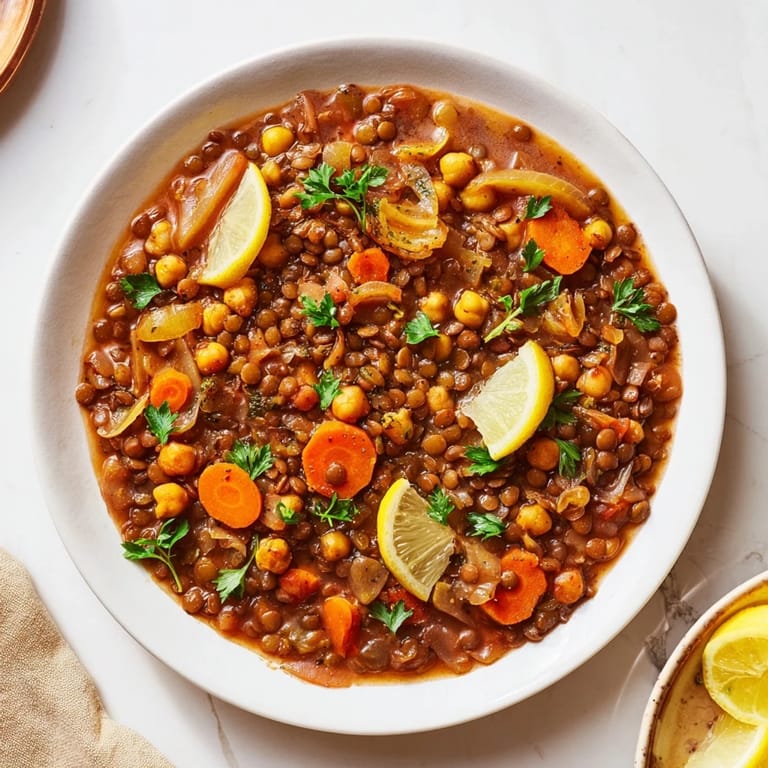
Pin The first time I made this for a dinner party, a guest asked if I'd been studying Middle Eastern cooking. I laughed and told her the truth: I'd bought sumac because it was beautiful, and this stew was me figuring out how to use it. She said it didn't matter where it came from, it tasted like home to her, and suddenly the whole thing meant something different.
Why Sumac Is Your Secret Weapon
Sumac is a quiet ingredient that does the heavy lifting in this dish. It brings tartness and complexity without needing a ton of lemon, which means you can balance the acidity however you like. If you've never cooked with it before, this is the perfect gentle introduction—it's not mysterious or intimidating, just a deep burgundy powder that tastes like sun-dried lemons and makes people pause and ask what they're eating.
Making It Your Own
This stew is forgiving and wants to be adapted. Add a generous handful of fresh spinach or chopped kale in the last 5 minutes if you want more green. Serve it over warm rice if you want something heartier, or with flatbread if you want to scoop and soak. Some people swirl a little tahini on top, others drizzle with extra olive oil and a sprinkle of sumac. Let your kitchen, your preferences, and what you have on hand guide you.
Storage and Reheating
This stew tastes even better the next day after the flavors have had time to deepen and mingle. Store it in an airtight container in the refrigerator for up to 5 days, or freeze it for up to 3 months. Reheat gently over medium-low heat with a splash of water or broth if it's thickened too much, stirring in fresh parsley and lemon juice again just before serving.
- A dollop of yogurt stirred in at the end adds richness and a cool contrast to the spices.
- Leftover stew makes an excellent next-day lunch or the base for a grain bowl topped with fresh vegetables and herbs.
- If it thickens too much during storage, thin it with a little broth or water to bring it back to a stew-like consistency.
 Pin
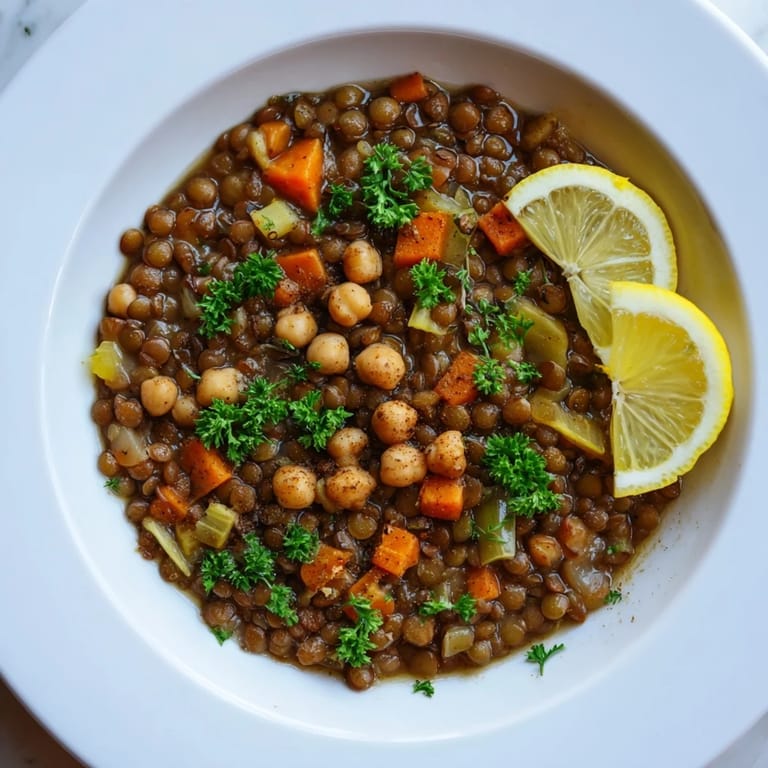
Pin This stew has become something I make without thinking, which is maybe the highest compliment a recipe can get. There's comfort in knowing exactly how to build something warm and good, and sharing it with the people at my table.
Recipe FAQ
- → What legumes are used in this dish?
Dried lentils and canned chickpeas provide the hearty base for the stew, offering both protein and texture.
- → How does sumac influence the flavor?
Sumac imparts a tangy, lemony brightness that enhances the overall aroma and taste, enriching the dish's Middle Eastern character.
- → Can fresh herbs be substituted in this dish?
Fresh parsley is suggested for garnish and freshness, but cilantro or mint could also be used to add a different herbal note.
- → What cooking method is used to prepare this dish?
The ingredients are sautéed first, then simmered gently to meld flavors and tenderize the lentils and chickpeas.
- → Is this dish suitable for special diets?
Yes, this stew is both vegan and gluten-free, making it accessible for various dietary preferences.
- → What can be served alongside for a complete meal?
Warm flatbread or a bed of rice complements the stew well, adding substance and enhancing the comforting experience.