 Pin
Pin There's something about a steaming bowl of pasta soup that stops time, especially on those evenings when you walk in from the cold and your kitchen fills with the smell of sautéed onions and herbs. My neighbor Maria taught me this recipe years ago when she noticed I was always ordering soup delivery instead of making my own, and she laughed saying it took her barely an hour from start to finish. The first time I made it, I was skeptical—how could something so simple taste this comforting?—but one spoonful changed everything. Now whenever someone mentions they're not feeling well or the weather turns grey, this is the first thing I think to make.
I'll never forget making this for my brother's family when their youngest came down with a cold—his daughter sat at the kitchen counter watching the steam rise from the pot, asking a hundred questions about why the pasta floats up when it's done. By the time we ladled it into bowls, she was already asking for seconds, and my sister-in-law got the recipe that same night. It became their go-to comfort food, and now whenever I see them, they tell me it's the soup that made her healthy again.
Ingredients
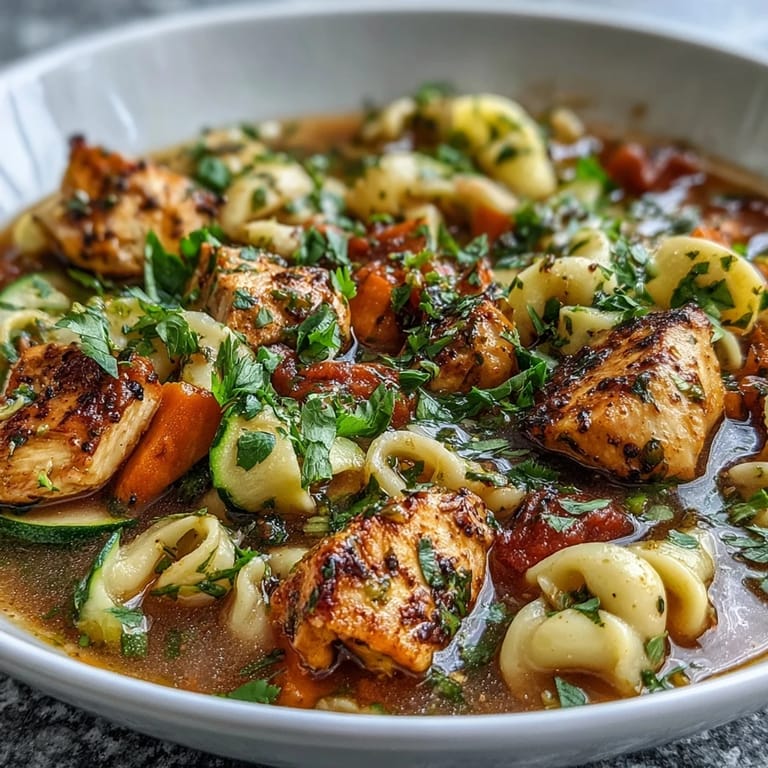
- Boneless, skinless chicken breasts (400 g total, cut into 1/2-inch cubes): Cutting them into small, even pieces means they cook quickly and distribute throughout the soup rather than sinking into one corner.
- Carrots (2 medium, peeled and sliced): These add natural sweetness and body to the broth—I slice them on a bias because it looks prettier and cooks faster.
- Celery stalks (2, sliced): The backbone of any good soup base, bringing subtle earthiness that most people taste but never identify.
- Onion (1 medium, finely chopped): This is where the flavor foundation begins, so don't rush this step—let it soften and turn translucent before moving on.
- Garlic (2 cloves, minced): Added after the onion so it doesn't burn and turn bitter, it wakes up everything else in the pot.
- Zucchini (1 medium, diced): This vegetable is forgiving and adds body without overpowering the broth.
- Green beans (1 cup, trimmed and cut into 1-inch pieces): They keep their snap in the soup, providing texture and color.
- Frozen peas (1 cup): Added at the end so they stay bright green and don't turn into little mushy balls.
- Canned diced tomatoes (1 can, 400 g, undrained): The liquid adds acidity and depth, so don't drain them no matter what.
- Small pasta shapes (1 cup of ditalini or elbow macaroni): These small forms get coated with broth instead of clumping together like spaghetti would.
- Low-sodium chicken broth (8 cups): Using low-sodium lets you control the salt level and prevents the soup from tasting like seasoning alone.
- Olive oil (1 tablespoon): Just enough to coat the pot and help the vegetables release their flavors without making the soup greasy.
- Dried thyme (1 teaspoon): This herb doesn't fight with the vegetables—it makes them taste more like themselves.
- Dried basil (1 teaspoon): The second herb that rounds out the Italian flavor profile without making it taste like a marinara sauce.
- Bay leaf (1): Remove it before serving, but while it's in there it brings a subtle sophistication you won't be able to name.
- Salt and freshly ground black pepper: Season at the beginning and again at the end—your palate changes as the flavors develop.
- Fresh parsley (2 tablespoons, chopped): This goes in at the very end because heat destroys its brightness and you want that final pop of freshness.
Tired of Takeout? 🥡
Get 10 meals you can make faster than delivery arrives. Seriously.
One email. No spam. Unsubscribe anytime.
Instructions
- Start with the aromatics:
- Heat your olive oil in a large soup pot over medium heat, then add the chopped onion, carrots, and celery together. Let them sauté for about five minutes, stirring occasionally, until the onion turns golden and translucent—you'll know it's ready when the kitchen smells sweet and inviting.
- Add the garlic:
- Once those vegetables are soft, stir in your minced garlic and cook for just one minute. This brief time lets the garlic perfume the oil without burning it.
- Brown the chicken:
- Add your chicken cubes and let them sit for a minute before stirring—this helps them develop a light brown exterior and seal in juices. Cook for four to five minutes total, stirring occasionally, until they're pale brown on the outside but still raw inside.
- Build the soup base:
- Stir in the zucchini, green beans, and canned tomatoes with their liquid, then add the thyme, basil, bay leaf, salt, and pepper. Mix everything together so the herbs distribute evenly and every piece of vegetable gets coated with seasoning.
- Add the broth and simmer:
- Pour in your chicken broth and increase the heat until the soup comes to a boil. Once it's boiling, reduce the heat to medium-low, cover the pot, and let it simmer gently for fifteen minutes—the chicken finishes cooking and the flavors meld together.
- Finish with pasta and peas:
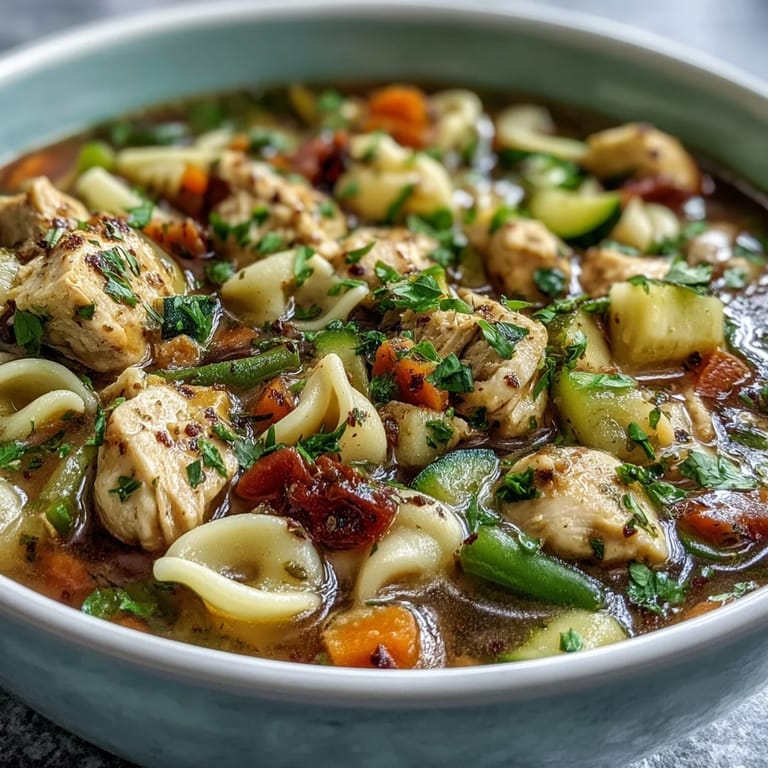
- Uncover the pot, stir in your pasta and frozen peas, and continue simmering uncovered for ten to twelve minutes until the pasta is tender and the chicken is fully cooked through. The pasta releases starch that thickens the broth slightly and soaks up all the seasoning.
- Final touches:
- Remove the bay leaf from the pot—this is important because eating a bay leaf is like biting into a piece of paper. Stir in the fresh parsley, taste the soup, and add more salt and pepper if needed, remembering that each person can adjust their own bowl.
 Pin
Pin There was an afternoon when my mother called me in tears, not sad tears but overwhelmed ones, saying she'd had a day where everything went wrong. I asked what would help and she said she'd been craving this soup, so I made a pot and brought it to her house while it was still steaming in the pot. We sat at her kitchen table in silence for a few minutes, just eating and breathing in the steam, and by the time we finished the bowls, she said she felt like herself again.
How to Make This Soup Your Own
This recipe is flexible because it's really just a framework for putting vegetables and chicken in broth, which means you can swap things around based on what's in your refrigerator or what you're craving that day. I've made it with rotisserie chicken shredded and added at the end, with spinach instead of zucchini, with corn when it's summer, and once with roasted red peppers because someone in my dinner party was allergic to green beans. The only things I wouldn't change are the onion, celery, and carrots because those three are the flavor foundation that makes it taste like soup instead of just hot broth with stuff in it.
Storage and Make-Ahead Wisdom
This soup actually tastes better the next day after the flavors have had time to get to know each other, which makes it perfect for weekend meal prep. Store it in an airtight container in the refrigerator for up to four days, and if you want to freeze it, do that before adding the pasta because the pasta will get mushy during thawing—just add fresh pasta when you reheat and simmer for a few minutes. When you're ready to eat it, reheat gently on the stove rather than the microwave so it warms evenly and doesn't taste metallic.
Pairing and Serving Suggestions
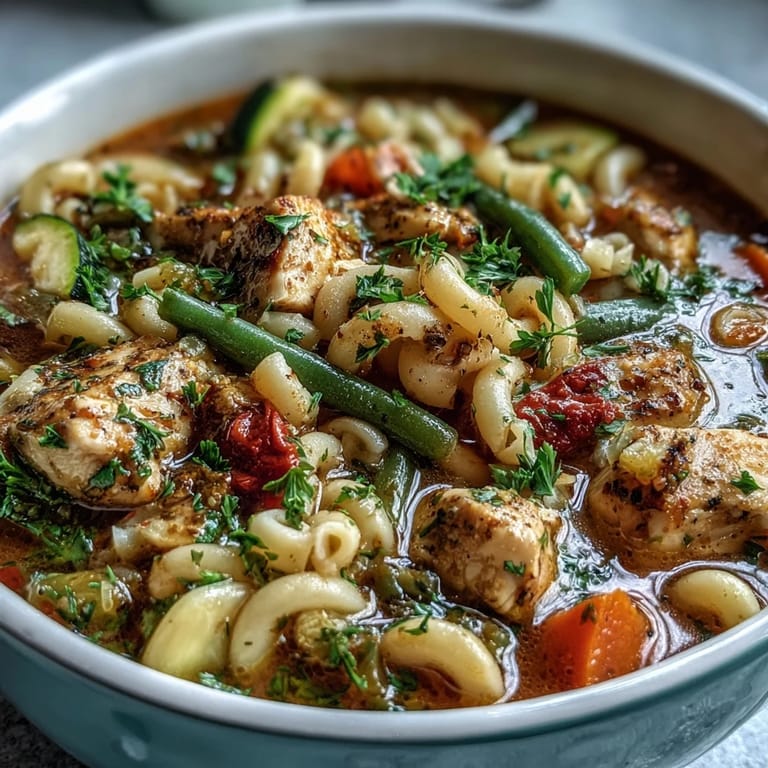
This soup wants a piece of crusty bread beside it, something you can use to wipe the bottom of your bowl and catch all the good broth that settles there. A simple green salad cuts through the richness, and if you're feeling fancy, a crisp white wine like Sauvignon Blanc or even a light Pinot Grigio pairs beautifully without overwhelming the delicate chicken flavor. Some people grate Parmesan on top, others add a drizzle of their best olive oil, and I once had someone add a spoonful of pesto which was either genius or sacrilege depending on who you ask.
- Serve it in wide, shallow bowls so you get broth and solids in every spoonful.
- Have hot soup ladles or spoons ready because cold silverware makes the first bite taste colder than it is.
- Leftover soup reheats better on the stovetop over medium heat, stirring occasionally and adding a splash of broth if it's gotten too thick.
 Pin
Pin This soup has become my answer to almost everything—a sick friend, a new neighbor, a day that just didn't go right. There's something about a warm bowl of vegetables and chicken in broth that says I'm thinking of you louder than almost any words could.
Recipe FAQ
- → What pasta shapes work best?
Small pasta shapes like ditalini, elbow macaroni, orzo, and small shells work beautifully. Their size allows them to cook evenly and creates perfect spoonfuls with the chicken and vegetables.
- → Can I make this ahead?
Absolutely. The flavors deepen overnight, making it even better the next day. Store separately from pasta if possible, or add a splash of broth when reheating as pasta absorbs liquid.
- → How do I prevent mushy pasta?
Cook pasta directly in the broth during the final 10–12 minutes. This infuses it with flavor while maintaining al dente texture. Avoid overcooking and serve promptly once done.
- → Can I use rotisserie chicken?
Yes. Shredded rotisserie chicken adds wonderful depth. Add it during the last 10 minutes with the pasta and peas, just long enough to heat through without drying out.
- → What vegetables can I substitute?
Swap zucchini for spinach, green beans for corn, or add bell peppers. The medley is flexible—use what's fresh or what your family enjoys. Just maintain similar quantities.
- → How long does it keep?
Refrigerate in airtight containers for up to 4 days. The broth may thicken as pasta absorbs liquid—add extra broth when reheating to restore consistency.