 Pin
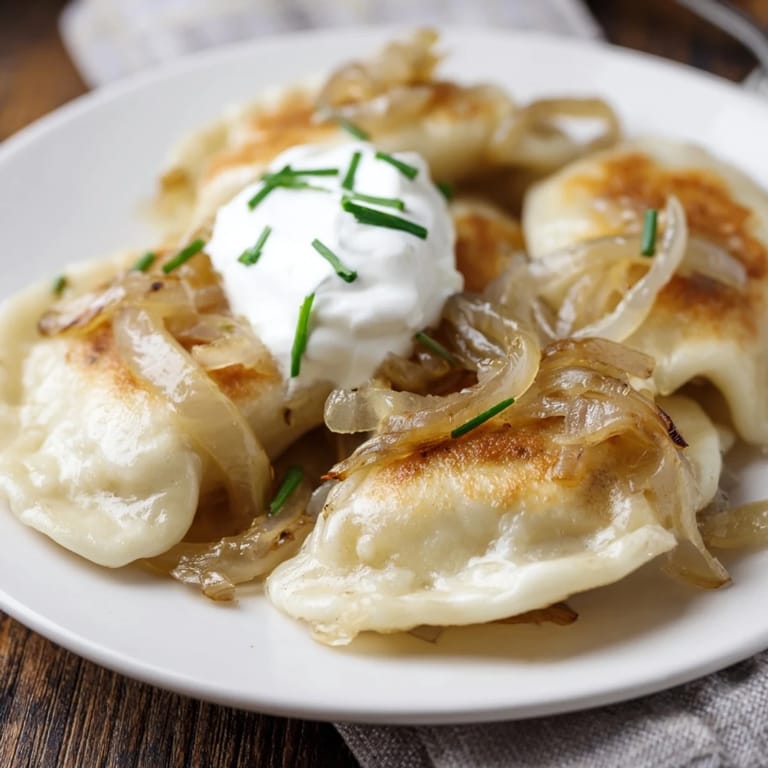
Pin My first pierogi came from a neighbor who'd learned to make them from her grandmother in Warsaw. She showed me how the dough should feel soft and forgiving, and when I finally tried making them myself on a quiet Sunday afternoon, something clicked—the way the potato filling steamed inside that tender wrapper, the crispy golden edges after pan-frying. Now I make these whenever I want to slow down in the kitchen, to really feel each fold and seal.
I made these for my partner on a rainy evening when we both needed something warm and grounding. The kitchen filled with steam, the smell of buttery onions softening over low heat, and by the time we sat down together, we'd already decided these were worth learning to make again and again.
Ingredients
- All-purpose flour (3 cups): This is your foundation—it needs to be strong enough to hold without tearing, so don't skimp on quality.
- Egg (1 large): The binder that brings everything together and adds richness.
- Lukewarm water (¾ cup): Temperature matters here; cold water makes the dough stiff, hot makes it sticky.
- Sour cream (2 tbsp): This adds tenderness and a subtle tang that keeps the dough from being bland.
- Salt (1 tsp for dough, plus more for seasoning): Flavor anchor and texture builder.
- Unsalted butter (2 tbsp melted for dough, 2 tbsp for filling, 3 tbsp for caramelizing): Use real butter; margarine won't give you the same golden finish.
- Russet potatoes (1 ½ lbs): These are starchy enough to mash smooth without becoming gluey, and they absorb cheese beautifully.
- Farmers cheese or well-drained ricotta (1 cup): Farmers cheese has the right density, but if you use ricotta, really wring it out in cheesecloth first.
- Sharp cheddar (½ cup grated): Don't use mild cheddar—you need that sharpness to cut through the potato's richness.
- Onion for filling (1 small, finely chopped): Sautéed until golden, it adds sweetness and depth.
- Large onions for serving (2, thinly sliced): These become your crowning glory, caramelized until they're sticky and dark.
- Sour cream for serving: A cool, tangy dollop that balances the richness.
- Fresh chives or parsley (optional): A whisper of color and freshness at the end.
Tired of Takeout? 🥡
Get 10 meals you can make faster than delivery arrives. Seriously.
One email. No spam. Unsubscribe anytime.
Instructions
- Mix and knead the dough:
- Combine your flour and salt in a large bowl, then make a well in the center. Add the egg, melted butter, sour cream, and water, stirring everything together until it becomes shaggy. Turn it onto a floured surface and knead for 5–7 minutes—you'll feel the dough shift from rough to smooth and elastic, almost silky under your hands. Cover it with a damp towel and let it rest for 30 minutes; this resting time is non-negotiable, as it relaxes the gluten and makes rolling easier.
- Cook the potatoes and prepare the filling:
- Boil your cubed potatoes in well-salted water for 15–18 minutes until completely tender. While they're cooking, melt 2 tbsp butter in a skillet and sauté the finely chopped onion over medium heat until it turns golden and sweet, about 5 minutes. Drain the potatoes thoroughly—any excess moisture will make your filling soggy—and mash them until completely smooth. Fold in the sautéed onion, farmers cheese, and sharp cheddar, then season generously with salt and pepper. Let the filling cool to room temperature before filling your pierogi.
- Roll and shape the pierogi:
- On a floured surface, roll your dough to about ⅛-inch thickness; this thin sheet is what makes pierogi so delicate. Use a 3-inch round cutter (or the rim of a glass) to cut circles, re-rolling scraps gently as you go. Place a heaping teaspoon of filling in the center of each circle, fold it in half, and press the edges together firmly to seal—a tight seal keeps the filling from escaping during boiling. Transfer each sealed pierogi to a towel-lined tray, keeping them covered so they don't dry out.
- Boil until they float, then rest:
- Bring a large pot of salted water to a gentle boil, then add your pierogi in batches so they have room to move. Once they float to the surface, give them another 1–2 minutes to ensure they're fully cooked through. Remove them with a slotted spoon and set them aside on a clean kitchen towel—this is the bridge between boiling and pan-frying.
- Caramelize the onions low and slow:
- In a large skillet, melt 3 tbsp butter over medium-low heat and add your thinly sliced onions. This is where patience becomes the ingredient—cook them slowly, stirring often, for 20–25 minutes until they're deeply golden, almost caramel-colored, and falling apart. This slow caramelization transforms them from sharp and raw to something sweet and almost jammy.
- Pan-fry the pierogi to crispy perfection:
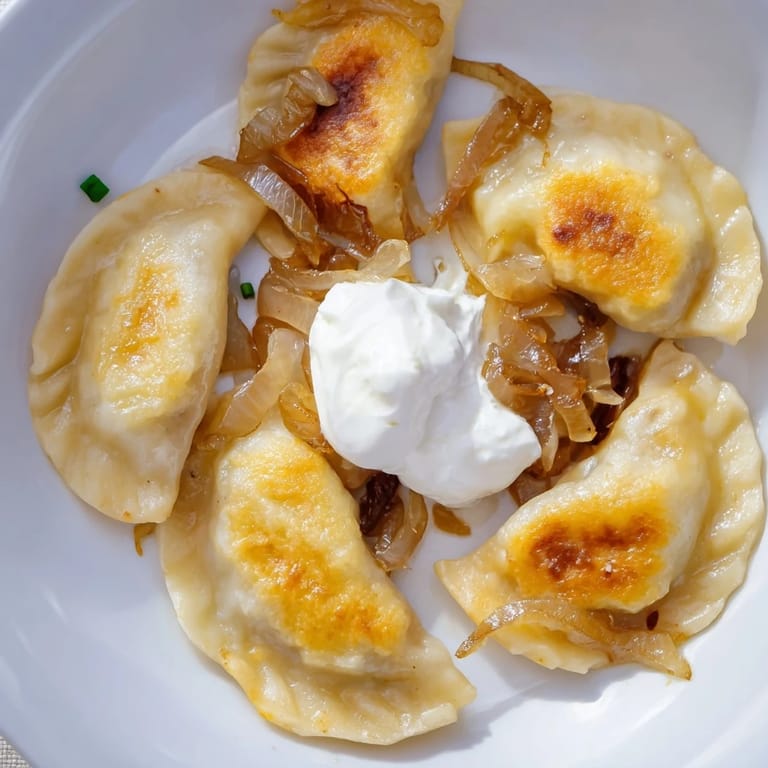
- In the same skillet (the caramelized onion flavor still clinging to the pan is a gift), add your boiled pierogi in batches and fry them over medium heat for 2–3 minutes per side until both sides turn golden and crispy. Don't crowd the pan; they need space to make contact with the hot butter.
- Serve with love:
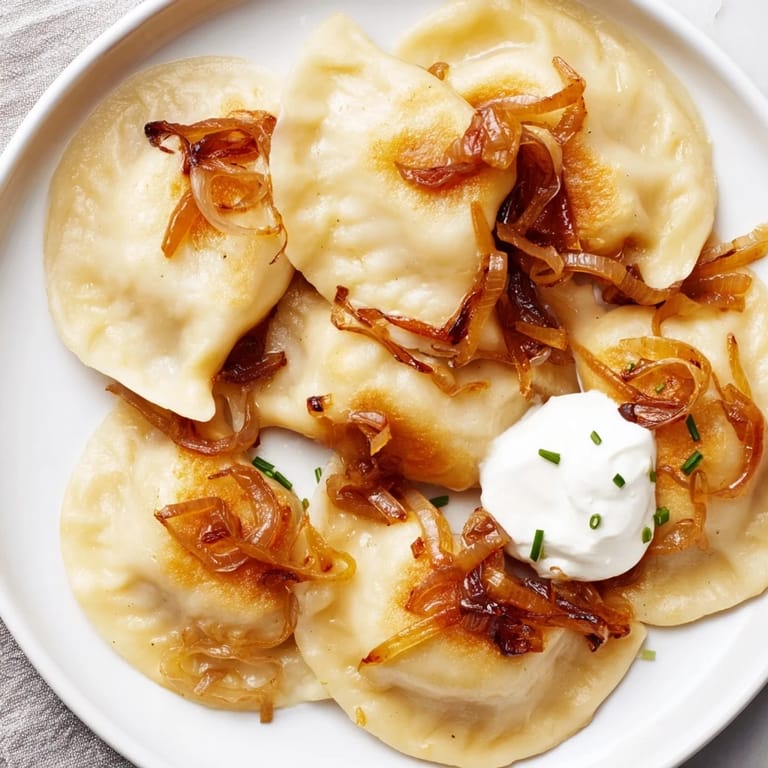
- Plate them while still warm, top with caramelized onions and a generous dollop of sour cream, finish with chopped chives or parsley if you like the brightness. Serve immediately while they're at their best.
 Pin
Pin I remember my friend's eyes lighting up when she bit into one—that moment when the crispy edge gave way to soft dough and then the warm, creamy filling. It's one of those dishes that stops conversation for a moment, the kind of food that makes people remember why they love eating together.
Freezing and Make-Ahead Magic
The best part about pierogi is that you can make them whenever you have time and freeze them for whenever you need comfort on a busy night. I've assembled a whole tray, frozen them uncovered for a few hours, then transferred them to a freezer bag where they keep for up to two months. When you're ready to cook them, don't thaw them—just drop them straight into boiling water and add a minute or two to the cooking time since they're starting from frozen. It's like having homemade restaurant-quality dumplings waiting for you.
Playing with Flavor and Tradition
Once you've mastered the basic potato and cheese version, you can start experimenting within that tradition. Some people swap in cottage cheese if that's what they have on hand, though it should be really well-drained so the filling doesn't become too wet. Others make a second batch with a different filling—caramelized mushrooms, sauerkraut, or ground meat—and serve them all together. What matters is that the dough technique stays the same; the filling is where you can gently push boundaries and make it yours.
Pairing and Serving with Intention
Pierogi aren't just a main course; they're a moment, a ritual, a reason to sit down and eat something that took real effort. Serve them with a crisp Polish lager or a dry white wine that cuts through the richness, and suddenly dinner becomes an occasion. If you're cooking for a crowd, remember that they hold well in a warm oven, so you can pan-fry them in batches without anyone feeling rushed or left behind.
- Make the caramelized onions first, cover them, and reheat gently when you're almost ready to serve—they're just as good warm as they are hot.
- Set out the sour cream in a small bowl so everyone can dollop generously without ceremony.
- Have extra butter standing by if the pan dries out between batches; these deserve a generous amount of fat for that golden finish.
 Pin
Pin These pierogi have become my answer to the question 'what should we eat tonight?' when I want to give both time and care, but not stress. They're worth every minute, and they're even better when you make them for someone you love.
Recipe FAQ
- → What type of cheese works best for the filling?
Farmers cheese or well-drained ricotta combined with sharp cheddar provides a creamy and flavorful filling that balances richness and tang.
- → How do I prevent pierogi from sticking after boiling?
Removing boiled pierogi with a slotted spoon and placing them on a lightly floured surface or under a damp towel helps avoid sticking before pan-frying.
- → What is the best way to caramelize onions for serving?
Slowly cook thinly sliced onions in butter over medium-low heat, stirring often, until they turn deeply golden and sweet, about 20-25 minutes.
- → Can the dough be prepared in advance?
Yes, the dough benefits from resting 30 minutes covered with a damp towel, which improves elasticity and ease of rolling.
- → How should pierogi be stored if not cooking immediately?
Freeze uncooked pierogi on a tray, then transfer to bags for up to two months to preserve freshness and shape.