 Pin
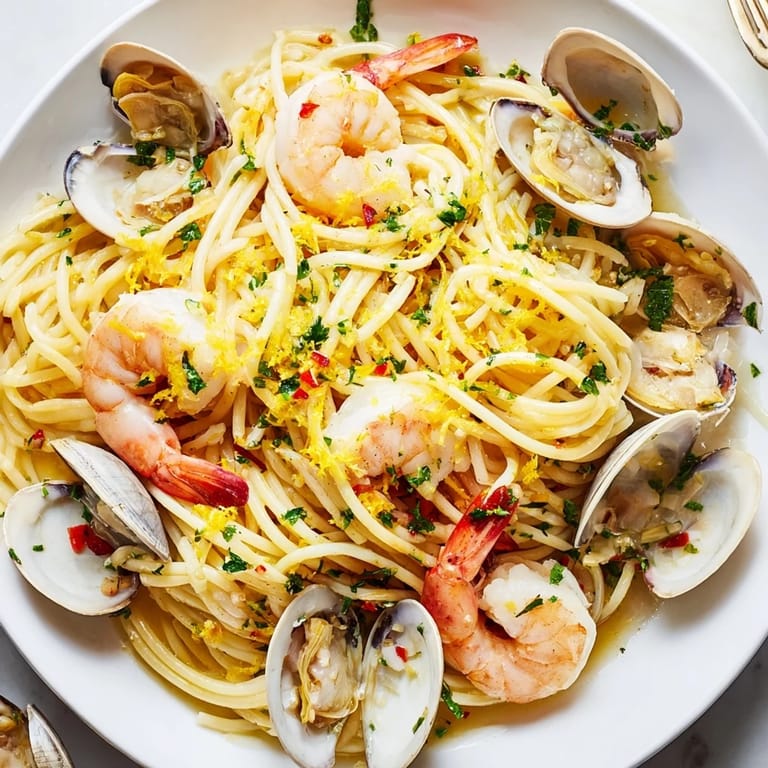
Pin There's something about the smell of garlic hitting hot olive oil that stops me mid-thought every time. I discovered this seafood pasta one evening when I had shrimp and clams on hand but absolutely no plan, and somehow that constraint turned into something I now make intentionally. The beauty of aglio e olio is how it lets the seafood and garlic talk to each other without a lot of fussy interference, just pure, honest flavors that come together in maybe thirty minutes.
I made this for my partner on our anniversary and halfway through realized I'd forgotten to buy wine, so I just left it out and the clams still opened perfectly, their juice mixing with the garlic oil in a way that felt like I'd planned it all along. That's when I stopped worrying so much about following recipes exactly and started trusting that good ingredients and a hot pan could handle a few surprises.
Ingredients
- Large shrimp (250g): Get them as fresh as possible and peel them yourself if you can—pre-peeled ones sometimes have a slightly off taste sitting in their own liquid.
- Fresh clams (500g): Buy them the day you're cooking if possible and keep them in a bowl with a damp towel in the coldest part of your fridge.
- Spaghetti (400g): Use bronze-cut if you can find it—the texture holds onto the oil better than the super-smooth kind.
- Extra virgin olive oil (6 tbsp): This isn't where you use the budget bottle; good oil changes everything here.
- Garlic cloves (5): Slice them thin yourself so they cook evenly and don't burn into bitter little crisps.
- Red chili flakes (1/2–1 tsp): Start with less and taste as you go—you can always add more heat but you can't take it back.
- Dry white wine (1/2 cup): Drink something you'd actually taste in the glass, not cooking wine that's been sitting in your cabinet for two years.
- Lemon (1): Fresh lemon juice and zest brighten everything at the end and keep it from feeling heavy.
- Fresh parsley (1/4 cup): Flat-leaf tastes better than curly and looks more intentional on the plate.
- Salt and black pepper: Taste constantly as you cook—this dish needs seasoning at every step.
Tired of Takeout? 🥡
Get 10 meals you can make faster than delivery arrives. Seriously.
One email. No spam. Unsubscribe anytime.
Instructions
- Start the pasta:
- Get a big pot of salted water boiling first—this is usually the longest part to wait for. Once it's rolling, cook the spaghetti a minute or two under the package time because it'll keep cooking slightly when you toss it with the hot seafood and oil.
- Toast the garlic:
- While the pasta cooks, pour your olive oil into a large skillet over medium heat and let it warm for a minute. Scatter in the sliced garlic and chili flakes, then stay right there and stir constantly—you want it golden and smelling amazing, not brown and bitter, which happens faster than you'd think.
- Cook the shrimp:
- Add the shrimp and let them sit still for about a minute before you start moving them around so they get a little color. Once they turn pink, about two minutes total, pull them out onto a plate so they don't overcook.
- Steam the clams:
- Pour in the white wine and add your clams, then cover the pan and listen for them to start opening—it usually takes about three to five minutes. Shake the pan occasionally and discard anything that stays stubbornly closed.
- Bring it together:
- Drain your pasta (save that starchy water—it's liquid gold), toss it into the skillet with the clams and shrimp, add the lemon zest and juice and most of the parsley, then toss everything gently. If it looks too dry, splash in some pasta water until it feels slick and glossy.
- Taste and serve:
- Season with salt and pepper—go easy on salt since the seafood and oil already bring it—then serve immediately while the pasta is still hot and everything is at its best.
 Pin
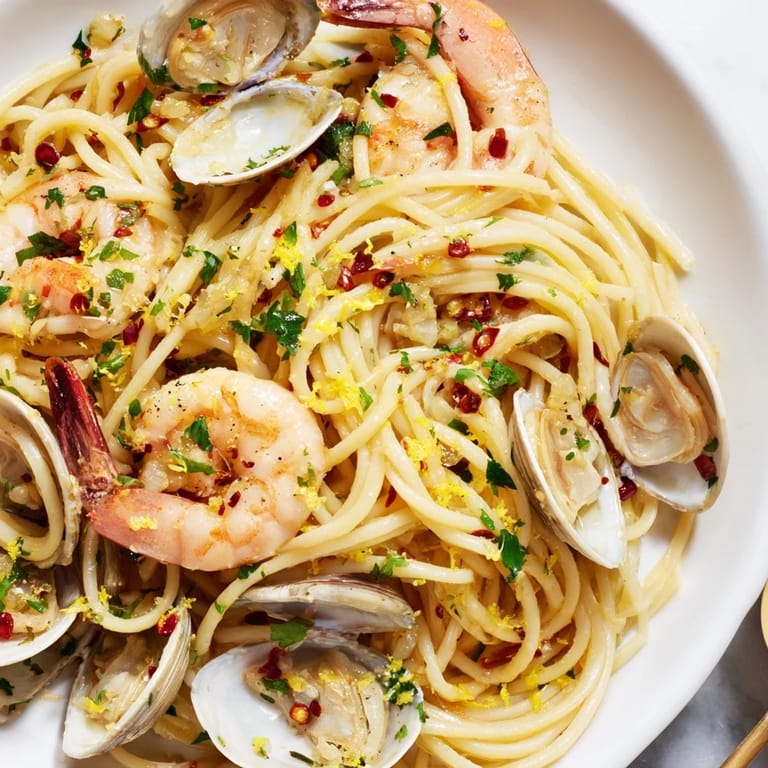
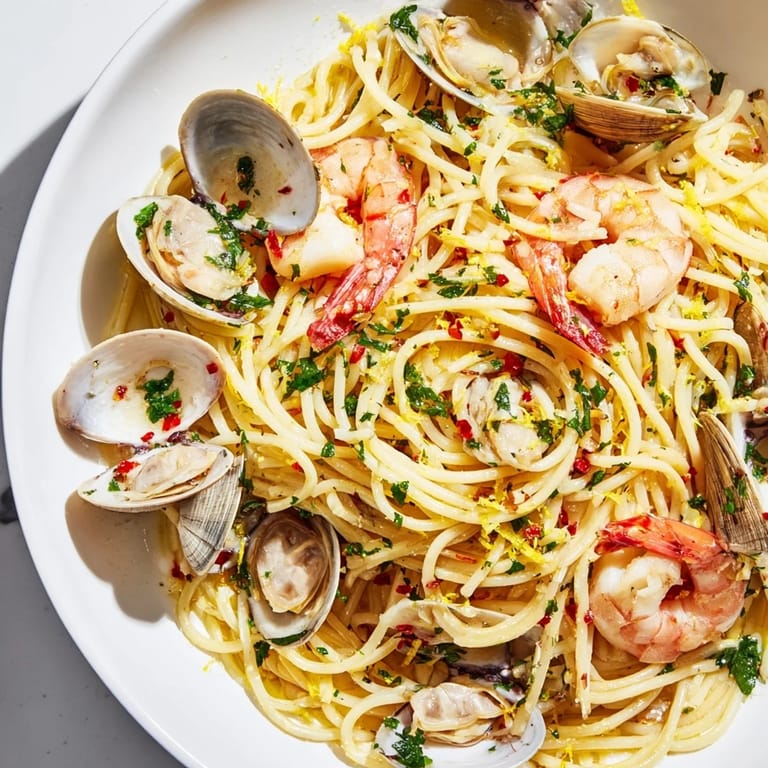
Pin There was a moment when everything came together on the plate—the steam rising, the parsley green against the white clams, the smell calling everyone to the table without me having to say a word—and that's when this dish stopped being just dinner and became something I make whenever I want to feel a little bit intentional about cooking.
Choosing Your Seafood Wisely
The quality of your shrimp and clams matters more than anything else here because there's nowhere to hide—it's basically just them, garlic, oil, and pasta. I've learned to build a relationship with the seafood counter at my market, asking questions about where things came from and how long they've been there. Frozen shrimp are honestly fine and sometimes better than fresh ones that have been sitting around, so don't assume fresh is always the answer.
The Wine Question
People stress about which wine to use, but honestly any dry white wine you'd drink works here—Pinot Grigio, Sauvignon Blanc, even a basic Italian white. What matters is that the wine steams the clams and adds a little acidity; it evaporates mostly during cooking, so don't overthink it. I've done this with minimal wine and maximum wine and everything in between, and the clams open all the same.
Building Flavor Without Heaviness
The secret is that olive oil, garlic, and a little acid from lemon and wine create something that tastes indulgent and creamy without any cream at all—just the pasta water working its starch magic. Once you understand this, you can build so many other dishes the same way, which is maybe why this one changed how I think about cooking. The toss at the end is where patience pays off; spend thirty seconds making sure everything is evenly coated and you get a completely different experience.
- Taste the sauce before adding salt because the seafood and oil bring salt with them naturally.
- Keep the heat medium so nothing sticks or burns and the oil stays smooth instead of breaking.
- Serve it immediately on warm plates because this dish waits for no one and gets sad if it sits.
 Pin
Pin This pasta reminds me that sometimes the best meals come from having good ingredients on hand and not overthinking what to do with them. Every time I make it, it tastes like possibility.
Recipe FAQ
- → What type of pasta works best for this dish?
Spaghetti or any long, thin pasta is ideal as it allows the garlic oil and seafood juices to coat each strand evenly.
- → Can I substitute clams with other seafood?
Yes, mussels or calamari can be used as alternatives to clams for a varied seafood flavor.
- → How do I prevent the garlic from burning?
Sauté garlic gently over medium heat just until golden and fragrant, usually about 1 minute, to avoid bitterness.
- → What is the purpose of reserved pasta water in this dish?
Adding reserved pasta water helps create a smooth, silky sauce by binding the olive oil and other ingredients with the pasta.
- → Is this dish suitable for gluten-free diets?
Substituting regular spaghetti with gluten-free pasta makes the dish appropriate for gluten-free preferences.