 Pin
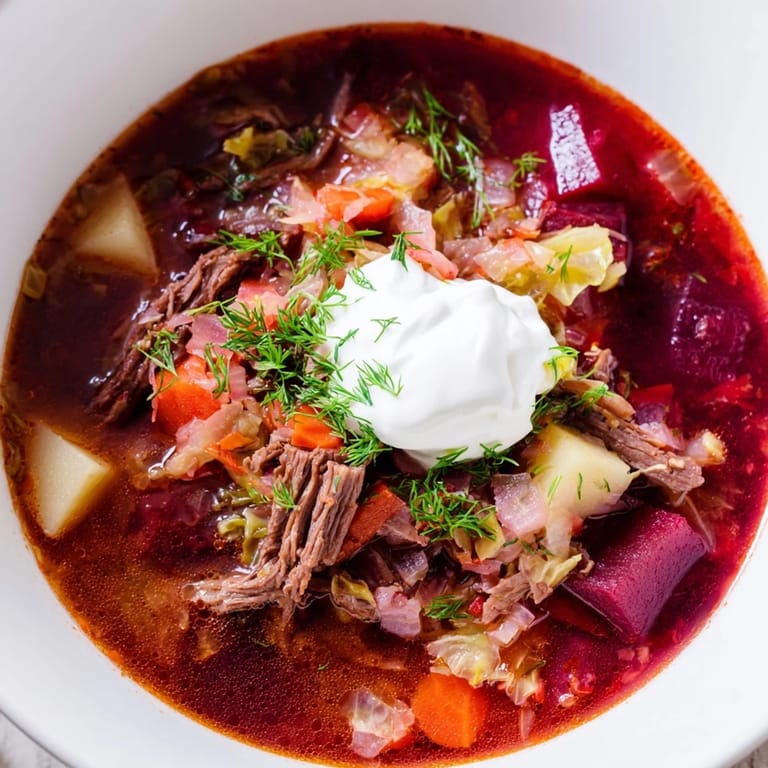
Pin The first time I made borscht, I was standing in my grandmother's kitchen on a gray winter afternoon, watching her hands move with the certainty of someone who'd made this soup a hundred times before. She didn't measure anything—just grated beets with a practiced rhythm while steam rose from the pot of simmering beef, and I suddenly understood why people talk about comfort food like it's a language. That deep crimson broth, the way the sour cream swirled into clouds when you stirred it in, felt less like cooking and more like being wrapped in something warm and familiar. I've made it countless times since, and it never fails to fill the kitchen with that same sense of home.
I remember making this for my friend Marcus on one of those brutal cold nights when nothing else seemed right, and he ate three bowls without saying much, which was his way of saying everything. By the time he finished, the whole apartment smelled like dill and beef stock, and somehow the evening felt less heavy than it had when he arrived. Food does that sometimes—it's not fancy or complicated, but it lands exactly where it needs to.
Ingredients
- Beef chuck or brisket (400 g): This cut breaks down beautifully into tender shreds over time—avoid lean cuts that'll stay tough no matter how long you simmer.
- Water (1.5 liters): The foundation of everything; don't skimp on quality or quantity here.
- Bay leaves and black peppercorns: They're your seasoning backbone while the beef releases its flavors into the broth.
- Beets (3 medium, grated): These give borscht its signature color and earthiness—the vinegar and sugar balance their natural sweetness perfectly.
- Carrots and onion: The aromatic base that makes the whole soup sing when they're sautéed together first.
- Potatoes (2 medium, diced): They soften into the broth and add substance without overwhelming the other flavors.
- Green cabbage (1/4 small head, shredded): Adds a subtle textural contrast and a whisper of brassica flavor that ties everything together.
- Tomato paste (2 tablespoons): This is your umami anchor—it deepens the overall flavor profile without making it taste tomatoey.
- Garlic (2 cloves, minced): Added at the very end so it stays bright and doesn't get lost in the long simmer.
- Sunflower oil (2 tablespoons): Use neutral oil here; it lets the vegetables shine during that crucial sauté step.
- Sugar and white vinegar: The dynamic duo that balances the earthiness of the beets and keeps the soup from tasting one-dimensional.
- Sour cream and fresh dill: Non-negotiable for serving—the creaminess and herbaceous lift transform each spoonful.
Tired of Takeout? 🥡
Get 10 meals you can make faster than delivery arrives. Seriously.
One email. No spam. Unsubscribe anytime.
Instructions
- Start the broth:
- Drop the beef into cold water with bay leaves and peppercorns, then bring everything to a boil. You'll see gray-brown foam rise to the surface—skim it off as it appears because it's impurities that cloud your final broth. Once the foam stops, reduce heat to a gentle simmer and let the beef cook undisturbed for 45 minutes; this slow cooking is what makes the meat tender enough to almost melt.
- Build flavor in the pan:
- While your beef is settling into its long simmer, heat oil in a separate skillet and add the onions first, letting them go translucent and sweet. Add the grated carrots and beets to the pan—the beets will stain everything that beautiful deep red almost immediately—and sauté for 5 minutes until they soften slightly. Stir in tomato paste, sugar, and vinegar, then cook for 7-8 more minutes, stirring often, until the vegetables are tender and the mixture smells almost jammy.
- Combine everything:
- Remove the beef from its broth and set aside to cool slightly, then pour the broth back into the pot and bring it to a simmer. Add the diced potatoes and let them cook for 10 minutes until they start to soften. Add the shredded cabbage and your entire sautéed vegetable mixture from the skillet, then simmer for another 10 minutes.
- Finish and rest:
- Shred or cube the cooled beef and return it to the pot along with the minced garlic. Taste and adjust salt and pepper—you'll probably need more salt than you think because the broth is subtle. Turn off the heat and let the whole soup sit undisturbed for 15-20 minutes; this resting period is when everything settles into harmony and the flavors deepen noticeably.
 Pin
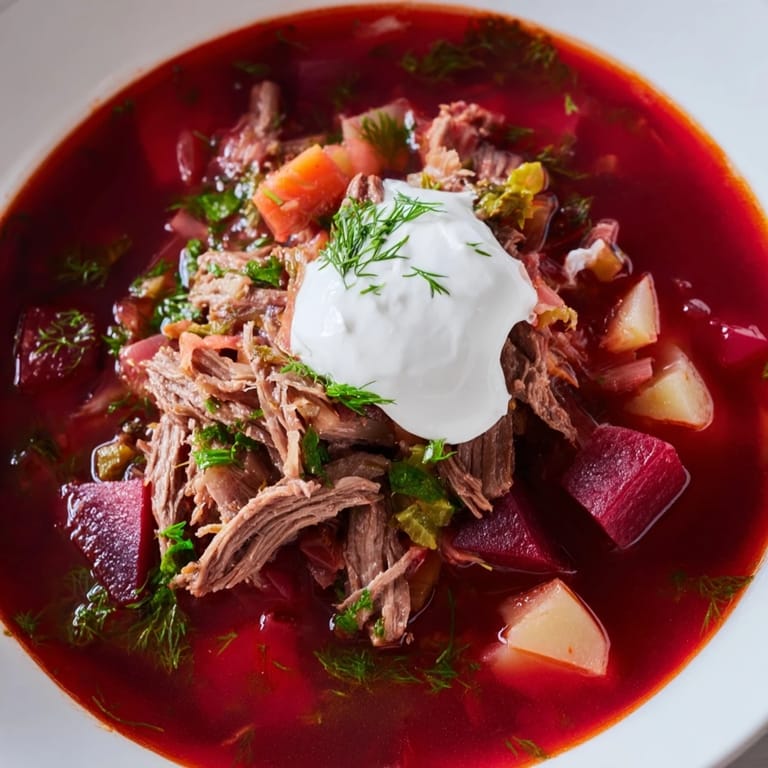
Pin I learned the importance of that resting period the hard way when I served borscht immediately after cooking it to some friends, and while they were polite, it tasted rushed—flavors hadn't settled into their proper places. Two weeks later, I made the exact same recipe and reheated it, and suddenly it was transcendent; that's when I realized borscht wants time to think about itself before meeting the world.
The Sour Cream Question
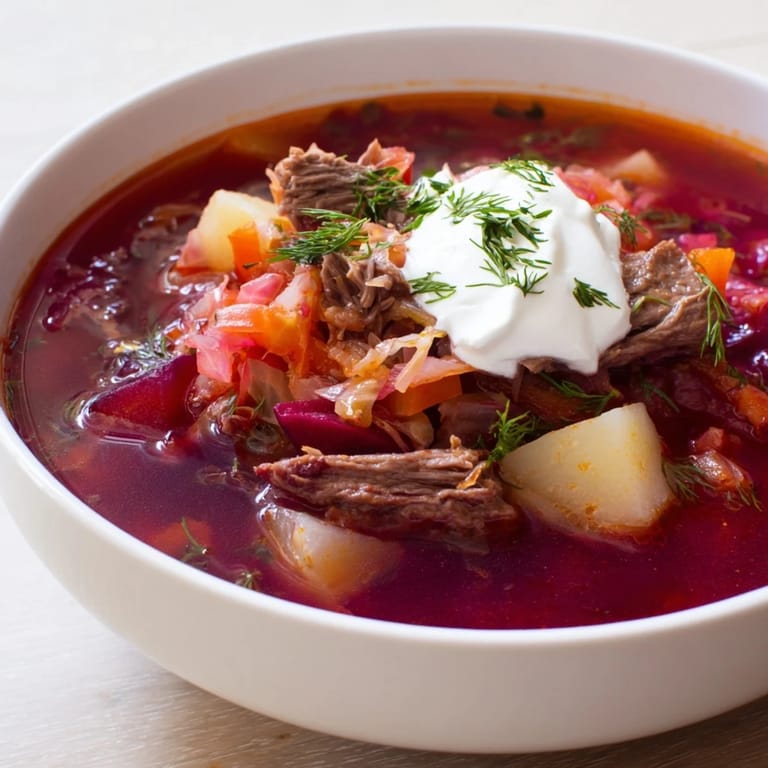
The sour cream isn't a garnish here—it's a crucial player that changes everything the moment it hits the hot soup. A generous dollop cools each spoonful just enough and adds a richness that makes the flavors rounder and less sharp. I've watched people who claim they don't like beet soup completely transform their opinion after one bowl with proper sour cream, which tells you something about how important it is.
Serving and Pairing Ideas
Borscht deserves company that complements rather than competes. Dark rye bread is the obvious choice because its slight sourness echoes the soup's depth, but I've also served it with crusty sourdough when that's what I have on hand. The soup is hearty enough to be a complete meal on its own, though I sometimes add a small side salad with sharp vinaigrette to keep things from feeling too heavy.
Make-Ahead and Storage Tips
This is one of those rare dishes where the fridge is your friend—borscht genuinely improves after sitting overnight as flavors continue melding and developing. Store it in a covered container for up to four days, and it reheats beautifully on the stovetop over low heat, which is when you'll notice that the color has deepened and the flavors have become even more integrated and complex.
- You can make the entire soup up to four days ahead, which makes it perfect for meal planning or bringing to someone who needs feeding.
- Freeze it for up to three months if you want to have emergency comfort in your freezer, though the texture of the vegetables will be slightly softer after thawing.
- Always add the sour cream and fresh dill just before serving so they stay bright and don't get muddied by the reheating process.
 Pin
Pin There's something grounding about making borscht—it's not fussy or complicated, just deeply satisfying work that rewards patience with flavor. Every time you make it, you're continuing something old and real.
Recipe FAQ
- → What cut of beef works best for this soup?
Beef chuck or brisket are ideal as they become tender during slow simmering while enriching the broth with flavor.
- → Can I prepare the soup in advance?
Yes, letting the soup rest for 15–20 minutes or refrigerating overnight allows flavors to deepen and intensify.
- → How do the vegetables contribute to the soup’s flavor?
Grated beets and carrots add natural sweetness and earthiness, while cabbage and potatoes provide texture and balance to the savory broth.
- → What role does vinegar play in the dish?
White vinegar brightens and balances the sweetness of beets and tomato paste, enhancing overall depth.
- → Are there suggested garnishes to complement the soup?
A spoonful of sour cream combined with fresh dill or parsley adds creaminess and fresh herbal notes, enhancing the soup’s richness.